The Fair Housing Act turned 50 this month, and lots of local organizations are using that milestone as an opportunity to look back and take stock of how far we’ve actually progressed since 1968. (Spoiler: not terribly far.) Today, UMSL hosted “Segregation in St. Louis: Dismantling the Divide” as part of its Fair Housing Conference; on Saturday, Creative Exchange Lab hosts a panel, “[De]Segregation by Design in Divided Cities,” featuring East St. Louis Poet Laureate Eugene Redmond, as well as a group of architects, historians, and city planners.
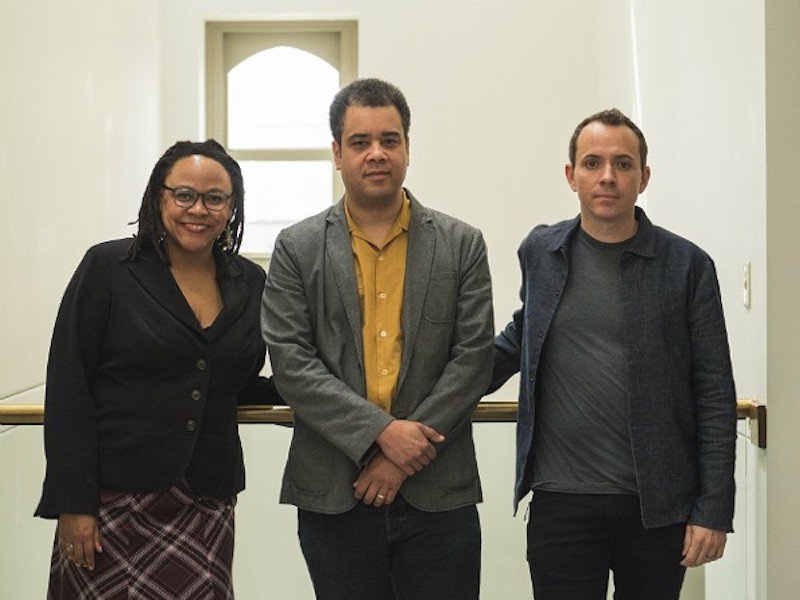
On Friday and Saturday, Dwell in Other Futures, “a two-day festival of art and ideas that explores the collisions of race, urbanism and futurism” will grapple with many of the same topics, but in a more nonlinear, speculative way. Organized by Rebecca Wanzo, Tim Portlock, and Gavin Kroeber with support from Wash U’s Divided City Initiative, it’s been in planning for more than a year.
Stay up-to-date with the local arts scene
Subscribe to the weekly St. Louis Arts+Culture newsletter to discover must-attend art exhibits, performances, festivals, and more.
“We did this not to tell people things—we did this to learn things,” Wanzo says. “We wanted to have a lot of St. Louis voices, and to amplify how St. Louis people are doing things, and put them in conversation with people who have a voice nationally and globally.” Kroeber agrees: “What I think the festival does is show that there’s a constellation of really exciting and visionary futures being built and enacted by artists, poets, other people in the city right now,” he says. “It’s amplyfing these futures that are already here, already emerging.” Portlock adds he’s very interested to see how local and national artists will tackle similar topics. “I think one of the things people have been talking about for a while is Afro-Futurism,” he says, “so I’m personally interested in how the discussions and ideas around Afro-Futurism will link up with other analogous concepts.”
The festival commences on Friday night at .ZACK with legendary science fiction writer Samuel R. Delany, who will do a reading, followed by ten-minute responses to his work from artists and thinkers, including poet Treasure Redmond, scholar Terrance Wooten, and writer/artist/filmmaker Sophia Al-Maria. Then, the floor’s opened up to the audience. After that, everyone will travel up to the fourth floor, where Portlock has curated a group exhibit featuring new, commissioned work by Addoley Dzegede, Basil Kincaid, Reuben Reuel, Jonathan Hanahan, Alix Gerber, and others. “There will be a range of media,” Portlock says, including digital media. “One thing all the artists will have in common, with maybe one exception, is they’ll be speculating about the future of the city, or proposing another way of viewing the contemporary city.”
Saturday’s events, which all happen at the Pulitzer Foundation for the Arts, will be broken into three blocks. The first segment features a new, commissioned video piece from St. Louis artist Katherine Simone Reynolds, “You’re the Only Reason I’m Staying Here”; an interactive project with artist Amber Reynolds, creator of The Justice Fleet, which guides people in imaging different futures for the city; and across the street at the PXSTL lot, landscape architect Eric Ellingson will do a performance based on the Chouteau Greenway. “So it’s soliciting different thoughts about how the future of St Louis is emerging through landscape projects,” Kroeber says. “These are projects you can immerse yourself in; you have the option to drift, or to go all in on one of them, if you really wanted to commit to one.”
Part two features performances by out-of-town artists Autumn Night and Mendi + Keith Obadike, as well as screenings of Al-Maria’s video work. At 5 p.m., part three will braid the local and national together. There’s a new sound installation by Damon Davis, Bloom of EROS, featuring St. Louis singer/songwriter Bloom; “New Imaginaries: Urban Design, Power, and Civic Futures in St. Louis, Detroit, and Newark” a conversation between Amanda Colón-Smith, V. Mitch McEwen, and Jae Shin, where they’ll compare notes on their respective cities; and finally, “Manifestoes for a Future St. Louis,” a series of rapid-fire presentations from ARTC, Michael R. Allen, Maxi Glamour, ICE, De Nichols, and Alison C. Rollins. “We wanted it to be a manifesto, rather than a talk, so that they could make bold statements,” Kroeber says.
After the festival closes, Wanzo will document and archive everything. Then, this summer, she’ll be working on a website that will allow people to access all of the art and information from this weekend. “What the arts do is see things differently,” she says. “And it’s part of conversations that people are having every day about what St. Louis should look like in the future. Who will be there? Who do people imagine aren’t there? What does to mean to come together and have a conversation about what that is? How are other places having that conversation as well?”
Dwell in Other Futures happens April 27 and 28. It’s free, but RSVPs are required. Friday’s event takes place at .ZACK (3224 Locust); Saturday’s events happen at the Pulitzer Arts Foundation (3716 Washington). For the full lineup and more info, go to dwellinotherfutures.com.