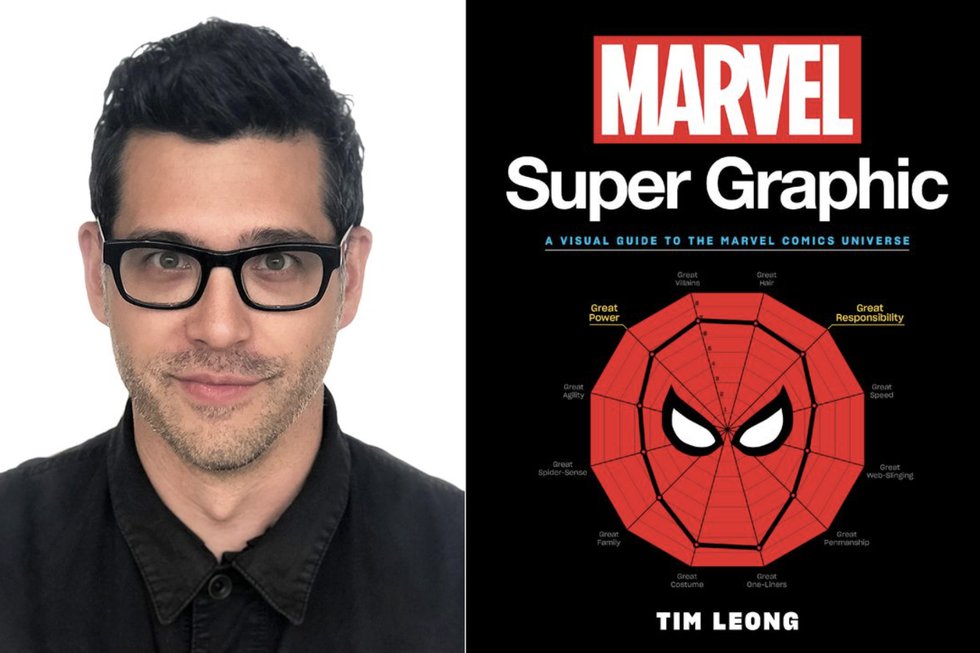
St. Louis native Tim Leong’s series of data-driven pop culture infographic books has a brand-new entry. Marvel Super Graphic, out now from Chronicle Books, explores 85 years of Marvel comics, from character catchphrases to overlapping moments in the multiverse. Leong, a longtime comic fan and former Entertainment Weekly creative director who also previously worked on Marvel projects, has thoughtfully crafted a volume of infographics that both diehard and casual comic fans can enjoy. We caught up with Leong on the eve of the release to talk Marvel, data, and making something that will spark interest in others.
Tell us a bit about the Super Graphic series and what got you interested in these projects.
Stay up-to-date with the local arts scene
Subscribe to the weekly St. Louis Arts+Culture newsletter to discover must-attend art exhibits, performances, festivals, and more.
I first had the idea, I think, in 2011 when I was living in San Francisco, working on Wired magazine. Just like a lot of ideas, it came and then just went. And a couple months later, it kind of came back and I was like, Oh, I remember that. And I still didn’t do anything with it. And then later that year, I was finally like, You know, if I keep having this idea, I feel like it’s one that’s worth pursuing. So I had this idea of combining comic books and infographics. They say to write about things that you know, and those are the two things I know. So I kind of put those together and made a little pitch document. I was at Wired at the time, and Chronicle Books was just a couple blocks away, and I sent it over there. I created about 40 pages in a pitch doc of sample pages and sample charts, and they were all in. The first book, which was just Super Graphic, which is about all types of comic books, came out in 2013. I don’t think anyone thought it would go anywhere or do anything, but it picked up real traction and found a real audience, and I think did a lot better than people thought.
What drew you to Marvel specifically for this most recent iteration?
I love comics as a whole, as an industry. There’s so many different types of comics. There are different characters I love, but you always have a first love, right? My first real introduction to comics was in Marvel, so it’s always had a real special place in my heart. I think my first comics were Spider-Man comics, and then I was really into the X-Men. It really captured me as a kid. I still had Batman and Superman and all these other things, but I was always a Marvel kid from the very beginning and have consistently stayed that way as an adult. When I was a kid, I collected these Marvel Universe trading cards. They came out in the early ‘90s, and on the back of the cards they had little power charts. That was kind of my first introduction into charts and data. Those really captured my imagination because I was really hardcore about collecting them. And it wasn’t just the top level characters. It had like ones you hadn’t heard of as well. Or they would reference some huge battle, and I was like, What is this battle? Those cards were a real jumping off point for me, and I think a lot of other people too. I think those cards not only exposed me to comic book data and data in general, but also opened the door to all these different stories and all these different characters that I wasn’t familiar with before. They made me want to go learn more, and my hope is that that’s what this book can do for other people.
As a lifelong fan, what is it like for you to add your own work to the world of Marvel content?
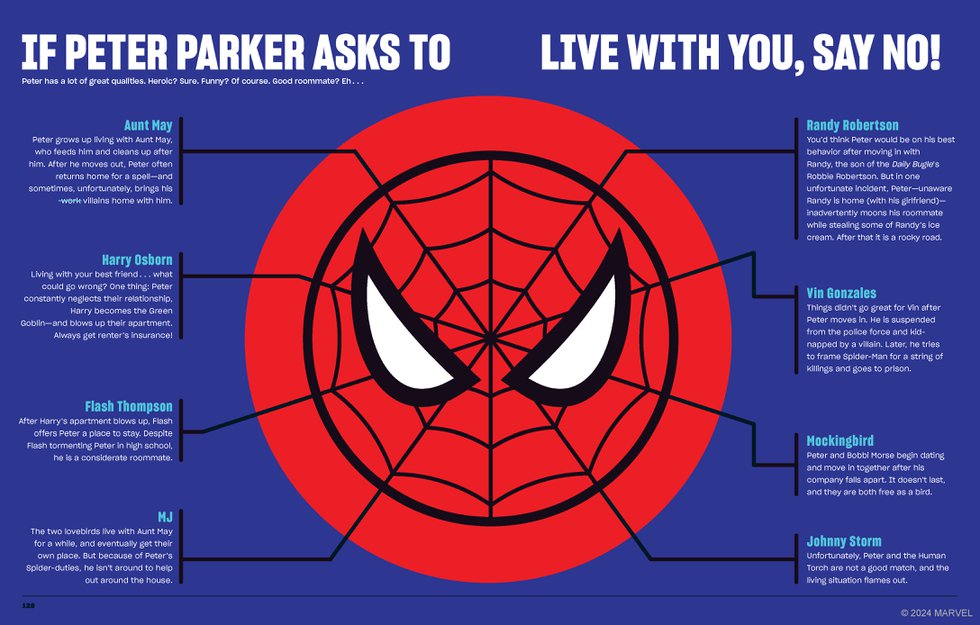
Terrifying. Laughs. I mean, equal parts exciting and terrifying. I think one of the coolest things about the Marvel Universe is how much people care about and love it. I mean, that’s like the ultimate dream, to be able to create something that people care about. So as you approach it, you definitely want to be as respectful as possible. You want to be as informed as possible. But it’s pretty cool. I had an earlier foray into working for Marvel, which was a very small thing, but it felt the same way. I guess about a decade ago I designed the logo for Ghost Rider for the new comic book that had come out, so it was kind of the same thing. What an opportunity to add to the bigger universe that so many incredibly talented people have attributed to and built. You just want to do the best job you possibly can. People care about it so much, and so much incredible creativity has already gone into this enormous world. I think there’s certainly pressure, but you just want to do your best and you don’t want to let anyone down. And you want to entertain and delight as much as possible.
What do you think it is that makes fans so passionate about these characters and this universe?
It’s just so relatable. Not that I can climb walls or have web shooters or anything like that, but the people who write and create and draw the books are just so great at making these characters human and relatable. And because the character is so relatable, I think you just want to learn more. You have this emotional attachment to them, which makes for a really engaged, passionate fan base.
Marvel has created this massive universe. There’s hundreds and hundreds of characters to choose from. How do you choose what information to distill down into these graphics?
I think part of it is making pages that I will like, at least as a starting point. What am I gonna get a kick out of doing? It’s a big project, right? So you want to bring your best to every single page. It’s also my opportunity to put in some characters that I like. But the other part is trying to look at the Marvel Universe and really use the book as a service tool to learn more. If I don’t know about something, then there’s going to be at least some more people out there that didn’t know either. So it was a really helpful tool for me to learn. So really I was just trying to look at the book as a way to explain more, not only to myself, but to the readers.
Were there any particularly interesting or surprising facts that you learned while doing the research for this project?
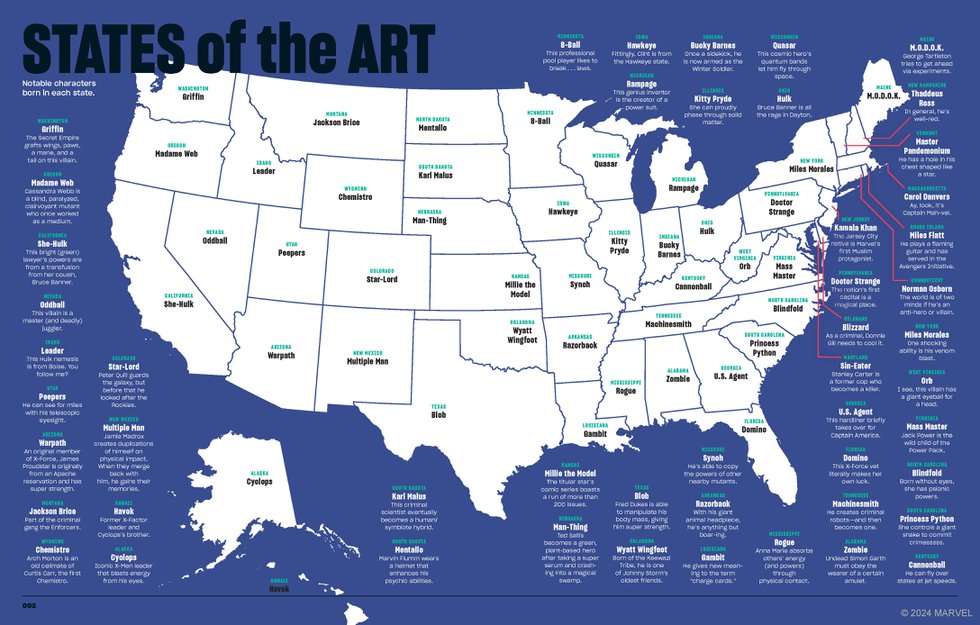
So many. I feel like it’s all just little things. Even something as small as The Thing’s poker games. The Thing from the Fantastic Four has hosted a recurring poker game through the years, I think starting back in like 1979. I knew in general that The Thing liked to play poker, but I didn’t know the extent of all these different games and who was involved and how big of a deal it was. It was just really cool to educate myself on some of those aspects, because there’s so many books. You just can’t read them all, which kind of makes it great. One of my big takeaways is that no matter how big of a fan you are, there’s still something new out there in the Marvel Universe. I’ve read Marvel comics my whole life, and there were so many things that I did not know, and there’s so many books that I had not read. That’s so cool, that you can be a fan for your whole life and that there’s still more, no matter how much you’ve read, there’s still more.
What sort of avenues for storytelling do data and infographics open up?
I think one thing that data can do is zoom out or zoom really close in. Marvel just celebrated its 85th anniversary this year. It’s been a long time. With data you could look at a character’s 80-year trajectory. You can look at a title’s run for decades. Some of these characters have stories that are older than our ages combined. It’s kind of incredible when you think about that. I think you can use data to kind of look at a broader story, but at the same time, data lets you go way into just one single issue or one little story.
What do you hope readers take away from this book?
My biggest hope is that it just ignites a spark in someone to read more comics. That’s just the goal. That’s the dream. I tried to make the book something, whether you are a longtime reader or just a new casual fan, that there’s something in here for everyone and that you will be entertained and delighted and hopefully be hungry for more.