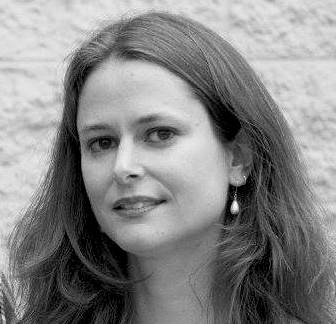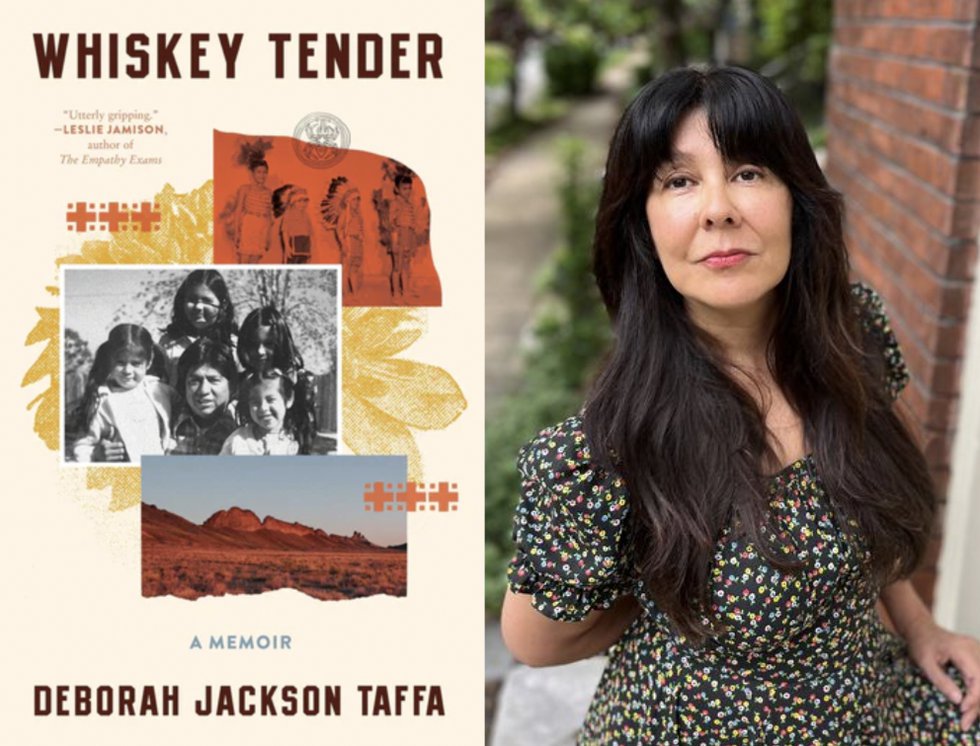
Deborah Jackson Taffa called St. Louis home for more than 20 years, and it’s here that she did much of the work of writing her memoir, Whiskey Tender, out today from HarperCollins Publishers. She’s the editor in chief of the just-revived St. Louis literary and visual art magazine River Styx. Taffa, a citizen of the Quechan (Yuma) Nation and Laguna Pueblo, is also the director of the low-residency MFA in Creative Writing program at the Institute of American Indian Arts in Santa Fe, New Mexico.
Whiskey Tender tells the story of her childhood, her family, and her coming of age. It’s also a nuanced and highly researched history covering centuries of the Indigenous experience in North America and how it laid the groundwork for her Gen-X youth and the multiple ways her tribal identities made her an outsider. It’s the deeply compelling tale of a “mixed-tribe Native girl listening to music on her Walkman,” far beyond the insulting and monolithic stereotypes of Native Americans she saw on TV. It’s the story of her process of discovery, both of herself and the hidden familial and political histories that shaped her.
Stay up-to-date with the local arts scene
Subscribe to the weekly St. Louis Arts+Culture newsletter to discover must-attend art exhibits, performances, festivals, and more.
The New York Times, ELLE, the San Francisco Chronicle, and Publishers Weekly are just a few of the outlets placing it on their must-read lists. She’ll launch the book locally on Monday, April 1, at Left Bank Books. Recently she sat down with SLM to discuss the book, her family, and her responsibilities as an artist.
Your father is a complicated figure, larger than life in the book. What can you tell me about him?
There’s a consistency in who he is. He’s an incredibly wonderful listener. He doesn’t give advice willy-nilly—he really sits with what you tell him. He tried very hard to understand who I was at the same time that there was this huge generational gap between us. So he couldn’t quite envision what my sisters and I were going through. He always emphasized hard work and this idea of America as a meritocracy, like, ‘Don’t feel sorry for yourself. Don’t play the victim. Get up and work hard.’
My father was very shaped by the brief period of time when he was in prison. He was in solitary confinement, where he had this vision of himself dying when he had his friends on the reservation. He realized that ultimately, when you have an existential crisis, you realize that you’re the one who’s in control of your future. You choose when you get angry or when you allow other people to make you feel lesser than you are. And he just really assumed responsibility for his life.
He dealt with a lot of prejudice in the ‘60s and ‘70s and even in the early ‘80s. But he just learned to let it roll off of him like water. That ability to trust people and to look at the world as if there were kind and good people out there made all the difference in his life. So, one profound thing that he taught me was, don’t bring assumptions or expectations to the table about what people think or assume of you because you’re Native American. Trust people until they’ve proven that they’re not trustworthy.
You had to learn a lot of history on your own growing up—lots of formative traumas, familial and historical, were hidden. How much do kids need to know, and when?
I think that it’s really hard to begin a history lesson with Native kids or Black kids or any BIPOC kids at the juncture of their societal, historic demise. You don’t start with slavery. You don’t start with the Indian wars that we saw in the 1700s and 1800s.
We could go further back and talk about the wonderful accomplishments of our ancestors, like if we learn that Native Hawaiians were the best sailors in the world who could sail against the wind. If we learn that corn is a fruit that was created by combining grass and fruit in a botanical discovery that nobody ever talks about, and people can’t figure out how they did it. If we talk about the great palaces that were built at Chaco Canyon and Chichen Itza and Machu Picchu, or the discovery of mathematical knowledge or the big cities that we know existed throughout the Americas and that were decimated by the arrival of guns and germs, then we would have something to hold onto in terms of the arts and the cultures and the societal beauty.
And then from there, you get to the war and all of that. It’s so damaging when you do finally learn about your history. You understand why your parents didn’t want to tell you about it, because it’s so freaking heartbreaking, you know?
What’s your responsibility as a history teacher? Storyteller? Family members?
What justifies exposing my family’s traumas and injuries to the world? If I’m going to tell you the things that happened to my family, I want you to take this history and digest it. I think one of the problems in the United States right now is that people are afraid of our history because they think that it implicates them, or they think that it makes them complicit. And I’m not trying to point a finger at anybody with this book. I’m trying to open the door and let the skeletons out because things resolve themselves when people hear each other speak. It doesn’t mean that you come to an agreement. It means that you listen, and you care enough to hear, and you don’t hide from the truth anymore.
I would challenge myself to compress a big chunk of history into three paragraphs, and then weave back out to the personal story. But if you can somehow weave the history in and give a lesson on top of it, then wonderful. I privileged the personal story because I don’t like to read a dry nonfiction account of history. If I had had to sacrifice one or the other, it would have been really, really disappointing. This project took eight years. I just knew that I had to tell the truth, number one. And the second was I had to get it right in terms of the balance between personal and a broader political history.
For a long time, I thought I was writing a book for my dad and my mom and my ancestors and it just didn’t come out right. And then I thought, well, maybe I’m writing it for my kids and my family, and it didn’t come out right. When I had my grandsons in Hawaii, suddenly I knew exactly what I wanted to tell.