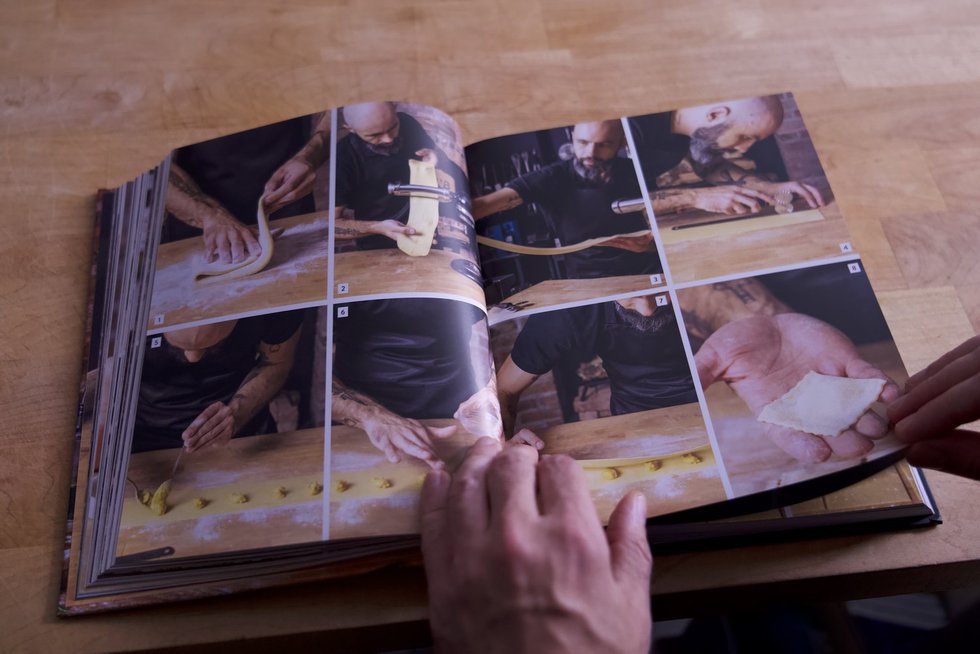
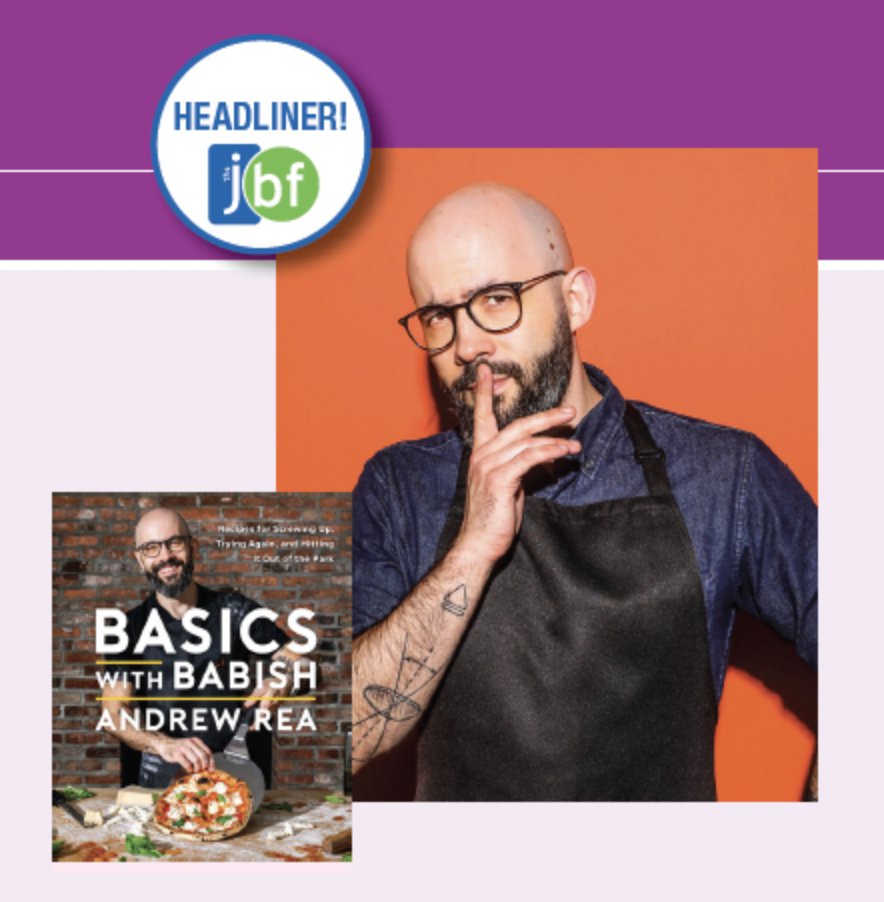
YouTube star Andrew Rea is most known for his Binging with Babish and Basics with Babish video series, which these days are cornerstones of a wider “Babish Culinary Universe.” But Rea is also a successful cookbook author. His first two books, Eat What You Watch and Binging with Babish, leaned into the format that started it all: cooking iconic dishes from television and film. But Basics with Babish, out today from S&S/Simon Element, focuses on another key part of Rea’s on-screen charm—embracing the mistakes and learning from them. Subtitled “Recipes for Screwing Up, Trying Again, and Hitting It Out of the Park,” the book includes funny, personal tales of Rea’s mistakes, as well as advice for common roadblocks readers may hit as they cook their way through dozens of recipes—from homemade bacon and brioche to perfect potstickers and potatoes aligot. It’s an entertaining read chock-full of beautiful food photography and guidance from Rea. For those who want some real face time with the celebrated cook, the St. Louis Jewish Book Festival will welcome the author to Edison Gymnasium for Cookbook Night on Tuesday, November 7, at 7 p.m. Tickets are $40 and available at jccstl.com. Ahead of his visit, we caught up with Rea to talk Basics with Babish, embracing mistakes, and what’s next for the BCU.
It’s officially release day for Basics with Babish. How’s it feel to finally have the book out in the world?
Stay up-to-date with the local arts scene
Subscribe to the weekly St. Louis Arts+Culture newsletter to discover must-attend art exhibits, performances, festivals, and more.
It’s very surreal. If you had told me 10 years ago that I would’ve a book in print, I would’ve not believed you. If you had told me I would have a third book in print, I would’ve thought that you were gaslighting me—just being mean. It’s been a pretty crazy process writing this book. My life changed drastically while I was writing it, and it was at times a very difficult process, but a huge amount of love and of myself went into the book. I wrote the whole thing in my voice with my sense of humor, which hopefully people like. It’s a very personal project for me. The last book was sort of an expression of fandom, both for the audience and for the pop culture that it was referencing. But this book is truly just my experience in the kitchen translated to the page. So it is a very personal thing, and I’m really hoping people enjoy it.
I love that these recipes include your personal mistakes and problems folks might run into. It’s a very fun read in addition to one I think will be really useful. Can you tell me a little bit about why you wanted to make the way cooking sometimes fails such a key part of this book?
I wanted to include a description of how I screwed up every recipe, not only so people could learn from my mistakes, but also so it would make it feel more accessible. One of the core tenets of my show is showing my mistakes. There’s a vulnerability, there’s an honesty to the process, both for humor and to make it feel more accomplishable to anybody at home who might wanna try it. For so long, food media was, you know, “Here’s this perfect dish coming out perfectly on the first try, for my perfect spouse, and my perfect dog, in my perfect home.” And that’s not what cooking’s like. It’s dirty. It’s hot…sharp…scary. It’s a lot going on. So I wanted to bring that sense of honesty and accessibility to each recipe, and also convey the truth of the recipes, which is that they are all developed from mistakes. Every single thing I know how to do in the kitchen was learned by making mistakes. I didn’t go to culinary school. I have just been screwing up until I get it right for as long as I can remember now. I think there’s a lot of great life lessons in there about just how to treat supposed failures—to not see them as failures, but as learning experiences and as the things that make you grow, the things that accumulate to become you.
I think that’s a great lesson. Obviously this book is about teaching others, but I wonder—in the course of creating this book, in working on all of these recipes and making your own mistakes, what did you learn yourself?
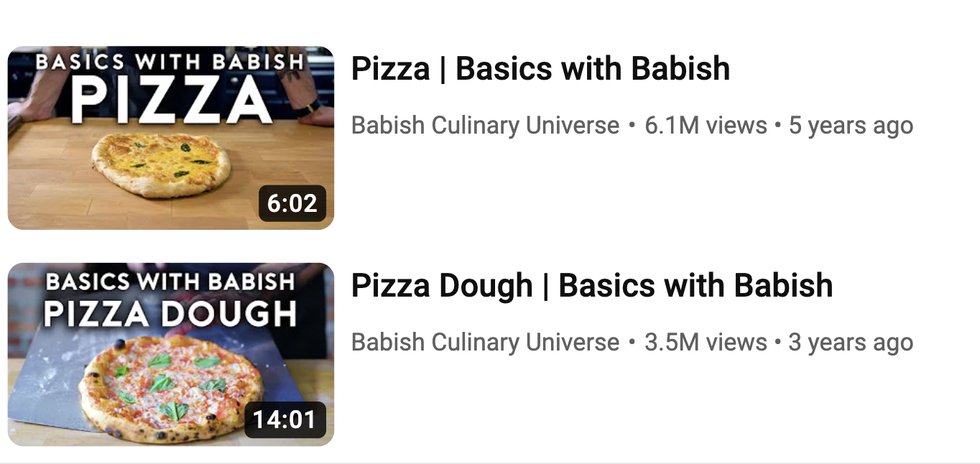
It taught me that I need to ask for a later deadline upfront. But really, making the show for years has taught me to be open and vulnerable about my process. But this really was an exercise in being open and self-effacing about what it’s like to be a YouTuber, about what it’s like to be a home cook, about what it’s like to be trying something new and not being so great at it. It’s a very intimidating process. In the introduction, I point out that I started writing the book when I saw a juxtaposition of YouTube thumbnails. When I searched for my old videos about pizza, I had just put out an episode about pizza dough, and the thumbnail was this beautiful, perfect Neapolitan-style pizza. Like, I couldn’t believe that I had made it. And then this older video that had come out five years prior was this orangy, triangular-looking thing with browned cheese and pale crust. I remember making it, and I didn’t know what I was doing at the time, and that’s how we always kind of feel about our past selves. But of course, you didn’t know what you were doing at the time you were learning. So I’m not mad at myself. I am more just excited and proud of myself to see this evolution in my cooking. If you look at the introduction, you’ll see I put those thumbnails in there so you can see the growth. It’s very easy to look at mistakes as failures, but when you see them as the many steps that took you to where you are, they can be empowering. That was a big part of the learning process in this book, was forgiving myself for mistakes of the past and seeing them not as negative experiences. I could very easily look back on that thumbnail and be embarrassed that I put out an instructional video that was so off the mark, or I could look back and see how far I’ve come since and feel a degree of excitement and pride about it.
What would be your advice to somebody who’s intimidated by trying new things in the kitchen or getting in there at all?
I guess my advice would be to start with something that you love. If lasagna is your favorite food, try some different recipes. Try mine, try others. See what clicks. What do you like about lasagna? Do you like it if there’s a ricotta base or a bechamel base? Do you like it cheesy or saucier? Do you like many thin layers of pasta or a few thick layers of pasta? There’s no right or wrong answers here. Seek out what it is that you like about your favorite thing. Try to recreate it yourself. See what works and what doesn’t. It’s so easy for someone like me to say, “Don’t be afraid to make mistakes.: But even though that’s the whole core tenet of this book, I still beat up on myself for making mistakes. Making mistakes and being tough on yourself is kind of part of the human condition, at least in my experience. It’s more of a retrospective thing. [If] the lasagna was wet when you cut into it, there was a pool of liquid in the bottom, am I gonna be terrified to make lasagna again and swear off ever trying something like that in my life? Initially, maybe. But then I will be like, Okay, why, why is there liquid? Well, there’s too much water in there. Where could the water be coming from? Maybe the sauce wasn’t cooked down well enough. Maybe I used buffalo mozzarella, which has a high moisture content, and I should be using low-moisture mozzarella, which is the best choice for lasagna, in my opinion. I think I say somewhere in the book that if you make a recipe and it doesn’t come out well and you swear off making it for the rest of your life, then it’s gonna haunt you for the rest of your life. But you can take a look at what happened and try and troubleshoot why it went wrong. And this is a way too long-winded answer to your question, but don’t be afraid of making mistakes and try making the things that you love. Try to perfect them in the way that you like them perfected, and go from there.
You’re stopping by St. Louis in a couple of weeks as part of the St. Louis Jewish Book Festival. Tell me about what people can expect from your visit.
I’ve never been to St. Louis, so I’m very excited to come and check it out. I was very excited to come to the St. Louis Jewish Book Festival. It sounds like it’s a major cornerstone of the community. What to expect when coming to my show is more of the same of what you might see on YouTube, which is a pretty honest and open discussion. My stage performances and signing events are pretty much AMAs. You can ask me anything. I will give you a rigidly honest answer, and it’s always about a conversation. Every time I’m on stage, the vast majority of the time is spent talking directly with the audience, because I love having discussions with people who love food, who like my show, who like YouTube content, who like to cook. I’m here to answer food questions. I’m here to answer personal questions. And, I’m here hopefully to bring a little bit more confidence into the kitchen for anybody on any level. You can expect an honest, open, and hopefully funny conversation about food and life and love…and Frasier.
Is there anything else you’d like to share with readers and folks who might be interested in coming to see you while you’re in town?
That’s always a tricky question because there’s so many things I want to say, and you’ve been able to tell from this short interview, I’m pretty long-winded in my responses. So I’ll try to be brief. In terms of what I do in the Babish Culinary Universe, I’m really excited that we’ve got new shows coming out. We have a hospitality concept—a vacation rental in the Catskills becoming available next year called The Bed and Babish. It’s going be a foodie retreat with an actually functioning kitchen, which I’m sure no one has ever seen in an Airbnb before. We have new shows with new people coming, and I’m going to be working on some new projects like a short film and a bigger, more expanded series for the channel. So we’ve got some big changes coming. Then, in a broader sense, and I hate to harp on the same lesson over and over again, but try to go easy on yourself for making mistakes. We all absolutely make them, especially in the age of Instagram. It might seem like everybody’s living a real perfect life except for you. And that’s not true. Everybody has their problems. Everybody is slipping up, and everybody’s just doing their best the best way they know how. Those lessons apply to the kitchen, and they apply to life. Just go easy on yourself, because the voice in your head can be kind of a jerk.