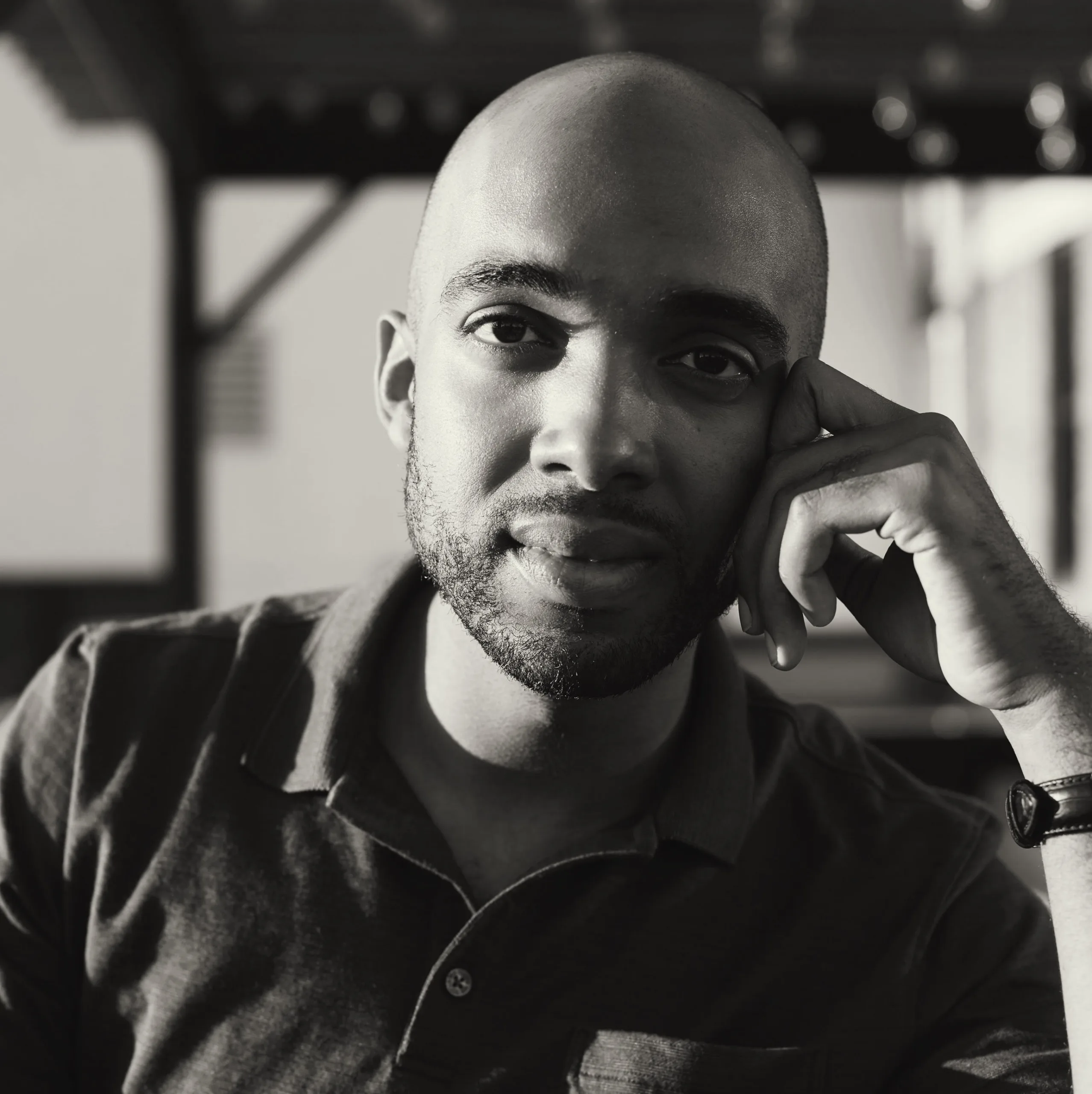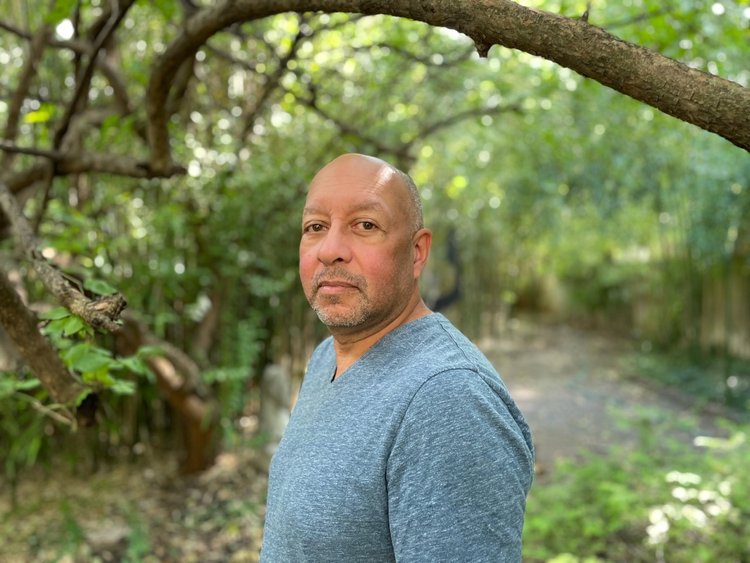
Carl Phillips, a professor of English at Washington University in St. Louis, has won the 2023 Pulitzer Prize in Poetry for his latest collection, Then The War: And Selected Poems, 2007-2020.
The Pulitzer committee praised his work as “a masterful collection that chronicles American culture as the country struggles to make sense of its politics, of life in the wake of a pandemic, and of our place in a changing global community.” One of the most prestigious awards in American literature, the Pulitzer Prize is given for a distinguished volume of original verse by an American author, published during the preceding calendar year. We spoke to Phillips following the publication of his Pulitzer Prize-winning collection to discuss his inspirations, influences, and craft.
Stay up-to-date with the local arts scene
Subscribe to the weekly St. Louis Arts+Culture newsletter to discover must-attend art exhibits, performances, festivals, and more.
When did you start writing poems?
I definitely wrote poems in high school, I know that, but probably earlier. My mother wrote poems for fun for my sisters and me; she would write a poem for our birthday or something like that. She wasn’t a trained poet; she just kind of did it for fun. So the idea of poetry was in the air. Probably high school is when I actually started thinking, I want to write poems. Not that I thought I’d ever be doing what I do now, just that it seemed like an interesting thing to do for fun.
Then I wrote in college and was on the literary magazine, but it felt a little in over my head. I stopped writing for about eight years after I graduated, for a variety of reasons that I think had everything to do with that I wasn’t ready for the subject that was going to be a big part of what my poems are about. I think it took reckoning with my queerness, coming out—at the same time as all that started to happen, I started writing, out of nowhere it seemed, very different poems from what I had written in college and high school. I sometimes tell my students that I think that’s the thing: sometimes we’re not ready for what our subject is. And so we can be writing a lot of things, but those aren’t the things we must write, or that’s not the space we must write from. It took me a long time, I think, to just figure out. I’m not the kind of person who is going to write a poem for someone’s birthday, or write about a building or something.
What has St. Louis has meant for you as a poet since you started teaching at Wash. U?
It’s a thing I’ve been thinking about a lot as I now find myself a few years from retiring. I think St. Louis has had a huge influence on me. One of the immediate things is that I lucked out getting this job that was supposed to be a visiting job at Wash. U. for three years. And now it’s been almost 30 years. It’s been a place that’s been very supportive of me, obviously. They wanted me to be on a permanent faculty. They’ve been very supportive of my work, and that makes a huge difference. When I came here, I had been a high school Latin teacher, and I thought I was going to be going back to doing that. And I loved doing that, but certainly, just at the level of time, there’s more time to do your writing as a professor here. They allow for sabbaticals and things like that.
The thing that I complained about when I first came here was the pace; I used to feel like I was living under a sea of molasses. When I first moved here, I thought, “Everyone speaks slowly, they move slowly.” It took me a while to realize that, when it’s 100 degrees all summer, of course you move slowly. I get that. But it has turned out to be perfect, because all the hecticness of a city like New York—or even Boston, where I moved from—is gone.
A lot of poets go off on literary retreats, go to MacDowell or something for a month. But I find that I can just stay here in the Central West End, in my house, in the yard, and it’s like its own workshop or retreat. There’s a kind of way in which St. Louis—I’ve noticed this for other kinds of artists, too—seems to be a great place if you want to hide and be left alone to get your work done, and I love that.
I will say, a pretty important influence for my poems was living near Forest Park, partly because I spent a lot of time in that park with my dogs. And a lot of the natural imagery in my poems comes from this urban park, actually. People will ask me, “Where’s this heron?” or “Where do you find these foxes?” It’s like: Have you been to Forest Park? You don’t have to go hunting out in the countryside.
I’ve been thinking a lot about the term “ecopoetics” as a description of a kind of aesthetic practice. When I read Then The War, I was reminded of the term, what the late C.D. Wright called “one of the most readily transformative interdisciplinary activities of human expression.” How do you reckon things like interdependence and ecological sensitivity in your work?
Sometimes terms come into being to describe things that I often feel I’ve just been doing all along. So when I think, What’s my relationship to ecopoetics? I think, I don’t know. I remember when I first heard the term I thought, What is that? Nature poems? Poetics that have to do with ecology? And then people would ask me, “Are you an ecopoetic poet?” Or they’d tell me I am.
I feel like I have a natural affinity for the natural world, and in particular, for trees and plants. In high school, I grew up in a house in the woods. So it seemed totally ordinary to me to speak to trees. And of course I know the wind doesn’t really speak, but I feel like I have some kind of communion—it’s felt like that since I was a kid—that kind of weird communion with natural things. There was a river—I don’t even know where it was because I grew up in various Air Force bases, when I was in third or fourth grade—that I would walk beside going home from school that I would sort of sing to. Part of that is just maybe being a nerdy, lonely kid, and so making the river your friend or something.
So for me, it’s just a natural thing that I do. In fact, I think it’s a way of being mindful of the natural world, which I take is what is meant by ecopoetics, partly. In which case, I guess my work falls into that, but it’s almost like it incidentally does, if that makes sense. That is not to disagree with C.D. about the importance of ecopoetics. I was thinking about this, too, because I was part of a conference on arboreal humanities. They had asked me to do it because of that essay thing in Then The War, ”Among the Trees,” and it was fascinating to talk about. But I was thinking about how a lot of what they were talking about just seemed to me to be about, “Oh, there are trees in the world; these are also citizens of the world, just like human beings are.” And to me, that seems like a very obvious thing. But I realized that maybe it’s not, because I see with my students often there’s a disconnect from the natural world, and people don’t spend time there. It’s not just because they grew up in a city. A colleague of mine is insistent that nature is an abstraction, and I feel like, how can that be, when all I have to do is go out into my yard, and I can touch this plant? That’s not an abstraction, that’s an actual thing.
In 2020, at the beginning of the pandemic, the author Yiyun Li invited people from around the world to read Tolstoy’s War and Peace together slowly, and she’s featured your contribution in her recent book, Together with Tolstoy. Could you talk about that experience?
I loved the experience! I’m not the most social person, and the idea of community I back away from very quickly. But because this all started in lockdown—I’d tried three times in my life to read War and Peace and never gotten past the first 12 pages or so—I thought, Well, what the hell, I’ll start it. And then [there was] this idea that every day we just read 10–12 pages, and everyone on Twitter kind of weighed in and said what they liked and what they thought. Or you didn’t have to: it wasn’t mandatory.
I found that I came to depend on this community and recognize certain names, certain people who would tweet something almost every day. So it would actually start to feel like I knew this person, and they were across the world somewhere. But we all were talking about the same book and having different reactions to characters or scenes. And it was a reminder that, although we were in isolation, of course we weren’t alone. But it’s hard to think that way when you just have your handful of friends you Zoom or FaceTime with. It also gave me hope that there is actually a world. I mean, it’s one thing to think that I have a community of people here in St. Louis, but to realize, Oh, this is a very tangible reminder that it’s a global community—that was exciting.
One of the most exciting things for me was learning what seems now so obvious: it never occurred to me that I can read 10–12 pages a day. I’m one who feels like you have to devour a book. It’s almost like it’s a competition against myself, and so I’ll be angry if I haven’t finished a novel in a week or something. And then I thought, Carl, who’s making you read it at that pace? I would abandon novels, because I would think, This is too much. That was the problem. War and Peace isn’t a book that you should read 100 pages of a night. But I would try to, and then I would just think, Oh, this book is too dense and it’s not for me. But it’s not meant to be, I think, taken in that way. And since then, I’ve been reading other books this way….These books that had seemed insurmountable, suddenly to realize that you can easily read almost anything if you just slow down a bit—it became a way for me to think about my life as well. Instead of rushing around and thinking each day is successful or not, depending on how long a list I can make of what I’ve accomplished, it can be OK to say, “I wrote one letter to a friend. I made some pudding.” I used to think I had to have a whole checklist. So I felt like it was an exercise in mindfulness, and I feel changed, like permanently, by the experience.
How does a poem start for you? What was the germ of the titular poem, “Then The War?”
I kind of collect pieces. So if I’m lucky, I’ll write one to two poems a month. I don’t sit down and decide to write a poem or something. I do a lot of walking with my dog each day, and I have found that during that time—and when I cook for the family here every day—during mindless tasks, peeling potatoes, things like that, those are the moments when something will just emerge into my mind. Sometimes it’s a phrase, sometimes it’s just one word, sometimes it’ll be seeing the bark of a sycamore tree or something. I’ll take a quick picture of it while I’m walking, and I’ll put all these things into a notebook I keep, and I’ll just sort of collect them. And then, at some point, about once or twice a month, I’ll sit down and think, You know, I think tonight, if I stare long enough at all these pieces that have nothing to do with each other, things are going to start to collage into something. Then it becomes a matter of, Where am I going to start? Which piece? What happens when I look at this piece next to that one? And then it just becomes—I don’t know, it’s not magic, but it but it feels like that.
I can’t write if I know what I’m writing about. I have to sort of write into strangeness, into lostness. It’s more like I’m just putting these pieces together and thinking, OK, this seems interesting. Here’s an interesting way of approaching something. And then, slowly, a storyline or argument emerges. So that poem, “Then The War,” is a good example of that. Right before I even had heard of COVID, in January of 2020, I was in Massachusetts, and I had been looking around online for an affordable house that I could retire to, knowing that I had plans of retiring a few years later. I’d found this house, and I made an appointment with the realtor, and I drove down there to look at it. While I was there, the realtor was telling me about a couple of places. He said, “Oh, there’s this great place for hiking called Hawksnest, and there are some other places.” And for some reason I was fascinated with this term, “Hawksnest.” So then I was driving back to the airport, and the opening line just came to me. I was just driving, and I just thought, They planted flowers because whatever… But it was because I was imagining; I was thinking, Could I make a life with my partner in this house? Would he like this house? I’m just driving along, listening to music, starting to envision it. I was trying to find something to write with while I’m driving down the highway, and then I thought, You know, you can speak into your phone, Carl, and dictate to yourself. So I did that, and that night, I wrote like the first half of the poem.
I don’t know where “Then The War” comes from, why I turned to that. You may know in St. Louis, there’s a paddock for police patrol horses in Forest Park. And that led to this idea of the men coming out and grooming the grounds and the horses prancing. So it’s a weird kind of thing, where half of it is something that just comes into one’s mind. And then you remember something you’ve been looking at for years, but never thought to put in a poem.
You’re often described as a lyric poet. What in your reading or background led you to write the way that you write? Did any prose stylists help you to find your poetic style? Any musicians?
Oh, I’m glad that you include musicians. Partly, I want to say it’s just the way I think. But I think a main influence was that when I was in fifth grade, my father got stationed, and so we all moved to Germany. One of the requirements in the schools there was we had to learn conversational German, which was exciting to me. I was a very nerdy kid who liked codes and languages and things. German is an inflected language, like Latin, as you know. So I think that was where I first got this—I didn’t think of it consciously, but it must be where I started—idea that, Oh, you can actually, in some languages, move words around because of their endings. I didn’t know the word syntax, but that’s what I was talking about, or realizing. And when we moved back to the states, they didn’t have German in my school, but they had Latin, which is how I ended up taking Latin and then going on to major in Greek and Latin. That’s a lot of being steeped in inflected languages, and I think that that probably had a huge impact on just the wiring of my brain.
While studying classics, I was fascinated with Cicero’s speeches, with the histories of Thucydides. At one point, I thought I was going to get a PhD in classics, and when I was going to do that, my dissertation was going to be on the ability of syntax and of sentence-making to politically manipulate the audience. I was interested in the relationship between sentences and power and control. And I think, for all my time of writing poems, that’s still what I’m most fascinated with. I think of a poem as both erotic and about power. Not manipulating the reader, more like attracting the reader, sustaining their interest for a time that I get to control, releasing them when I choose to. I think of a poem as being that. I think of each sentence as being that. For me, a sentence like “the dog walked down the street” doesn’t invite or lead me anywhere new. But as soon as it becomes something like “down the street walked a dog,” there’s suspense in some way. “Down the street.” Yeah, what happened? “Walked.” Who was walking? Then a dog. That sort of refusal to reveal the subject for a while to me is like a kind of courtship, or it’s a kind of cruising, or it’s a kind of invitation. As I tell my students, it’s like, you see someone across the room, you’ve decided you’re interested in them, how are you going to get them to come closer? And now that they’re here in front of you? What’s going to get them to stick around for a while? They don’t seem to like my way of talking about it because they want to say that love isn’t about power, and sex isn’t about power, and neither is poetry. But I think, of course, they all are.
In your poems, love is rendered as this taut fabric whose warp and weft is violence and tenderness.
I think that’s what love is. We have the power to care for people, and we have the power to harm them. We all have those powers. And so to try to make even the briefest commitment to another person involves a certain amount of trust. But to trust is to cede power to someone else, in a way. It’s to kind of say, “OK, I’m not going to always observe you every single moment; I’m just going to have to believe you’re not behind me with a hammer or something.” So there are those ways in which this vulnerability, even if it doesn’t involve violence, there’s always the potential to be hurt in some way. But there’s also great power for tenderness. And I do feel it’s a kind of dance back and forth, because there are all kinds of tendernesses and violences—most of them are emotional and psychological. It’s not like being afraid to be beaten up by a partner or something—it’s more like, will you be misunderstood? Will you be hurt in some way? And to what degree is that incidental or deliberate?
As I read your work, it reminded me of Rilke’s Sonnets to Orpheus and the Book of Hours. I find in it a really compassionate metaphysics that seems hard for a young poet to achieve.
I’ve been wondering this, too, because I read a lot of first books and I like to keep up with what young poets are writing. I often feel like I’m just very old-fashioned and just old. And so I think, Well, metaphysical poetry, that kind of thing is an old thing. So I never know.
You’re suggesting that it’s hard for a young poet to achieve, but I sometimes wonder if it’s just that young poets aren’t interested in it, and it doesn’t feel like it’s current. I hate it when people say it’s generational, but I do think that somebody who’s, say, 25, has grown up entirely in a different world from what I have. Even when I say “My students don’t know much about trees and nature”… When I grew up, when I was in the woods, I knew no one could see me. I wasn’t worried. There was no such thing as all the surveillance and drones and things like that that are happening now. So there was at least an impression of a different kind of innocence.
In the same way, even with the economy, the cost to go to Wash. U. as an undergraduate is insane. I’m not one of those people who grew up with student loans, no job opportunities, all the bleakness there is now. I actually grew up in a time where you could hope that, Oh, yeah, one day I’ll work, and I’ll buy a house, and I’ll do all the things that you’re supposed to do. But I can see how that’s not how someone feels who’s 25 right now. I just wonder sometimes…maybe there’s not the leisure, maybe it feels privileged to dwell on one’s metaphysical thoughts. I can’t do anything but be who I am, but I just wonder. To give young people credit, I just think maybe there’s a new agenda, and they’re working from very different contexts and with very different tools.