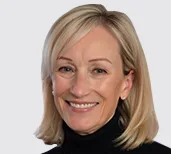
Sullivan has overseen a major expansion at Easterseals Midwest, marked by the May 2025 merger with The Center for Hearing & Speech, which she describes as “a small but mighty audiology and speech services organization that has been around for more than 100 years.” The partnership unites the center’s specialized expertise with Easterseals’ broader disability services, expanding access to early intervention, speech therapy, autism support, and workforce development across Missouri, Illinois, and Kansas. The merger also strengthens sustainability and deepens advocacy, creating new opportunities to reach even more people.
Keep up with local business news and trends
Subscribe to the St. Louis Business newsletter to get the latest insights sent to your inbox every morning.
2026 QUESTIONNAIRE
PROFESSIONAL ACCOMPLISHMENTS & OPPORTUNITIES
What has been your/your company’s most significant success over the past 12 months? In May, we merged with the Center for Hearing and Speech, a small but mighty audiology and speech services organization that has been around for more than 100 years. By combining the center’s specialized expertise in hearing and speech with Easterseals’ broad array of disability services, we are able to expand services across Missouri, Illinois, and Kansas. This partnership expands access to critical programs including early intervention, speech therapy, autism support, and workforce development. The merger strengthens our long-term sustainability, diversifies our revenues, boosts innovation, and enhances our advocacy efforts—while creating new opportunities for staff collaboration and professional growth. We plan to replicate and grow the center’s services to reach even more people in need. I couldn’t be more proud to be joining forces with such an impactful and mission-driven organization.
What has you most excited about the future of your company or industry? Technology is transforming how we support people with disabilities—at home, at work, and in the community. Tools like smart home systems, remote support teams, and adaptive security devices are now available to people with disabilities, increasing their independence and safety, while reducing service costs. As this technology advances every day, the possibilities are thrilling. I’m excited to see how self-driving cars could revolutionize mobility and freedom for people with disabilities.
If you could change one thing about your industry, what would it be and why? Progress for people with disabilities is far too slow. More than 25 years after the Americans with Disabilities Act, nearly 100,000 individuals with intellectual and developmental disabilities (IDD) still live in institutions. Only 37 percent of working-age adults with disabilities are employed—compared to 75 percent of those without—and nearly half a million people with IDD are on waitlists for services. If I could change one thing, it would be the pace of change. These are people with talents and dreams who just need a little support to thrive. We owe it to them to act faster.
What’s the toughest business challenge you’ve had to overcome? Recruiting and retaining the workforce necessary to deliver essential services to people with disabilities remains our most significant challenge. Because most of our funding comes from the state, we’ve spent years educating legislators about the need to invest in these vital workers. Thanks to sustained advocacy, we’ve been able to increase wages by 30 percent over the past four years, but we still have more work to do. Supporting this workforce is critical to ensuring quality care and continuity for the people with disabilities.
What’s a risk you took in business that didn’t pan out—but taught you something valuable? Easterseals has grown both organically and through mergers and acquisitions. While most of our M&A efforts have been successful, some opportunities didn’t work out—either because the other organization backed out or we realized it wasn’t the right fit. It’s always disappointing, especially after investing time and resources, but I’ve learned the power of saying “no.” If it’s not working, you must be willing to walk away. Every project that didn’t work out has ultimately led us to a better outcome.
What advice would you give to the next generation of St. Louis entrepreneurs or leaders? Be bold. Follow your passion—it’s the only way to achieve success and fulfillment. Be humble. And if you’re not, life will teach you humility eventually.
MENTORS & PEERS
What is a key strength of the St. Louis metro area business environment? St. Louis is an incredibly philanthropic community. I’m consistently inspired by the generosity of our business leaders and companies—even when they don’t have a personal connection to our mission. Whether through board service, corporate sponsorship, or individual donations, the support of the St. Louis business community has made a tangible difference in the lives of the people we serve.
Who is the most interesting under-the-radar/emerging business leader in St. Louis? I live in the Skinker-Debaliviere neighborhood in St. Louis City, which was hit hard by the tornado on May 16. Watching Mayor Cara Spencer lead the city through this crisis—just one month into her term—has been fascinating. I learn a lot from observing leaders during difficult times. Sometimes I’m inspired to follow their example, and sometimes I learn what to avoid. Either way, it’s valuable insight.
Who in your company (or industry) deserves more recognition for their impact? Direct support professionals (DSPs) are the unsung heroes of our field. They support individuals with intellectual and developmental disabilities in living more independent, fulfilling lives. DSPs help with daily tasks like personal care, meals, and managing appointments—but more importantly, they empower people to build skills, connect socially, and participate fully in their communities. Unless you or a loved one is directly affected by disability, you may never realize how vital DSPs are. They carry the mission of Easterseals in their hands every day.
What’s a local organization, nonprofit, or initiative that more people should know about—and why? One local organization more people should know about is Easterseals Midwest. We serve more than 10,000 children and adults with disabilities across Missouri, Illinois, and Kansas—providing vital services like autism therapies, early childhood support, employment assistance, and community living programs. Our mission is to ensure every individual has the opportunity to live, learn, work, and play as fully included members of their communities. As the need for disability services continues to grow, Easterseals remains a trusted and innovative partner helping individuals and families thrive. An important initiative we are involved in that impacts the St. Louis business community is Employment First, a movement to deliver meaningful employment, fair wages, and career advancement for people with disabilities. Employment First means that employment in the general workforce should be the first and preferred option for individuals with disabilities. When people with disabilities are included in the workforce, communities feel the economic force of fair wages spent in the local economy and the valuable lesson of witnessing the many abilities of people with disabilities. Businesses gain talented employees and people with disabilities gain employment, fair wages, benefits, and the dignity that arises from gainful employment.
BACKGROUND
Where were you born? I was born in Indianapolis Indiana. We moved to St. Louis when I was 9 years old. My parents were in their 20s with four kids. My father passed away a few years after we moved, and my mom was left to raise now five kids (ages 3 months to 12 years) on her own. She raised the kids and got a Ph.D. from Saint Louis University—the ultimate teacher in determination!
What was your first job, and what did you learn from it? My first job was working with students who had significant disabilities. I didn’t know what to expect, but I quickly fell in love with the work. It required creativity, resilience, determination, and—most importantly—an unwavering belief in the potential of every human being. Being present with people with disabilities changes you. It certainly changed me, for the better.
HOBBIES & INTERESTS
What’s your hobby/passion? I love backpacking. The physical challenge, the stillness, and the beauty of nature help me disconnect from daily worries and feel recharged. Missouri has some stunning trails, and I’ve also backpacked in Yellowstone, the Appalachian Trail, and the Arizona desert. Each trip offers something different—and unforgettable.
What is one book you think everyone should read (or podcast everyone should listen to) and why? Ours Was the Shining Future by David Leonhardt is a recent favorite. It’s a fascinating look at the evolution of the U.S. economy through a political and cultural lens. History has so much to teach us about the choices we face today.
What do you do when you’re feeling stuck or uninspired? I refocus on our mission—supporting people with disabilities, their families, and our community. That sense of purpose is incredibly grounding and usually gives me the reset I need. Also, snacks. Snacks always help.
What would people be surprised to learn about you (fun fact)? I’m a pretty open book, but some might be surprised to learn that my original career goal was to be a stay-at-home mom. While I was home quite a bit when my kids were young, the work I was doing at Easterseals was too meaningful to walk away from. I’ve found deep fulfillment in both roles.