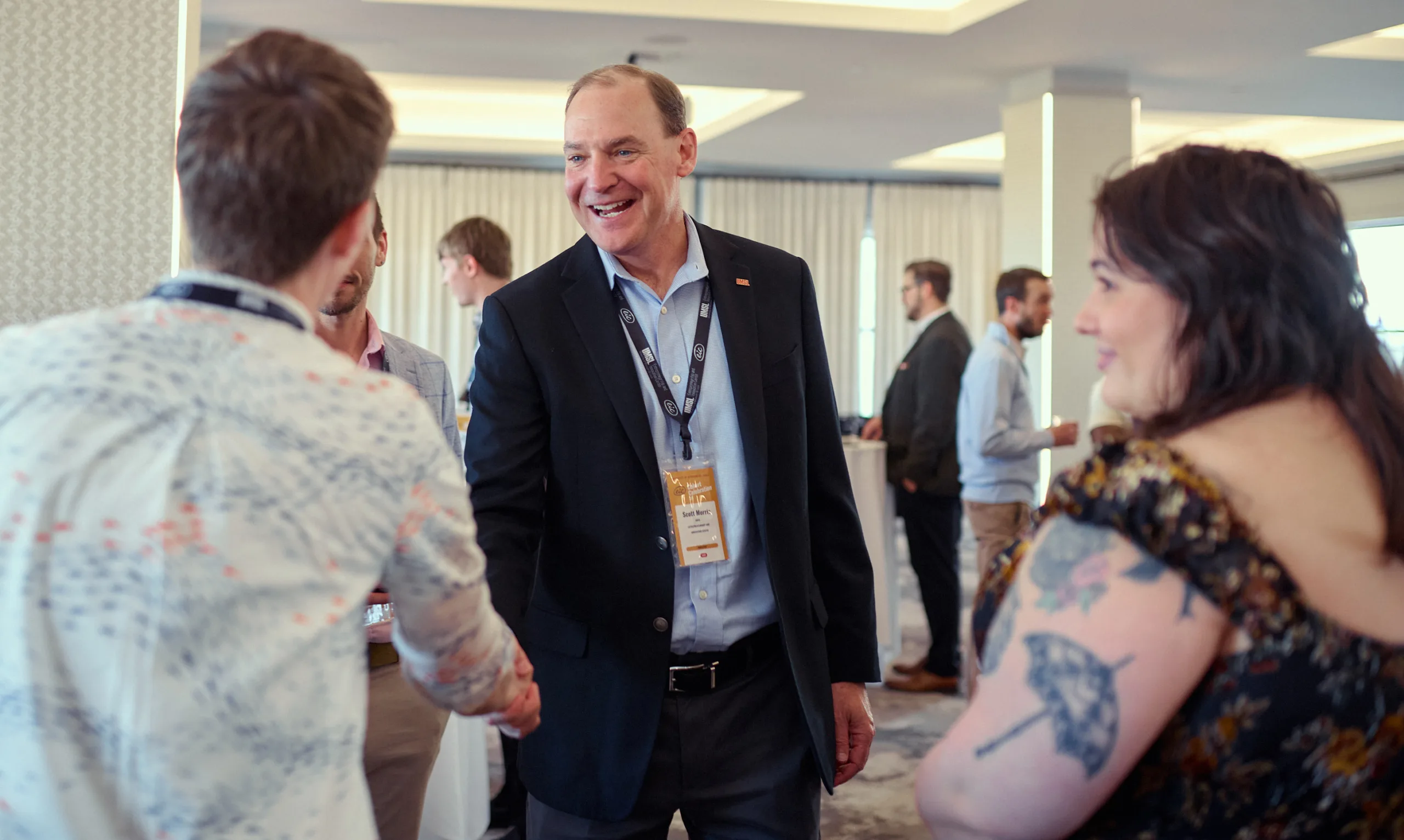
Scott Morris is intentionally picky about which companies he chooses for the University of Missouri-St. Louis’ Anchor Accelerator, the business development program he runs as the director of UMSL’s Entrepreneurship and Innovation Center.
St. Louis is awash with ventures that sustain their founders and maybe a few other people. “They’re great for the community,” Morris says, but not necessarily what he’s looking for, which are businesses poised to significantly grow their revenue and employee headcount.
Keep up with local business news and trends
Subscribe to the St. Louis Business newsletter to get the latest insights sent to your inbox every morning.
“It’s very important to us who we take into the program,” he explains.
Making the cut for the fourth cohort he’s set to oversee (the program’s seventh overall) are Tastacio, Whip It Goods, 3 Bears Granola, Switchgrass Spirits, Signarama, LW Concierge Nurse Advocates, and Eye Fashion Factory.
Since coming to UMSL from the world of private equity, Morris says he’s altered how the Anchor Accelerator selects participants. The program provides a $10,000 grant, 12 weeks of entrepreneurship programming, mentorship, and two UMSL students assigned as interns.
“We tried pitch competitions, and we found that the St. Louis ecosystem, because there are so many grant and accelerator programs, people are very effective at pitching,” he says. “It is very difficult to discern the real scalable businesses from the ones that just want another grant or the publicity or whatever it is.”
Morris instead has turned to referrals from reputable local professionals, such as bankers, lawyers, or accountants, or organizations including Cortex, T-REX, Arch Grants, the Hispanic Chamber of Commerce, Schnucks, and others that may know of a founder with a solid business ready to take the next step. The program is taking referrals for the rest of the month, before Morris and others at the Entrepreneurship and Innovation Center vet each one and narrow the possibilities down to a cohort, with an announcement likely before the end of the year.
Since adopting this change, he says the volume of applicants has dropped significantly, but not the quality. The program has supported 44 companies thus far, with the vast majority led by founders from traditionally underrepresented backgrounds; half are women-led. By industry, about one-third are tech related, one-third are food and ag related, and the rest are a mix of professional services, health and beauty, consumer packaged goods, and a small amount of manufacturing.
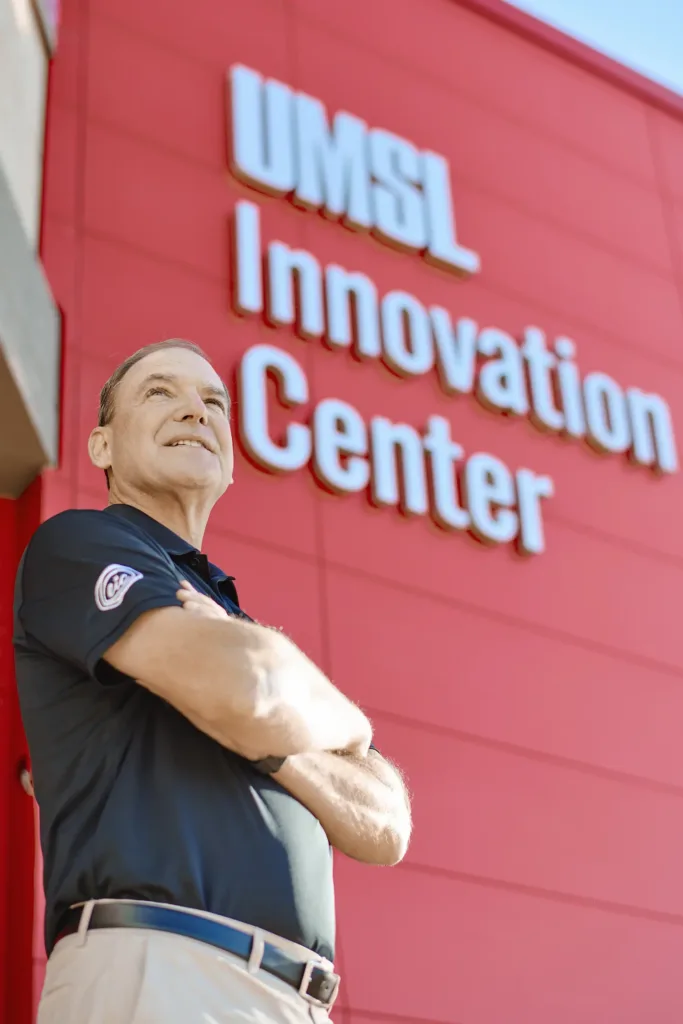
His goal is to ensure that companies that emerge from the accelerator are ready to grow, a perspective he says is informed by conversations he has with potential investors.
“One of their big complaints is ‘We see [hundreds of] pitches, and there’s one that’s interesting. So we’re seeing a lot of volume, but very little that’s investment ready or investment grade,’” Morris says.
He identifies a few culprits, such as founders not having a clear strategy to bring their product to market or not fully understanding how to be an effective executive, capable of planning operations, hiring people, and other responsibilities that come with growing a company.
The Anchor Accelerator’s programming appears to be working to better position young companies for sustainable growth. From 2023 to 2024, the fourth and fifth cohorts saw collective year-over-year increases in revenue (an average of 16 percent) and employees (an average of 12 percent). The entrepreneurship center is still collecting data on gains in more recent years.
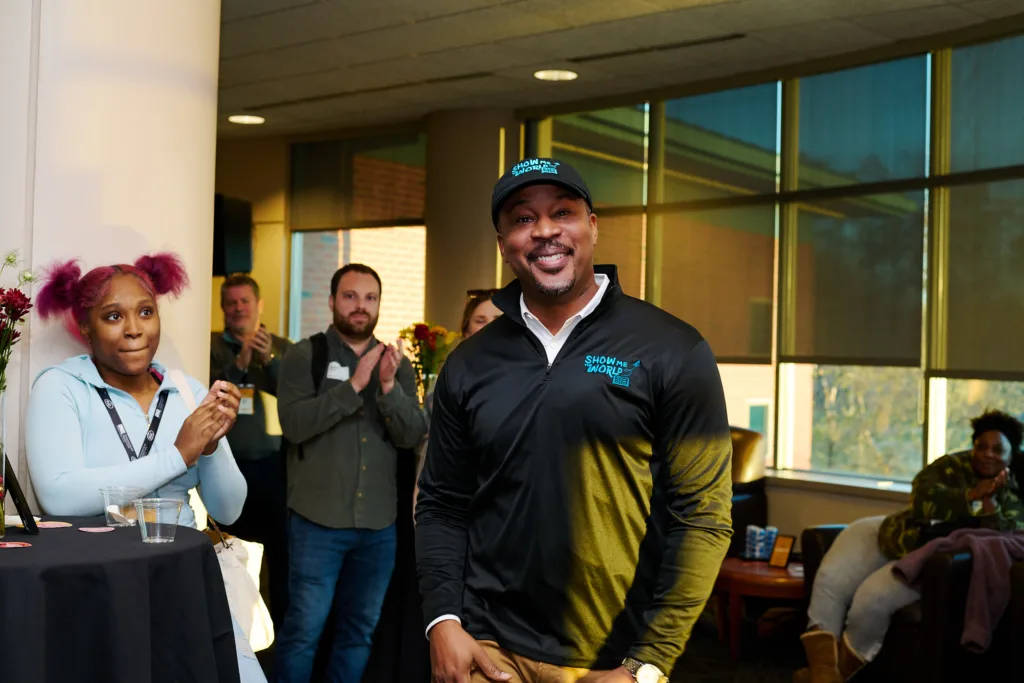
Show Me The World Project co-founder Sylvester Chisom says the accelerator helped him expand what he considered possible. His company, a nonprofit, uses the proceeds from the coffee it sells to fund international trips for students from under-resourced communities.
“The UMSL Accelerator unlocked the belief system to think bigger, that you are the person that’s going to create a company that’s going to hire folks here, that’s going to make a big impact,” he says. “Also the structure, the infrastructure, the systems that are going to be required to scale into those opportunities, to be prepared for those opportunities.”
Since being a part of UMSL’s Anchor Accelerator, Show Me The World managed to land a major contract supplying coffee in St. Louis Lambert International Airport, which amounts to moving thousands of pounds of coffee a month, Chisom explains.
“To even mentally believe that our organization is the one to have an opportunity like that, and compete for it,” he says. “And also have the structure, management systems, processes, supply chain, making sure all those boxes are checked.”
Now, Show Me The World is keen on building a digital platform where other nonprofits can use the brand’s coffee for their own fundraising goals.
Other founders credit the Anchor Accelerator and Morris specifically with helping to accelerate their company’s growth.
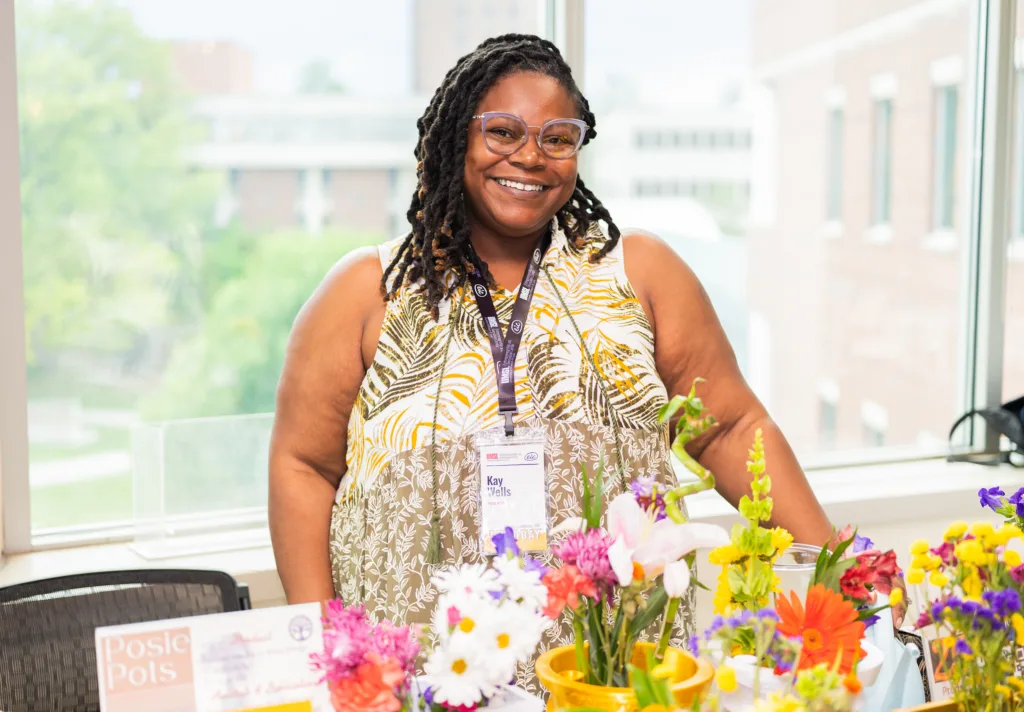
Posie Pots founder Kay Wells was in one of the cohorts before Morris led the program and says it was instrumental in helping her gain more traction for her self-watering planters, including an appearance on ABC’s Good Morning America. She stayed connected with the university’s Entrepreneurship and Innovation Center, and says Morris was especially helpful securing a deal to have Walmart carry her products.
“They’re like, ‘OK, but we need to see your numbers.’ So they gave us a preliminary deal the first time I went,” Wells says. “I circled back around and go, ‘Scott, I’m going to go back in again, I’m going to show my numbers, but what do I need to do to get in front of buyers and for them to give me a gold ticket?’”
She explains Morris connected her with people who could advise her on how to land a deal, including tips on strong branding, packaging, and presentation.
“Just people that he knows from just being in the entrepreneur space and working with Walmart and knowing what that looks like, and just introducing me to that whole Bentonville world,” Wells explains. “I am bad at marketing. I’m an engineer.”
Posie Pots is now valued at $6.6 million, clearing $300,000 a year in annual revenue, and growing around 50 percent year over year, she says. The products are already on Walmart’s website and next spring will be sold in 100 stores in a deal Wells says is worth north of $1 million.
For Habitat Financial co-founder and CEO Calvin Windschitl, who participated in last year’s cohort, the Anchor Accelerator provided a “really easy glide path to make our first hire” for the company, whose products help music businesses manage royalty and data processing for what they owe.
“We entered the program in a time where we were scaling, we were generating more revenue, we were about ready to make that first hire and the next step, and I think it really gave me the confidence that we really could do that,” he says.
And their hire, Sonya Yereshchenko, was the UMSL student who had been assigned to work with Habitat Financial during the cohort.
“She had taken a microscope to the business during this accelerator program,” Windschitl says.
It was a good fit for Yereshchenko, who now coordinates business operations for Habitat Financial, as well. The piano, accordion, and guitar player was curious about the music industry and curious to learn from Windschitl, who also had experience running an independent music label he also founded.
“It was just like infinite access to all of this information on a firsthand account, not just from an artist side, but from the business side [too],” Yereshchenko says. “During the program, I also got a feeling of what it would be like to work under him.”
In addition to helping make the right hires (the company has brought on a second employee), the Anchor Accelerator was essential to refining the company’s core offerings, Windschitl says. Its “brutally honest look at the business” has now yielded robust revenue growth, which he says was 600 percent over the last year.
“We raised our prices pretty significantly after the accelerator program last summer,” Windschitl says. “It was really scary. When we launched Habitat, we were going to try to have a kind of ‘freemium’ tier where we were going to monetize payments, and we thought it was all very cool and sexy, and would be a big driver… and it just didn’t really ever turn out that way.”
The pivot to fewer, larger clients, offering managed services, and opening up the application programming interface for others to build on top of their product has yielded much more value, he says.
“I was really sick of trying to get $100 each month here and there. It’s much more fun to get $500, $800, $1,000 per month for a SaaS product,” Windschitl says.
To Monique Levy, founder and CEO of Levy Consulting Co., as well as a mentor for companies in the Anchor Accelerator, this type of willingness to take feedback and make uncomfortable decisions is critical for participants.
“We’ve not had success with people who get scared of achieving goals or people who don’t think big enough,” she says. “So this is definitely for the person who wants to be successful and knows that it’s going to take some time, but also that they are the person who’s got to do it.”
As a mentor, Levy says she consistently pushes founders to consider how their business will continue to function and grow if they’re not around.
“How does this run without you? Who are you delegating to? Are you in the job, working it? Are you being a leader? Are you stepping as a CEO and actually pushing the work forward, doing the strategy work?” she says are the questions she is regularly asking.
For Morris, this is the “secret sauce” of the Anchor Accelerator: mentors who can counsel, guide, and make connections for the founders that participate in each cohort. “It’s that relationship that can really kind of open doors to other networking,” he says.
Ultimately, Morris wants the Anchor Accelerator to be a bridge for companies on the precipice of growth to convert into entities that are ready for bigger investments from local and statewide organizations, such as the Arch Angels or Missouri Technology Corporation.
“We’re literally trying to connect the pieces of the ecosystem together so that we function together instead of in splendid isolation,” he says.
Editor’s Note: This story has been updated to include the list of companies in the latest UMSL Accelerator Cohort.