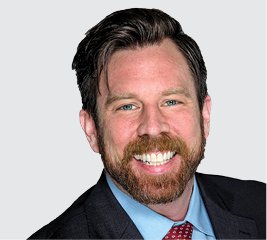
A sixth-generation St. Louisan, Peter Hoffman started in 2018 as a single attorney helping neighborhoods use the court system to fix abandoned properties and put them back on the market. He now works with five other lawyers, two support staff, and many volunteers who have helped put more than 400 units back on the market and, in the case of another 400, intervened before they became vacant. This has generated approximately $20 million in new investment wealth preservation in the city. Hear more from Hoffman on The 314 Podcast.
PROFESSIONAL ACCOMPLISHMENTS & OPPORTUNITIES
What has been your or your company’s most significant success over the last 12 months? In typical millennial fashion, I have a lot of tabs open. The same goes for our Neighborhood Advocacy project at Legal Services. Over the last six months, through a partnership with the Home Repair Network, we’ve served more homeowners in drawing beneficiary (transfer-on-death) deeds than we did all last year. As a result, those families will be able to cleanly transfer their most significant asset – their home – to their loved ones when they pass away. This brings peace of mind to our clients and strengthens the community by reducing abandoned properties, which in turn lowers crime rates and increases neighborhood stability. I’m also incredibly proud of our work with the City of St. Louis and the neighborhoods around the NGA-site to put safeguards in place to keep housing affordable for long-term residents there, while also giving the City the tools it needs to address the land speculation and blight through a limited use of eminent domain.
What has you most excited about the future of your company or industry? This year Neighborhood Advocacy played a key role in an effort that allows places like St. Louis County to establish a land bank agency to more effectively repurpose vacant properties. Collaborative efforts like this have so much potential to transform our region and benefit our communities that have long suffered from disinvestment. Because of our success with initiatives like land banking, St. Louis was selected as the host city for the Center for Community Progress’ Reclaiming Vacant Property conference in October. This is a huge accomplishment and will bring in hundreds of experts in the field to St. Louis, to collaborate with our local practitioners, showcase our community development successes, and develop new ideas that we can implement here. It’s refreshing that people from all walks of life and of all political stripes continue to come together to work on these issues and we are thrilled that our work and St. Louis will be getting national attention.
If you could change one thing about your industry, what would it be and why? I wish more people across the region recognized how important it is to invest in our urban core. Every day I am blessed to see the best of what St. Louis has to offer: residents and neighborhood leaders work together with City departments, business leaders, and elected officials to improve their neighborhoods. Great things are happening every day, but it’s challenging to maintain that momentum when it’s not a shared priority for the entire region. Connecting with one another takes effort. It means pushing ourselves outside of our comfort zone, showing up, and volunteering. So many people here have family history in the City and there are lots of opportunities to re-connect with those roots. Investment takes many forms – whether you have financial resources or just time to give. By volunteering to plant flowers or clean up an alley, you can build positive connections with new people and make a positive impact. Not only does it feel great, but it’s also about doing your part to make our city a better place!
What’s the toughest business challenge you’ve had to overcome (excluding the pandemic) and why? Missourians are skeptics by nature. It’s the Show-Me-State, right? Legal Services started Neighborhood Advocacy in 2018 to help City neighborhoods hold absentee property owners accountable in court. That first year we heard every possible reason why we wouldn’t be successful: “This won’t work here. Nobody wants to rehab those properties. Our neighborhood associations aren’t strong enough.” Initially, only a few neighborhoods were willing to serve as clients. Despite facing so many historic wrongs, these neighborhoods were still open to seek justice through the court system. Together we have proven that we can be successful. As of today, we’ve helped neighborhoods across the City return 416 units of formerly vacant housing to the market through legal action. It makes me wonder why the rest of our region can’t be more optimistic about the future. We have to keep trying new approaches to solve our region’s problems.
Keep up with local business news and trends
Subscribe to the St. Louis Business newsletter to get the latest insights sent to your inbox every morning.
MENTORS & PEERS
To whom or where do you go for sound business advice? My legal services colleagues are some of the smartest and most creative people I know. We do a lot of problem solving together. Our clients are also an endless supply of wisdom. I may be the one providing the service, but I learn just as much from them as they do from me, I’m sure. My partner is also has a magical ability to help me re-frame things that I’ve been wrestling with throughout the end of the day.
Do you have a business mentor? If so, who and why? I wouldn’t be doing the work that I do today without Michael Duffy, the recently retired Managing Attorney for Legal Aid of Western Missouri’s Economic Development Unit. In so many ways I’m just singing from the sheet music he drew up. I spent eight years in Kansas City working under him and the lessons he taught me I’ll carry with me the rest of my career. He taught me that community lawyering is so much bigger than handling cases. Law can have an enormous impact on people’s lives. We should be striving to use the practice of law as a tool for enhancing fairness and equality, and improving the overall quality of people’s day-to-day lives.
What piece of advice has had the most significant impact on your career? The other piece of advice came from Tom Schlafly, the then-owner of Schlafly Beer, where I worked before becoming a lawyer. He wrote my letter of recommendation for law school. In it he talked about the practice of law being a customer service job. I had no idea at the time how right he was. People come to lawyers because they’re facing some type of crisis. Not only do you need to be able to help them navigate the legal solutions to that crisis, but how you help them navigate the crisis is equally important ‚Äì how do you ask them questions, your pacing, your tone of voice, etc. When I talk to law students now, this is always something I emphasize with them: this is a people profession.
If you could have dinner with any two area business leaders, who would you choose and why? As someone in the nonprofit space, I am always inspired by the work being done by Chris Krehmeyer at Beyond Housing and Michael P. McMillan at the Urban League. Both organizations go beyond providing services. Those organizations empower the communities they serve. In my opinion, that’s how we’re going to bring the meaningful and lasting change our region needs.
Who is the most interesting under-the-radar/emerging business leader in St. Louis and why? There are so many talented and inspiring people in our City that don’t get enough attention, I could go on forever. Whenever I talk with Kaveh Razani and hear about the work he does with the St. Louis Arts Place Initiative, I leave the conversation reinvigorated about community development and where we’re going as a city. Kelly McGown with Transform 314 is another visionary in the community development space. She has an uncanny ability to turn mundane civic issues like street infrastructure into something interesting that people want to engage with. Getting people informed and engaged with local government is no easy task, but it’s critically important to make sure our systems are being inclusive of all voices and perspectives.
What is one thing you would change about the St. Louis metro area business environment and why? We have to find more ways to unify the region and create more positivity and optimism. I know I’m being pollyannaish, but I think we need to renew conversations around a reunified regional government. I spent almost a decade in Kansas City. The pace of transformation there over that time was eye-opening. Border war aside, the region seems much more unified. You hear so much less divisiveness and negativity there. We’ve got to find ways to get people excited about the region again. We have to get out of our silos to do that.
BACKGROUND
Where were you born? Just a few miles from where those two big rivers meet.
What was your childhood aspiration? I wanted to be a firefighter when I was younger. My mom was a nurse growing up, so I suppose I’ve always been drawn to the helping professions. While I’m not running into burning buildings, I’m certainly putting out all kinds of proverbial fires these days. 🙂
What was your first job, and what did you learn from it? Most of my earliest jobs were in the service industry. Those jobs taught me a ton, especially how to communicate with the public. Those jobs also taught me the importance of mutual respect and teamwork.
What educational degrees do you hold, and where were they earned? I received a master’s in public administration and a law degree from the University of Missouri at Kansas City. Go Roos!
HOBBIES & INTERESTS
If you were not in your current profession, what would you be doing and why? This is hard because I feel like legal aid is my calling. During the pandemic, like so many others, I got really into gardening. I’d love to have more time to play in the dirt.
What is your favorite St. Louis-area restaurant, and what do you typically order there? I love Lona’s Lil Eats. Spicy tofu wrap please!
What is one item you recently crossed off your bucket list? It’s not quite crossed off, but I’ve been to 32 major league baseball stadiums with just two left! Hoping to have seen them all by this coming spring!
What is one book you think everyone should read (or podcast everyone should listen to) and why? I have to pick just one? I think anyone trying to understand the dysfunction that is St. Louis politics should read The Triumph of Tradition by Lana Stein
What’s your hobby/passion? Work is my passion. As for hobbies, I love a ton of things I’m not very good at – I like to run and play guitar. I’m really in to yard work and lawn care. I think lawns get a bad rap.
What is your most prized possession? I have a 1964 Zenith record player that I had restored a few years ago. I love that thing.
What would people be surprised to learn about you—a fun fact? I once played in a band that got a song on Beverly Hills 90210.
What is your go-to karaoke song? “Changes” by David Bowie.
Hear more from Hoffman on The 314 Podcast.