In recent years, a federal program designed to help farmers sell more of their products while feeding the locals who needed help gave small operations like Marcoot Jersey Creamery in Greenville, Illinois the guaranteed sales to grow their staff and their herd of milk cows. But this spring, the program was abruptly halted.
Marcoot Jersey Creamery learned in March 2024 that they could sell their cheese through the program, called Local Food Purchase Assistance Plus Grants. The second round of the LFPA Grants from the U.S. Department of Agriculture allowed community partnerships to purchase food at market prices from local farmers for low-access food areas. Those partnerships included food banks, non-profits, and church outreach programs. The long-term security they offered was vital and farmers staffed up.
Keep up with local business news and trends
Subscribe to the St. Louis Business newsletter to get the latest insights sent to your inbox every morning.
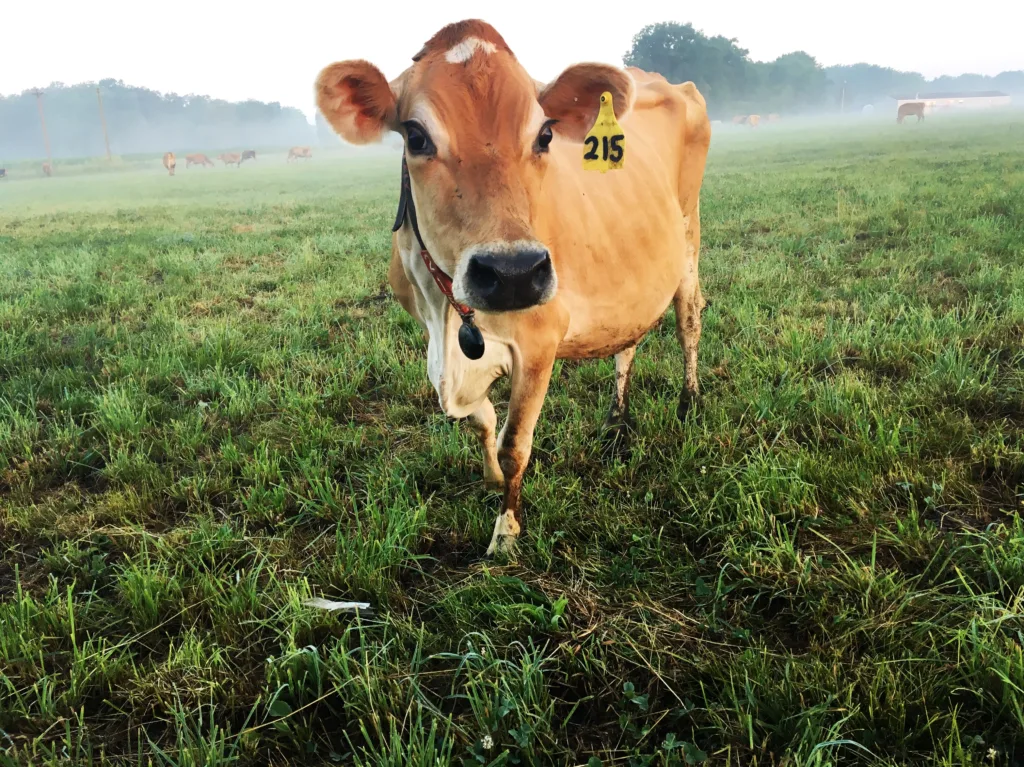
“From birth to that heifer calf—that female to have her own calf [and thus begin producing milk]—is two years,” says Beth Marcoot, co-owner of Marcoot Jersey Creamery.
To date, Marcoot has sold 70,000 units of cheese to community partners receiving the grant funds.
“That’s a really big impact for us as a business to be able to supply jobs, but it’s also a huge honor to know that food is going into hands and families and bellies that are getting good nutritious food,” Marcoot says.
Recently, however, the program has been whipsawed by changing winds in Washington. In February, the Agriculture Department announced that reimbursements for LFPA Plus were paused and LFPA-FY25, the extension announced last fall by then-Secretary Tom Vilsack that was set to run through 2028, had been canceled. While the remaining funding for LFPA Plus did resume at the end of March and will finish its cycle in June, the majority of the purchases that farms were relying on are gone. Renewal LFPA FY-25 remains canceled mere months before its July start. It was set to bring increased funding, include more farms and run for two-plus years.
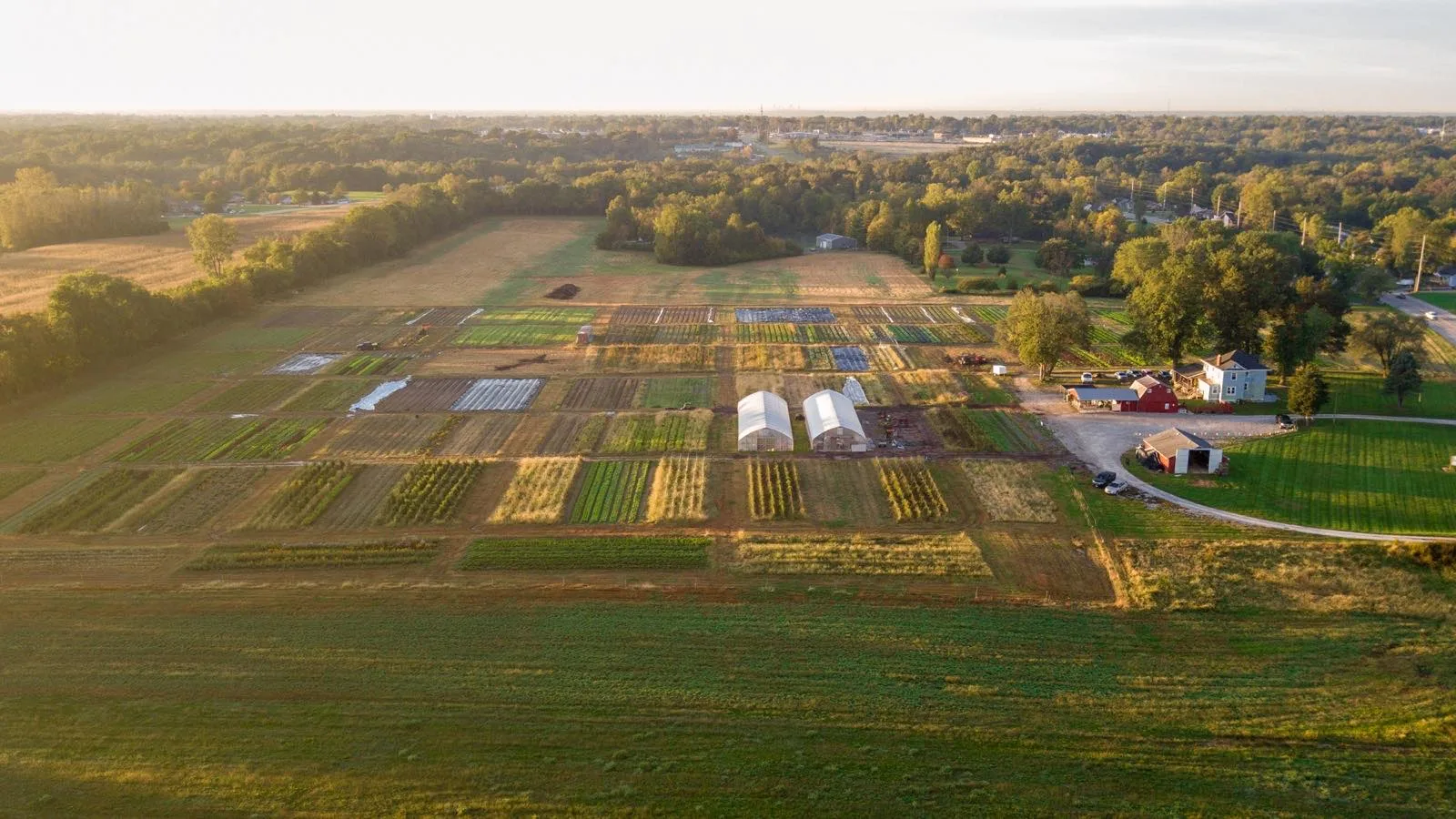
“We already started a significant number of plants in the greenhouse to grow specifically for LFPA,” says Jeff Adams, farm manager at Theodora Farms in Godfrey, Illinois. “It was just this massive shock wave through my head as the farm manager, having spent all winter making plans, and labor time and seed costs and fertilizer, for a season where our primary production model just went up in smoke.”
Now, farmers and producers like Theodora Farms, Marcoot Jersey Creamery, and scores of others around the region are trying to plan their paths forward.
In mid-2023 Theodora Farms started providing organic vegetables purchased with LFPA funds for grocery share boxes that were distributed throughout Missouri. Then, last July, the program was expanded, allowing the farm to work directly with food pantries in the Alton area distributing enough produce for 200 households a week.
“It was incredible,” Adams says. “It really meant a lot to our staff to know that they were supporting food insecurity, especially child nutrition, directly in our community.”
With each renewal, the federal programs were able to reach more farms in the area. This round was set to include Hale Family Farms in Farmington, Missouri.
“Everyone was on board and trying to leverage the funding [of several federal programs] for more small farms,” says Tami Hale of Hale Family Farms. “We put our distributor in touch with Known and Grown [a St. Louis-area farm network] and he was interested in buying from as many of the farmers as possible.”
Now, such partnerships are up in the air as local farmers scramble to account for the lack of funding. Figuring out how to pivot isn’t simple. The abrupt pause of the program left places like Marcoot Jersey Creamery scrambling to account for orders they were counting on. The LFPA orders made up nearly 50 percent of Marcoot’s sales.
“It happened so quickly it caught us off guard. We were devastated,” Marcoot says. “Our team had already been cutting and packaging that cheese we had made in November, December so it could age out. It’s not possible to un-package it.”
They decided to turn to the community for help and launched an initiative called Choose Cheese and Kindness, asking people to donate $5 for one block of donated cheese. “It has been amazing the response and how kind so many people are,” Marcoot says.
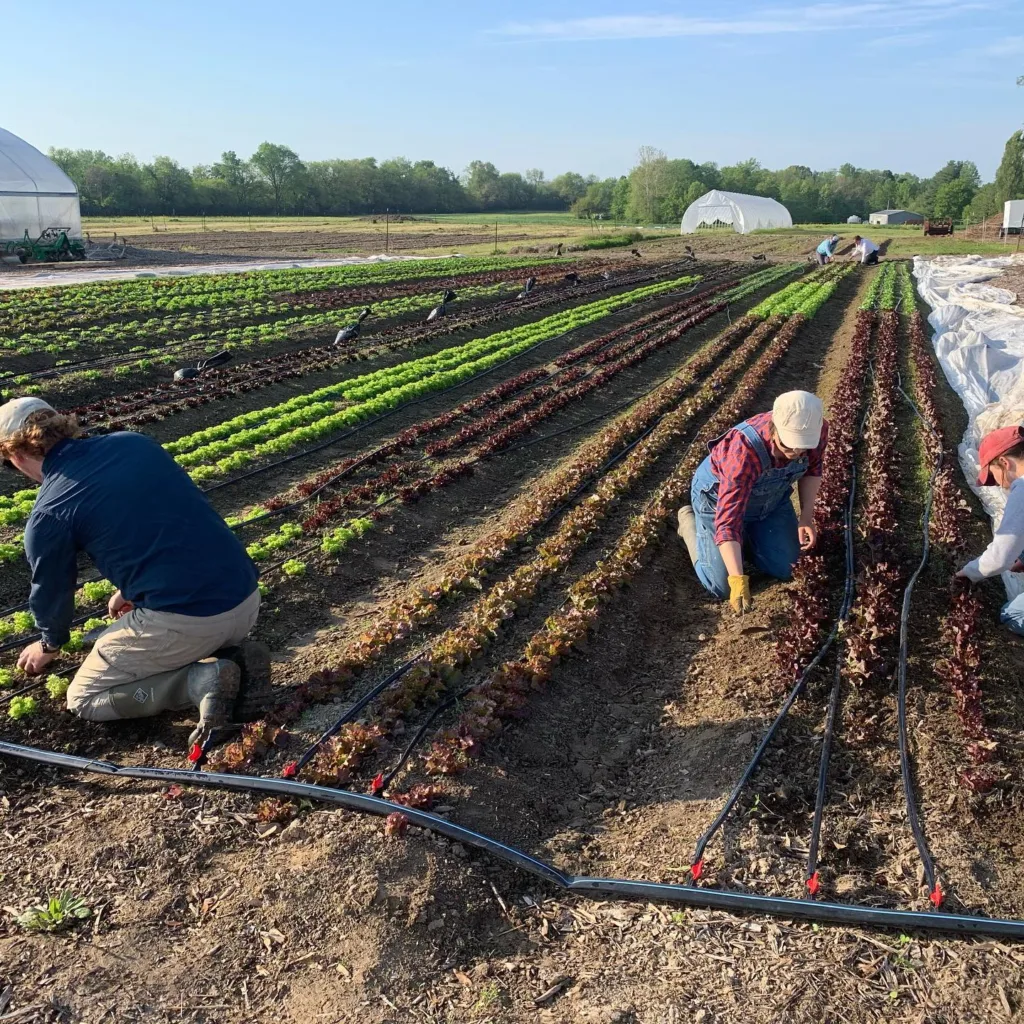
Meanwhile, Theodora Farms is restarting its Community Supported Agriculture subscription service with the promise that for every CSA share sold, the farm will donate an equivalent share to a crisis food center in the Alton area. In the first five days it sold 20 percent of the shares and is currently approaching 30 percent. The CSA shares, however, will not cover the whole of Theodora Farms budget shortfall, so they are also seeking additional distributors.
Hale—who started her family farming business with her husband in 2019, but still hasn’t broken even—expects to produce approximately 20,000 pounds of food this year but now will have to sell her produce throughout a wider geographic footprint than originally planned.
“I would like to be able to have my produce feed my community, which is highly food insecure,” Hale says. “When the federal funding goes away, the recipients of that federal funding no longer have the budgets to pay a living wage to local farmers to get their local produce to provide to local kids.”
For Amanda Berry, food security policy manager for Empower Missouri, the loss of federal funding goes well beyond LFPA. In addition to the LFPA cuts, farmers are seeing cuts to several programs, including one for selling their produce to local schools.
“LFS—Local Food for Schools—is over $13 million that we’re losing, and that food goes directly to local schools and children, and it is being purchased from local Missouri farmers,” Berry says. “So LFS is more than double the LFPA program and both combined are being taken away from local farmers.”
To survive, small farmers are appealing to the community.
“If people are looking for ways to feel comfort or stability in their lives right now, getting involved with their local farm, going to their farmers market, purchasing a CSA Share, or going to a you-pick at a local farm, are really good outlets for—not only self-care and mental health—but also to keep the local economy strong when things are on rocky footprints,” Adams says.
Because, if not, says Adams: “Those people might not exist forever.”