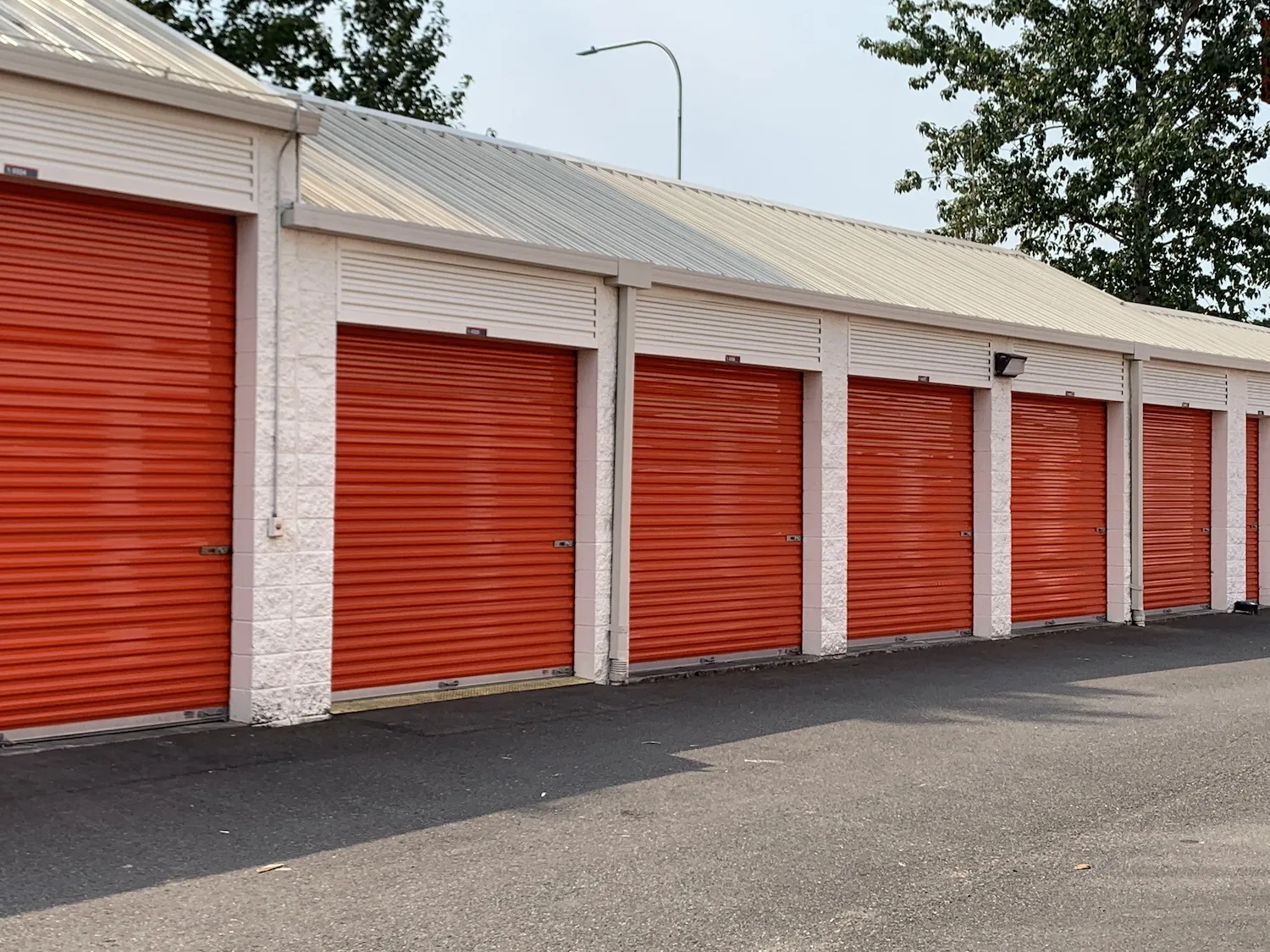
Move aside data centers and make room for self-storage, as it takes its place as a desirable real estate asset, according to the 2026 Urban Land Institute’s Emerging Trends in Real Estate report. While not grabbing as many headlines as data centers, the demand for self-storage has steadily grown in recent years as more U.S. households are choosing to rent space for their extra stuff.
Between 2022 and 2024, the share of households renting at least one storage unit grew from 11.1 percent to 13.4 percent, the largest step up the Self-Storage Association has noted in its recurring study, per ULI’s report. And more than 400 million square feet have been completed since 2020.
Keep up with local business news and trends
Subscribe to the St. Louis Business newsletter to get the latest insights sent to your inbox every morning.
In St. Louis, some 1.7 million square feet of the market’s total of nearly 4.6 million are from converted industrial properties, per a recent report from StorageCafe.
“The pandemic was huge,” Keeley Properties president Jason Braidwood explained at a local ULI event focusing on the year’s real estate trends. In the five years since Keeley has gotten into the self-storage space, the usage rate has gone up at least three percentage points.
“Good news for me, millennials are the number one user,” he said. “I didn’t think that was the case when we got into it, but they’re accustomed to using the asset.”
So what’s behind the uptick in people paying to store their extra stuff? ULI’s report points to the current housing market as one culprit.
“Elevated home prices and mortgage rates are keeping many households—notably homeowners with built-up equity—from changing their living situation,” the authors note. “The inability to obtain a larger home with a basement, garage, barn, or other free space may be creating demand for off-site storage.”
Braidwood concurs. “One thing to keep in mind is that it’s really not a real estate play,” he explained. “I mean, yes, it takes up ground, but it’s a retail industry. It is a service. And you know, in terms of affordability, storing stuff in a garage somewhere is cheaper than another bedroom.”
Braidwood also points to the trend of people moving to the South, where basements are less plentiful, as well as the aging, and passing, of the Baby Boom generation.
“We’re just starting to experience the biggest wealth transfer in the history of our country from Baby Boomers down, and you got to put that stuff somewhere. And we’re not good at throwing stuff out,” he said.
His firm predicts the share of households using such facilities could hit 15 to 20 percent within a decade.
The ULI report finds more people are looking for bigger storage spaces, even depicting a new type of self-storage space: the “storage-industrial-flex condo.” It’s a mouthful, but boils down to larger units, equipped with electrical and water hookups that allow for the installation of bathrooms, kitchenettes, or entertainment areas, or space that’s good for businesses needing “modest industrial space,” including landscapers, caterers or heating and ventilation companies.
Other highlighted trends
Thursday’s discussion of this year’s real estate trends included a lot more than the self-storage industry. PwC partner Lou DeFalco described the overarching theme of this year’s trends for those in the commercial real estate space as “navigating the fog.”
“It’s like driving in thick fog: If you go too fast, you might run off the road, but if you go too slow, you might get hit from behind by somebody. And so that’s a lot of the sentiment that we’re hearing as we think about this year,” he said.
DeFalco explained a growing disconnect between corporate profits, which have remained steady, and feelings about the future, where optimism dropped. He said uncertainty also weighs on outlooks, driven by sticky inflation, higher interest rates than before (though there are expectations they’ll continue to fall), and tariffs.
Demographics came up too as a limit to future economic growth, and how the U.S. is slowly edging toward a tipping point, illustrated by the number of people turning 65 overtaking the number of people turning 20.
“We’ve got less people entering and we have more older people who are living longer that we’re going to need to take care of,” Defalco said. “And so this is a pretty concerning thing.”
Add to that decreased immigration to the U.S., and the labor force availability begins to flash as a challenge.
Other panelists suggested St. Louis is a place on the leading edge of those potential consequences. Natasha Das, vice president at the real estate development and investment firm CRG, noted the imperative for regional collaboration in the face of these challenges, when too often St. Louis communities act in fractured ways.
“To outsiders, which is what we need to grow, we are the St. Louis MSA, and downtown is the face of that,” she said. “We need to make sure that instead of focusing on just thinking locally on a ZIP code basis, we’re figuring out the best ways to come up with a strategy for regional growth to ensure that there is continued momentum.”
Braidwood added that firms are following where the people are going. “And at this point it’s South and when it’s not South, it’s those urban areas that are dynamic,” placing a greater importance on determining a clear value proposition for the region.
There was some optimism in how to drive that, though, as Explore St. Louis’ chief commercial office Ed Skapinok shared. The region’s tourism offerings can and should give way to relocations.
“If you think about it, nobody’s ever relocated a business someplace they haven’t visited, and generally it’s an event or some other reason that brings them to that area,” he said. “We’re seeing the green shoots right now of bringing those types of industry events here.”
Skapinok noted that the Gateway South district centered on innovation for the construction industry, once open, can be a driving force as well.
“As we bring these associations and those types of attendees here, those are going to be the seedlings to get businesses to relocate here,” he said.