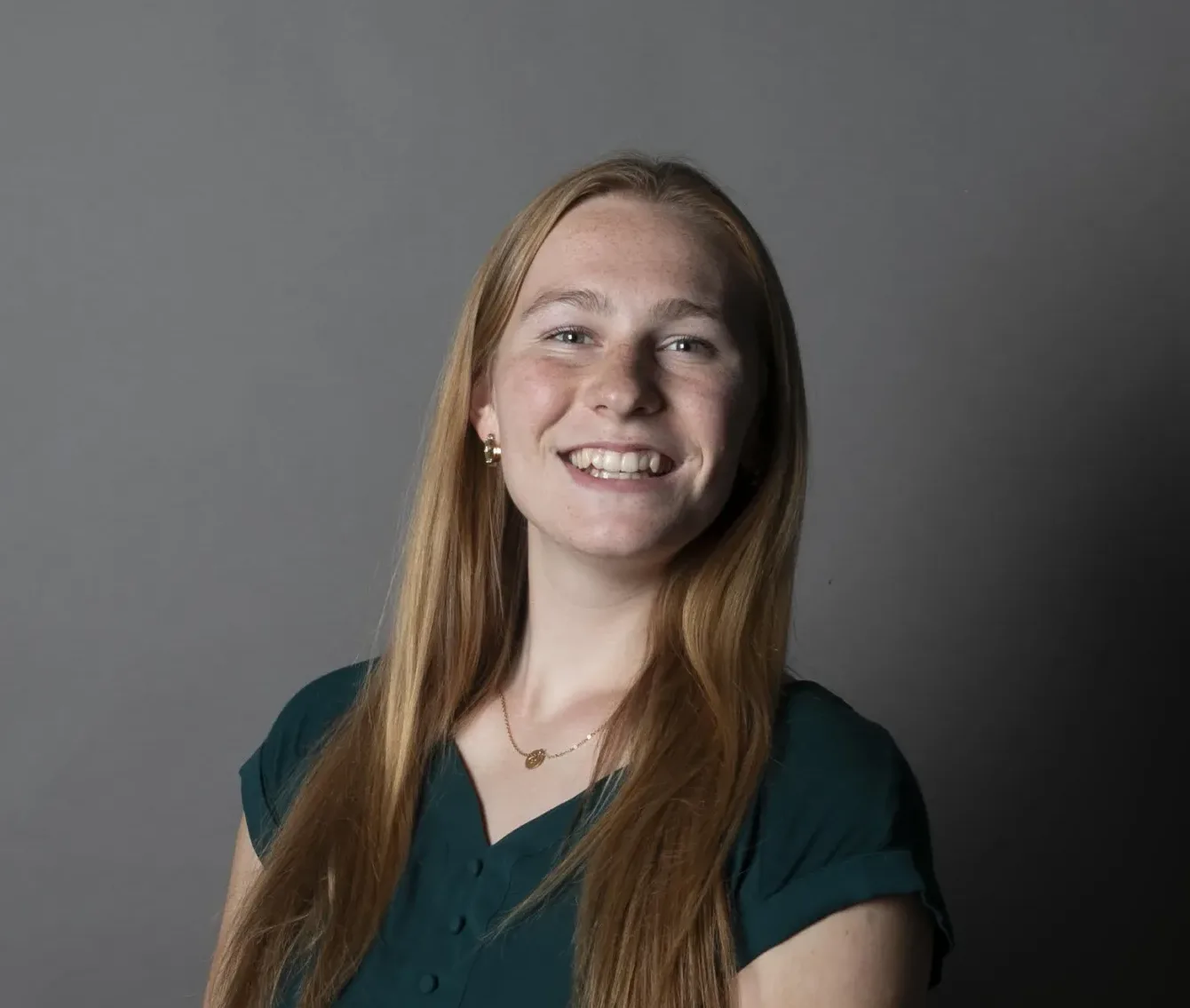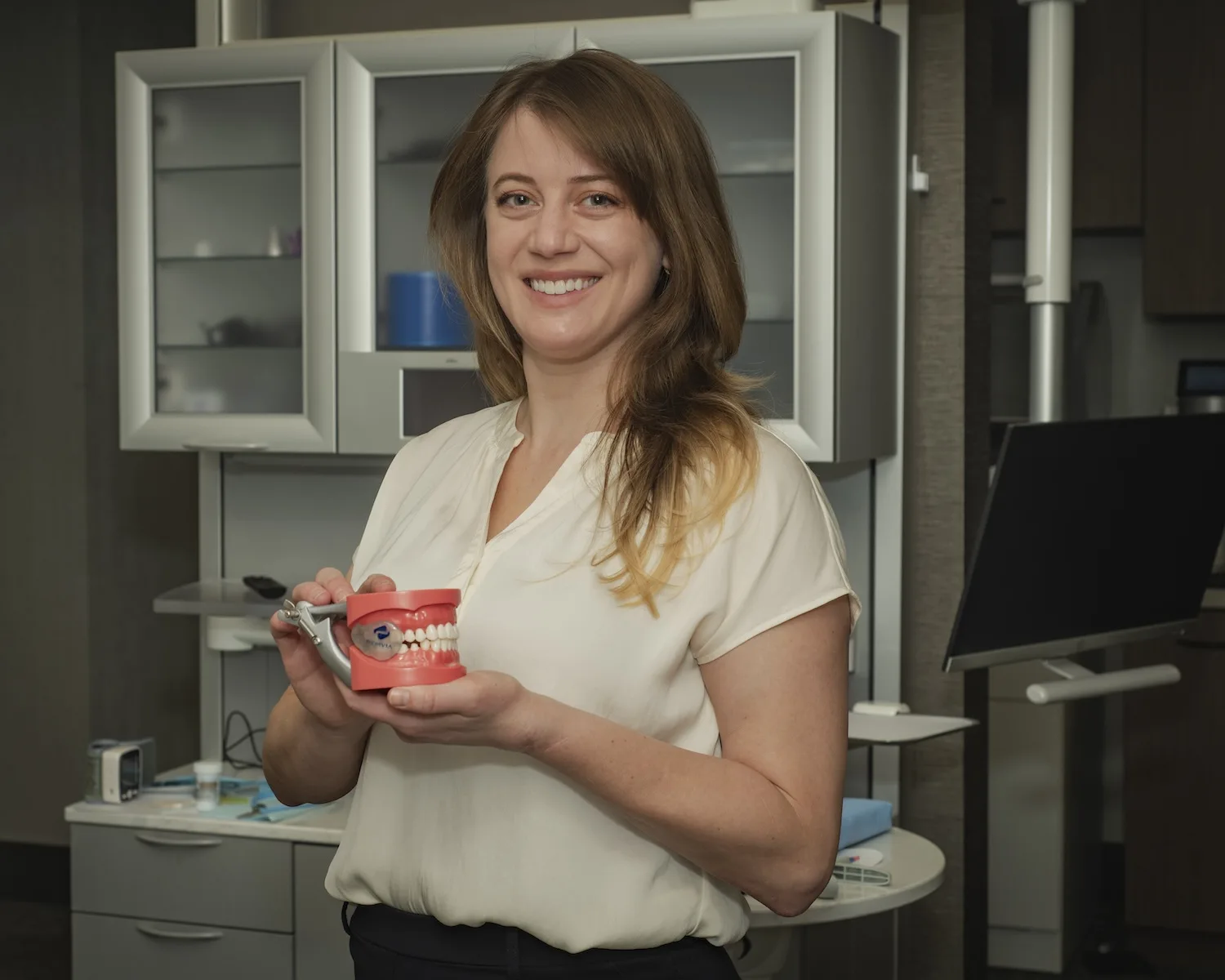
Dr. Andrea Morris created Remvia to help her own struggles with bruxism, a condition that causes people to grind their teeth at night.
Most medical devices on the market for this condition cover the teeth and protect them from grinding. However, as Morris explains, the grinding still negatively affects your mouth tissue and jaw. Her solution? Fundamentally change the way bruxism is treated by taking the nightguard off the teeth, and instead fitting it into the back of the jaw between the soft tissue.
Keep up with local business news and trends
Subscribe to the St. Louis Business newsletter to get the latest insights sent to your inbox every morning.
“I was in dental school when I started grinding my teeth,” Morris says. “I got a custom night guard, and I’m learning about this condition as a dentist as I’m suffering with it. My teeth are protected, but I’m waking up and my jaw is sore, my muscles are sore, I just don’t feel good.”
In 2023, she started seeking out entrepreneur meet-ups to learn how to start a company that could do it better. It was on a platform called StartHawk that she met her co-founder, Nephi Zufelt, and together they created Remvia. By 2025, they’d won an Arch Grant.
The St. Louis-based company received its patent and its 510(k) clearance from the Food and Drug Administration, two major achievements that came just five days apart in December of 2025, allowing it to begin marketing the product to others who struggle with night grinding.
Morris says Dr. Andrew Bruening, Remvia’s chief innovation officer, is an expert in digital design and digital dentistry.
“We’re scaling very carefully and responsibly. The way we want to do that is only Andrew and I are prescribing these as we’ve just launched,” she says. “Then we have a portal on our website so that once we’re confident with our process, we can open it up to providers.”
The process starts with an impression, similar to how other dental devices require custom scans of your teeth in order to fit to your mouth.
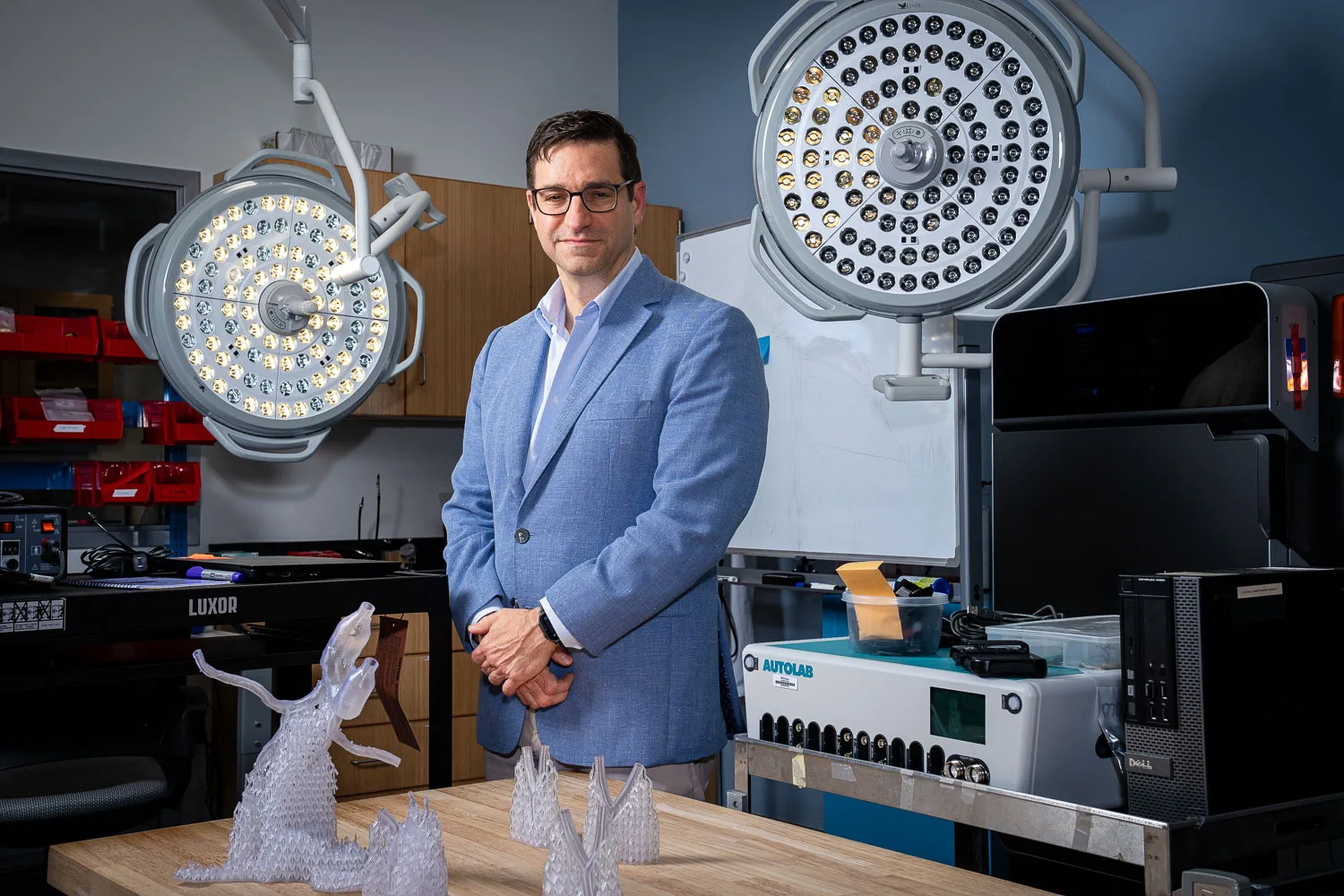
“We will take the impression, then we’ll digitize it, and then I’ll smooth up all the edges in the computer just using CAD software,” Bruening explains. “I’ll expand the area where we want to add the pressure, and then I will solidify those models, make them 3D printable and print them using a bio compatible resin.”
Remvia’s current printer, Formlabs, is one of the leading 3D printing labs on the market. They have medical and dental printers that are FDA-approved to create biocompatible devices. Remvia uses a product called Biomed Elastic. From impression to end product, one device can be made in about four hours, Bruening says.
Morris said one area of the market that she’d like to work with in the future are youth who grind their teeth.
“A lot of children grind, and you just cannot put a fixed night guard on the kids, because their teeth and their bones are changing and growing and falling out, so it’s a market that you can’t treat right now,” Morris says. “Long term, we’re going to be looking in a pediatric market as well, because this is currently a market that there is no solution for.”
Morris explains that Remvia one day hopes to train other providers to take their own impressions, allowing dentists across the country to prescribe the device. Even further down the line, they want to mass-produce their product so everyone can have access to a solution for night grinding.
“Ultimately, I want this to be something that’s accessible. I worked in nonprofits for the majority of my career, and a lot of people couldn’t even afford a custom night guard,” Morris says. “I saw people’s quality of lives really deteriorate without having any kind of adequate treatment other than an over-the-counter boil and bite, which a lot of people just don’t tolerate well.”