When Joy Jiang and Graham Colditz sold their first startup, Prognosia Inc., to Seoul-based Lunit last year, it didn’t mark the end of the duo’s foray into entrepreneurship, but rather a launching point to tackle a much larger idea.
Prognosia grew from the software the two WashU Medicine professors had developed that applied artificial intelligence to analyze mammograms and better predict a person’s risk of developing breast cancer over the next five years.
Keep up with local business news and trends
Subscribe to the St. Louis Business newsletter to get the latest insights sent to your inbox every morning.
“When we first started Prognosia, the idea was not just to do breast cancer prediction. The idea was to do a multi-cancer prediction,” says Jiang.
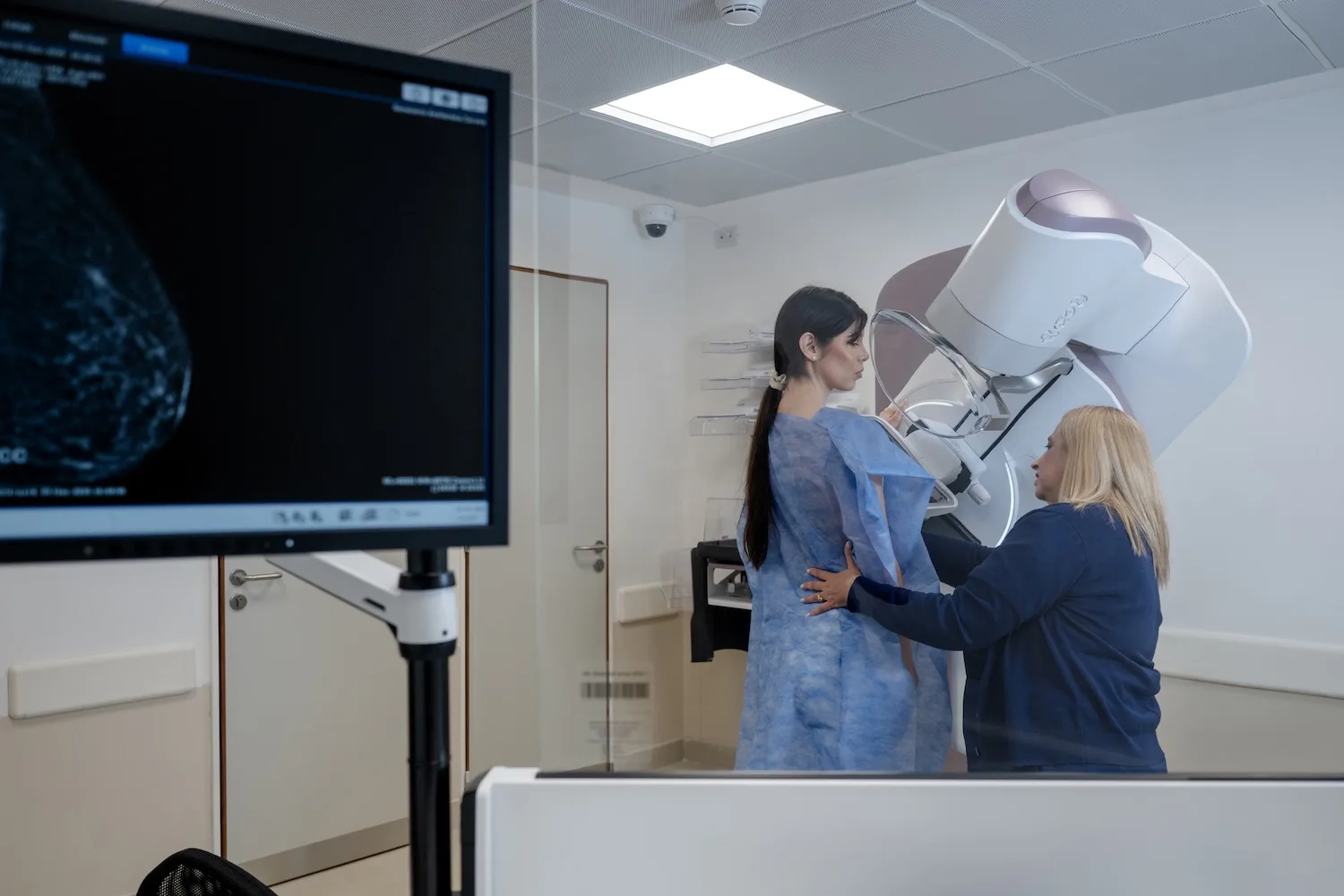
Now, Jiang and Colditz are back, having co-founded ProvanAI to develop and commercialize a similar AI technique for mammogram imagery that predicts the five-year risk of a different cancer: ovarian.
Jiang admits the idea may not make intuitive sense at first “because ovarian cancer is not going to grow in your breast, right? It’s completely different.”
Colditz adds that he had submitted grant funding applications to study the idea in the past, but was turned down because “people thought it was too radical.” But, having spent decades of his public health career studying the epidemiology and risk factors of ovarian cancer, he saw familiar patterns emerge.
“Having babies lowers your risk, breastfeeding lowers your risk of ovarian cancer. Obesity and hormone use can increase risk. Oral contraceptives reduce risk,” Colditz says. “Wow, that’s a lot of the stuff that also relates to breast cancer.”
He explains that epidemiologic risk factors are a way to approximate what a woman’s breast has been exposed to, while mammograms capture what that tissue has actually experienced. The machine learning strategies Jiang has developed look to analyze the tissue in the context of how a breast may be the platform for cancer to grow or reflect the risk factors that drive ovarian cancer.
“The breast tissue actually summarizes the past life exposure,” Jiang says. “For example, when did the woman have her first period? How many babies did you have? What kind of lifestyle, diet, physical activity did you have? All of that is going to be summarized on her breast.”
Jiang explains there isn’t a single identifiable factor that the company’s AI searches for in a mammogram image, but rather a pattern of past life exposure relative to the potential for future ovarian cancer. (Determining those specific factors, she says, is worth pursuing in future research.)
Having a more clear understanding of a woman’s five-year risk of developing breast or ovarian cancer can drive specific follow up actions to potentially detect the disease at much earlier stages. Those could be more screening, referrals to high-risk clinics, lifestyle changes, preventative chemotherapy or others.
“Everything is ready, but it requires a trigger,” Jiang says.
Jiang and Colditz are now focused on shepherding ProvanAI through the process to pass regulatory muster with the Food and Drug Administration, as well as collecting external data for validation. The company must also iron out cybersecurity challenges and how results are generated and presented to providers in an electronic health record.
“There’s a range of expenses to get all through the process,” Colditz says.
ProvanAI has some runway though, having recently closed out a pre-seed fundraising round that brought in $1.2 million from investors including BioGenerator and the Missouri Technology Corporation.
Both Colditz and Jiang say their success with Prognosia removed friction when it came to establishing ProvanAI. They had a better sense of how to tackle legal, tax, and corporate governance challenges. And investors were quicker to write checks because the technology is familiar, as is the network of other experts they’re working with to validate it.
“We know where we’re going,” Colditz says. “The first time we were learning every single step of the way.”
They add that selling Prognosia also meant the bit of technology they developed specifically to predict breast cancer risk will reach patients sooner. Lunit, the acquiring company whom they both still consult with, already has a presence in about a third of the roughly 8,800 imaging centers in the U.S. and has already made a submission to the FDA for clearance.
“Because they have the commercial engine and the pipeline ready and the infrastructure set up and the cybersecurity, everything cleared, you can imagine that it goes right into the clinical flow,” Jiang says. “It would take years to get those clear and to build your commercial pathway from scratch. I want to see this in clinics tomorrow.”
And that, broadly, is what Jiang thinks researchers should be prioritizing.
“We should aim at translational impact and economic impact, not just a project that sits on the shelf that only your peers would use,” she says. “I think that’s what we all should be doing: translating something that’s useful to the public.”
After achieving regulatory approval with ProvanAI, Jiang sees the company pursuing partnerships with imaging centers. Both her and Colditz expect to hold onto the new venture a bit longer than their last.
“In part, the field is not as ready, and so there’s more work to do for clinical management pathways, working with clinical colleagues, and I think we can do that effectively with the company,” Colditz says. They also want to think about how best to expand how people think about mammograms: from breasts that need imaging to a “whole woman visit.”
Their work in that regard is part of a much larger movement.
“We know others already have the breast arterial calcification as a way to identify women at risk of cardiovascular disease,” he says. “We know we have breast health colleagues, looking at whether you can, through the mammography visit, identify women who are smokers and eligible for lung cancer screening.”