A new Washington University program seeks to use business principles to improve health care systems and operations, and spur new innovations.
Launched late last year, the Business of Health initiative leans on research originating at WashU’s Olin Business School to solve industry challenges, help students launch careers on the business side of the health care field, and turn fresh ideas into real-world solutions.
Keep up with local business news and trends
Subscribe to the St. Louis Business newsletter to get the latest insights sent to your inbox every morning.
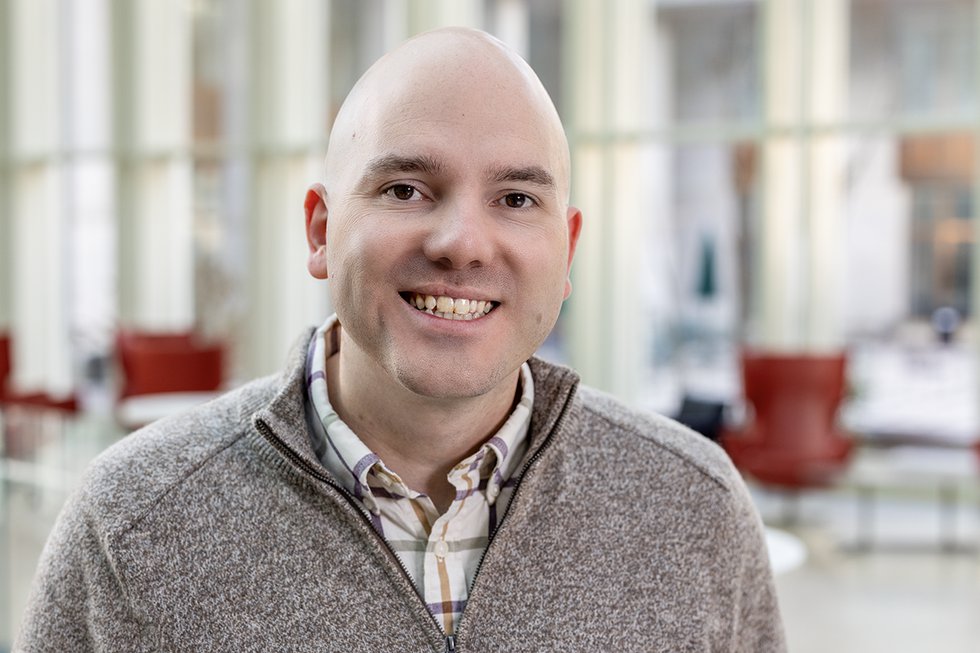
WashU’s program will focus on four key areas: research, commercialization, executive education, and the expansion of degree programs. Patrick Aguilar, the initiative’s managing director, says one of the priorities will be to provide experiential learning opportunities that will train students for jobs in the industry. In the coming months, the Olin Center for Experiential Learning will match students with projects that address specific industry challenges and equip them with knowledge of broad business understanding and specialized health industry insights.
“Health is one of the biggest industries in the American economy, and it’s an industry that has lots of opportunities for improvement,” Aguilar says. “Then you start asking questions like, ‘How do we make a healthier society?’”
St. Louis has a role to play in answering that question. The region is home to a variety of biotech startups, health-focused companies, and healthcare delivery systems, including local organizations like Express Scripts, Centene, and BioSTL. Many employers in the region and beyond also operate in industries that don’t look like health, but actually have a lot to do with it. Just think of how an employer provides health insurance to employees.
Using research from Olin faculty, the Business of Health initiative hopes to make life better for people living in St. Louis—and beyond. One example could be finding solutions to mitigate drug shortages. Business school professors are already doing novel work that intersects with health, including Sydney Scott, an associate professor of marketing who studies consumer engagement with medical products, as well as Tony Sardella, an adjunct lecturer and senior research advisor who is a leader in the commercialization of advanced medical technologies.
“We’re really interested in asking questions about health contexts, using data from the health industry, using interviews with health professionals or consumers, and creating insights that make a difference,” Aguilar says. “Not just in the field of the researcher, but in the real lives of the people impacted by that work.”
This summer, in addition to the university’s existing undergraduate degree in health-care management, the school will roll out a Master of Business Administration program with a concentration in healthcare. Next year, the university will launch a course on pharmaceutical and medical device technology development, along with a course covering the business aspects of the health insurance industry. For those who aren’t necessarily looking for a degree, there will also be continuing education courses covering the ever-changing landscape of the health care industry.
For now, the Business of Health initiative is in the foundation-building stages as it seeks to highlight the complexity of the health industry while leveraging the relevant work that’s already being done at WashU.
“As we aim to be the leading business school in health, we are committed to doing that in partnership with others on campus who think about the same problems, recognizing that we will be stronger through collaboration than we could be on our own,” Aguilar says.
Learn more about WashU Olin Business School from dean Mike Mazzeo on the Fast Forward STL podcast.