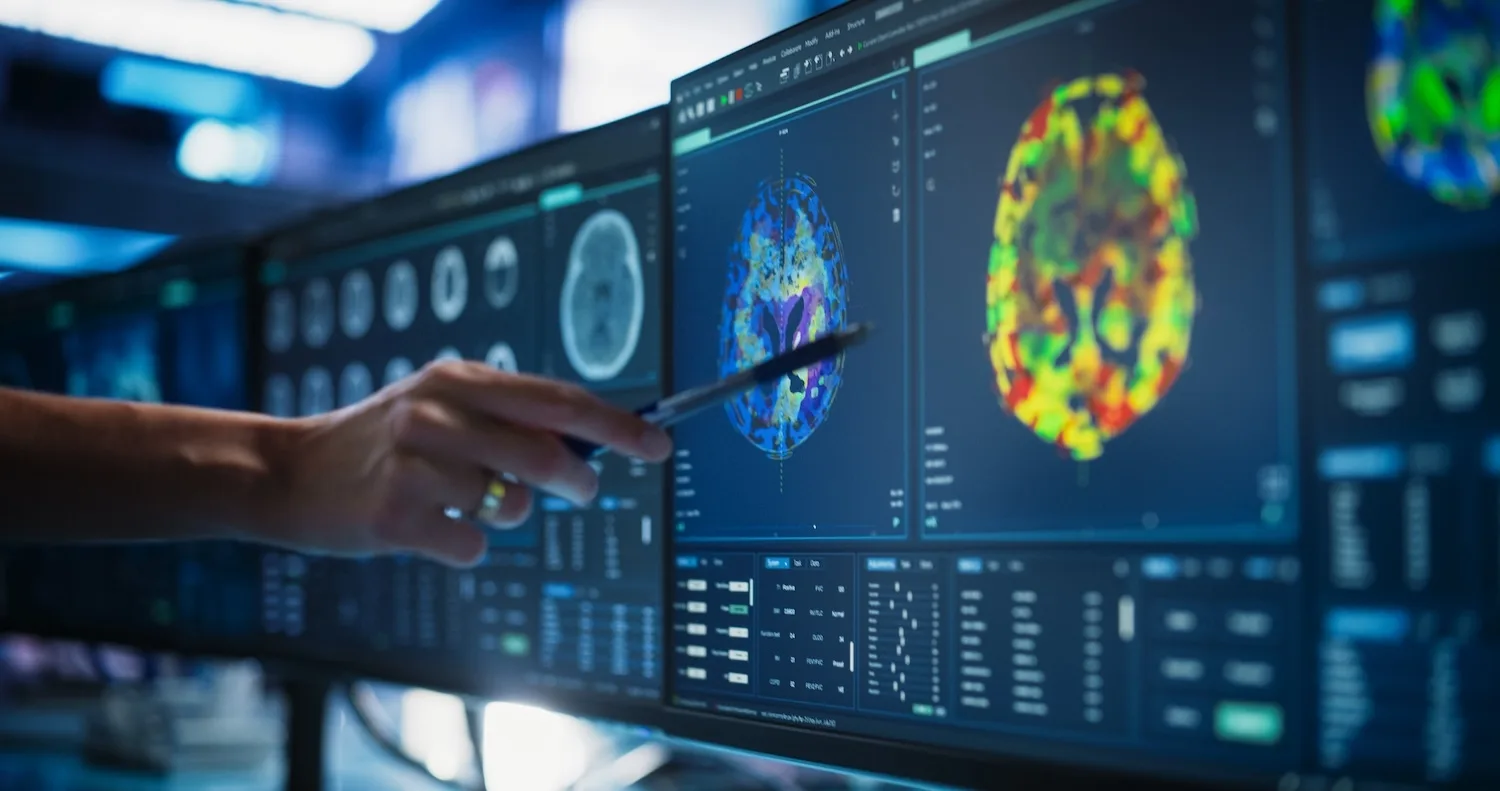
Leaders at the local nonprofit BioSTL are still committed to making St. Louis a global leader when it comes to neuroscience innovation, despite learning the region is no longer in contention for a massive National Science Foundation grant that would have been a big boost to those efforts.
BioSTL, along with Washington University, had pitched NEURO360 for NSF’s Regional Innovation Engines, a grant up to $160 million over 10 years to help a region orient its local assets in higher education, nonprofits, state and local governments, and other organizations around a single sector ripe for innovation. St. Louis’ plan aimed to make the region a neuroscience juggernaut by capitalizing on local research and expertise and developing those discoveries into new treatments, products and approaches to medicine.
Keep up with local business news and trends
Subscribe to the St. Louis Business newsletter to get the latest insights sent to your inbox every morning.
“I was disappointed; the team was really disappointed. We wanted to advance in the competition,” says Eric Gulve, who’s been co-leading the NEURO360 engine since 2023. “We knew the odds were really rough: 300 applicants this time around and we’re expecting seven winners or so.”
After shaking off the disappointment, Gulve says the team and partners he and others assembled to pursue the grant funding will continue to work to develop St. Louis’ neuroscience ecosystem. BioSTL’s vice president of innovation ecosystem building Justin Raymundo reflects this commitment that with or without NSF’s blessing, neuroscience will continue to be a core part of the region’s economic future.
“Regardless of what a handful of people in a review process think at NSF, those things still stand. St. Louis has an unparalleled amount of ability to really change the world through neuroscience innovation,” he says.
As some of the leaders of this initiative, Raymundo and Gulve say they’ll continue to implement the NEURO360 strategic plan, which the region won a $1 million grant from NSF in 2023 to develop. It means there’s still an eye toward translating research into commercial products or ventures, recruiting talent and later-stage companies to the region to accelerate how fast the local neuroscience ecosystem matures, and tapping into local underrepresented communities to ensure new discoveries reduce entrenched health disparities, Gulve says.
“The scale can’t be as big as it would have been if we had far more money, but we do want to pursue the pillars behind the engine,” he says.
Even with an NSF Engines grant, the region would have still been on the hook to raise matching fund, Gulve adds. They previously identified some possible funders, tut there’s still a need to identify more, particularly those who will support efforts by BioSTL or other involved organizations to boost the ecosystem and who will eventually invest in new companies spun up from local research, he says.
“We’re in the process of sorting that out and trying to figure out which one should be early priorities for us to pursue funding,” he says.
Raymundo contends the bet on neuroscience innovation is a sound one, because of St. Louis’ established expertise (largely thanks to WashU) and the way breakthroughs in this sector can potentially help reduce “significant forms of human suffering,” such as Alzheimer’s, dementia, mental health problems, and addiction.
“We are seeing a shift in the national landscape of more investment in neuroscience,” he explains. “We see that increase in our own investment portfolio, so we want to continue to work with our community to identify opportunities for investment into companies and new and emerging firms.”
And already there are some results from past efforts to coalesce regional organizations around this goal. Raymundo notes the investment by academic institutions into physical lab space, recruiting talent, and accelerating research into neuroscience-focused technology.
Gulve says this specific focus has reoriented what even BioSTL is considering. That’s evident in a half day of programming at the organization’s Global Health Innovation Summit this week being dedicated to neuroscience and the number of neuroscience-focused companies that have been attracted to the region.
“In the prior six years before we started NEURO360, neuroscience wasn’t a focus of the global health team. They had recruited, I think, four companies in six years,” he says. “In the last two years, I’ve lost track of the count, but we’re around 15, 20, 25 companies. It’s a pretty seismic shift in the prioritization of the work groups around the region.”
Moving forward, Gulve is clear-eyed about the challenge ahead. Creating a new regional ecosystem centered on neuroscience will take decades, not years, he says, which means being vocal about small wins, like when a new company moves to town.
Gulve and Raymundo stress they also need partners who’ve already committed to the NEURO360 engine to stay the course and not reallocate the tens of millions of dollars they’ve earmarked to support the initiative.
“Our community needs to be undeterred, to continue to invest in neuroscience, our biotech and healthtech innovation ecosystem,” Raymundo says. “That will ultimately pay off in new jobs, new companies and economic opportunity.”