Sobolik is strengthening UMSL’s standing as a national leader in access to higher education. In the 2026 U.S. News & World Report rankings of the country’s top schools, UMSL ranked No. 1 in Missouri and No. 87 nationally among Top Performers on Social Mobility—its fourth consecutive year leading the state. Nearly half of UMSL students receive Pell Grants, underscoring the institution’s role in continuing to drive educational and economic advancement throughout the region. Sobolik announced in early 2026 that she will step down from her position and transition to a role as chancellor emerita on July 1.
2025 QUESTIONNAIRE
PROFESSIONAL ACCOMPLISHMENTS & OPPORTUNITIES
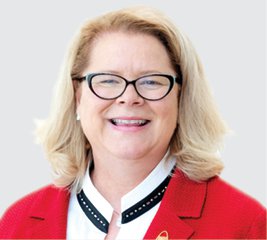
What has you most excited about the future of your company or industry? After celebrating UMSL’s 60th anniversary of serving St. Louis during the ’23-’24 academic year, I am most excited about planning for the next 60 years and beyond. I am impressed by the talent of our leadership team, and our plans to build out the metropolitan campus of the future, committed to serving our students and the region for years to come. At UMSL, we focus on new and innovative academic programs and initiatives that align the university with the region’s professional workforce needs. Our programs support the workforce needs of the state and region’s traditional and emerging industries, as identified by the Greater St. Louis, Inc. STL 2030 Jobs Plan.
If you could change one thing about your industry, what would it be and why? As an industry, higher education is at the crossroads of a historical model focused on the institution, and the need for institutions to adapt to financial and demographic challenges, cultural shifts, regional workforce needs, and articulating a value proposition for students. The University of Missouri-St. Louis is a young university, and campus leadership is taking aggressive steps to reimagine UMSL as the public metropolitan university of the future – an educationally relevant university that is vital to regional economic growth and development and a national leader in urban higher education. I think this is the direction the industry needs to make the shift toward staying relevant and promoting and supporting regional and national economic growth and development.
What’s the toughest business challenge you’ve had to overcome (excluding the pandemic) and why? In service to our students, we have worked to strengthen the financial position of the university by stabilizing funding and increasing our focus on philanthropy, donor engagement, state investments, research development, and sponsored programs. One of the toughest challenges has been improving accessibility while trying to reduce overall student debt and keeping the focus on learning and graduation. Doing so increases social mobility for students and their families and benefits the economy of not only the local region but the state as well.
Keep up with local business news and trends
Subscribe to the St. Louis Business newsletter to get the latest insights sent to your inbox every morning.
MENTORS & PEERS
To whom or where do you go for sound business advice? I engage a broad network of leaders throughout the community, including colleagues in higher education, and other leaders from the regional business community. Members of the UMSL Chancellor’s Council, comprised of alumni and business leaders who represent a broad spectrum of businesses and disciplines, also provide a wealth of advice for which I am grateful. UMSL is also is a founding member of the Coalition of Urban and Metropolitan Universities (CUMU) consisting of 120-plus universities across the nation that support and anchor their urban and metropolitan regions. I am Chair of the Board of Directors of CUMU and I always turn to my fellow board members, and other chancellor’s and presidents within CUMU, for sound advice on any topic, including higher education, business practices, and the evolving political landscape.
Do you have a business mentor? If so, who and why? I am fortunate to have among my circle of friends two special mentors. UMSL chancellor emeritus Blanche Touhill remains very active with the university and many regional leadership organizations. Blanche is an experienced, wise, and generous advisor and has been such a positive and progressive force for the campus throughout her entire career here. I always value her perspective on any topic. UMSL chief of staff Adella Jones is always by my side as the campus takes its leadership place within the St. Louis ecosystem as the workforce driver and only public research institution in the region. Adella’s deep understanding of how St. Louis operates and the connections she has within the region have been instrumental in helping me navigate UMSL as a collective, collaborative asset for the region’s inclusive economic growth and development.
What piece of advice has had the most significant impact on your career? This piece of advice came early in my career from a previous supervisor who advised me to slow down and make sure that others are with me before I move ahead on a project. In this particular case, I was moving way ahead of the team in developing a new Ph.D. program that I felt the region and nation needed to help train environmental policy experts that had an understanding of science, policy, and how humans think and work. The advice to slow down came at a crucial time that allowed me to get more buy-in and collaboration with others, a strategy that led to the successful implementation of what is now a long-standing and highly sought international program.
If you could have dinner with any two area business leaders, who would you choose and why? This is a trick question! There are so many engaged and optimistic people and leaders here in St. Louis, many of whom I have the privilege to interact with frequently. I am a member of the International Women’s Forum (IWF). One aspect of members includes monthly member hosted dine-arounds. It is so wonderful to engage with talented, accomplished, positive, pragmatic, and visionary leaders for conversation on any issue of the day. In fact, Blanche Touhill and I are looking forward to hosting the next IWF Dine-around this September at the UMSL Chancellor’s residence.
Who is the most interesting under-the-radar/emerging business leader in St. Louis and why? I am very impressed with many of the region’s emerging leaders, and I want to do a call-out here to FOCUS St. Louis that does a fantastic job of leadership development at all levels. One person that I have on my radar is Zekita Armstrong Asuquo, who is the chair and CEO at Gateway Global, aligning talent and workforce development with the growing geospatial industry here in St. Louis. Zekita is making such bold, positive, and deep impacts on geospatial training, and on collaborative actions that are really helping transform not only the geospatial industry but also the entire St. Louis ecosystem. I am not sure if Zekita should be considered “under-the-radar,” but I am a big fan!
What is one thing you would change about the St. Louis metro area business environment and why? Coming to St. Louis after having lived in several different states and communities, I would say I always want to keep in sight the fact that we are truly a connected community and that connectivity is our strength. As an institution that serves the entire region, UMSL is aligning with traditional and emerging industries that make up St. Louis’ diverse business ecosystem, and we are very aware of the collective desire of everyone to move St. Louis forward. Sometimes we lose sight of that unified desire. We arrive at the pinnacle of success together, not apart.
BACKGROUND
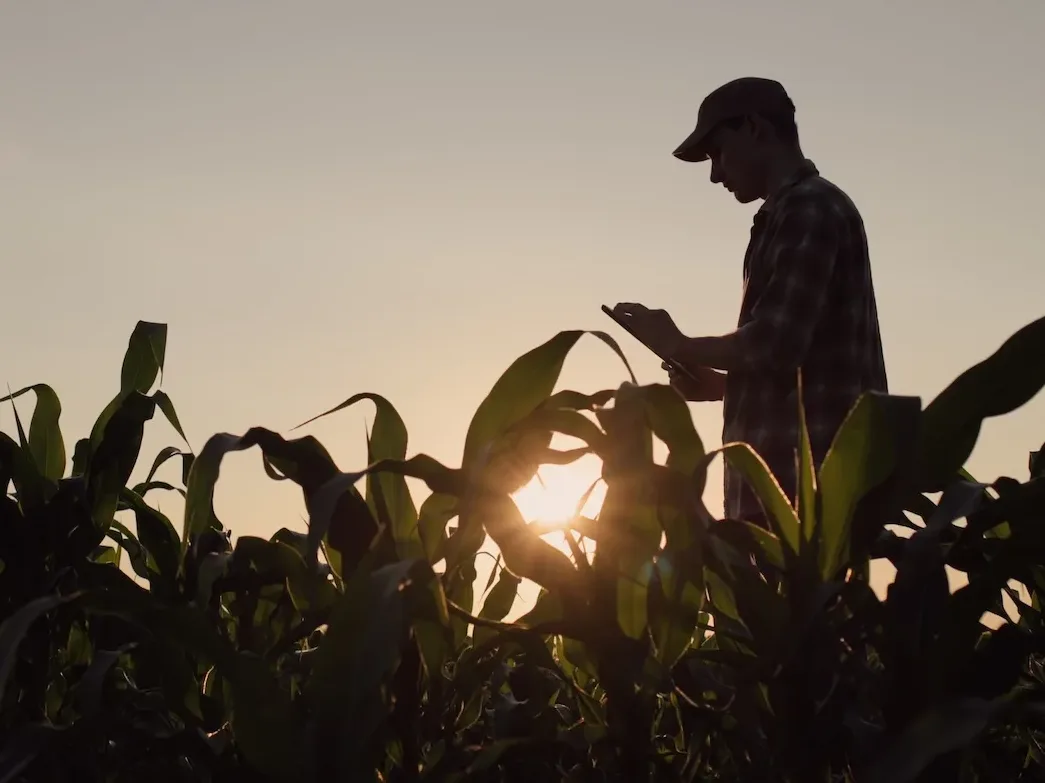
Where were you born? I was born in the small town of Charles City in north central Iowa, where the corn grows tall and agriculture is the economic driver.
What was your childhood aspiration? I have always loved to read and would frequent the Charles City Library weekly, gathering up all the books I could find, from Nancy Drew and Little House on the Prairie to How Green Was My Valley, The Women’s Room, and The World According to Garp. I loved the library, and the librarians were my favorite people as they were always helpful. I remember specifically talking with one of the librarians on how to find other topics than just fiction. That exposed me to a whole other world that ultimately led to my academic profession as an archaeologist. All this to say that I at first wanted to be a librarian, and then a scientist, which led me to archaeology.
What was your first job, and what did you learn from it? Now this brings me back! My first real job was detassling corn—remember, I am from Iowa which has the best sweet corn in the world! I can’t say that I liked the job, but it paid well and was the first real money that I ever had. That job taught me about getting up early (not my favorite thing), working hard in the hot burning sun (apparently something I like, as I ultimately became an archaeologist), and how to earn and save money.
What educational degrees do you hold, and where were they earned? B.S. in Biology from the University of Iowa, M.A. in Anthropology from Texas A&M University, Ph.D. in Anthropology from Texas A&M University
HOBBIES & INTERESTS
If you were not in your current profession, what would you be doing and why? I had a job in college working in the Neurophysiology Lab at the University of Iowa Hospitals making artificial blood to test on guinea pigs to analyze the impact different chemicals, proteins, oxygen, and acidity levels had on brain hippocampus function to ultimately analyze Sudden Infant Death Syndrome (SIDS). I loved that job and thought for a time that I wanted to be a neurobiologist. If I hadn’t gone on that archaeological field school my senior year, I would probably be a neurobiologist somewhere.
What is your favorite St. Louis-area restaurant, and what do you typically order there? My husband and I love Chuck-A-Burger Drive-In on St. Charles Rock Road in St. John. We can drive up and order our favorites from the car with prompt, friendly service and the best Philly cheese steak this side of Philadelphia. Plus, they serve Coke products!
What is one item you recently crossed off your bucket list? I don’t have a bucket list—I seize opportunities as they come. One such opportunity came last night, actually, when my parents called up and said that they had just booked a Mississippi River Cruise from Memphis to NOLA and wanted to know if we would join them. The timing was right, so we booked the same evening. I love being spontaneous!
What is one book you think everyone should read (or podcast everyone should listen to) and why? The best book I have read is one that really helps explain the differences and similarities across America: American Nations: A History of the Eleven Rival Regional Cultures of North America by Colin Woodard. I could not put this book down and even recommended it to my leadership team. I actually come back to that book often and reread some sections as issues come up across the nation and I want to think about some of the foundational reasons that set the stage for these issues.
What’s your hobby/passion? I have two passions. The most important is Scott and our wonderful growing family of four children, their significant people, and our grandchildren. The other is the University of Missouri–St. Louis and its continued growth and development. I do like to read and will grab a book any time that I have to do so, which is not as often as I would like.
What is your most prized possession? I am partial to my Marshalltown trowel—my trusty, archaeological sidekick that has been with me on every excavation from the first to the last. It is displayed on the shelf in my office and has most likely seen its last active days.
What would people be surprised to learn about you—a fun fact? That my favorite possession is a well-used Marshalltown trowel.
What is your go-to karaoke song? “Fly Me To the Moon” by Frank Sinatra.