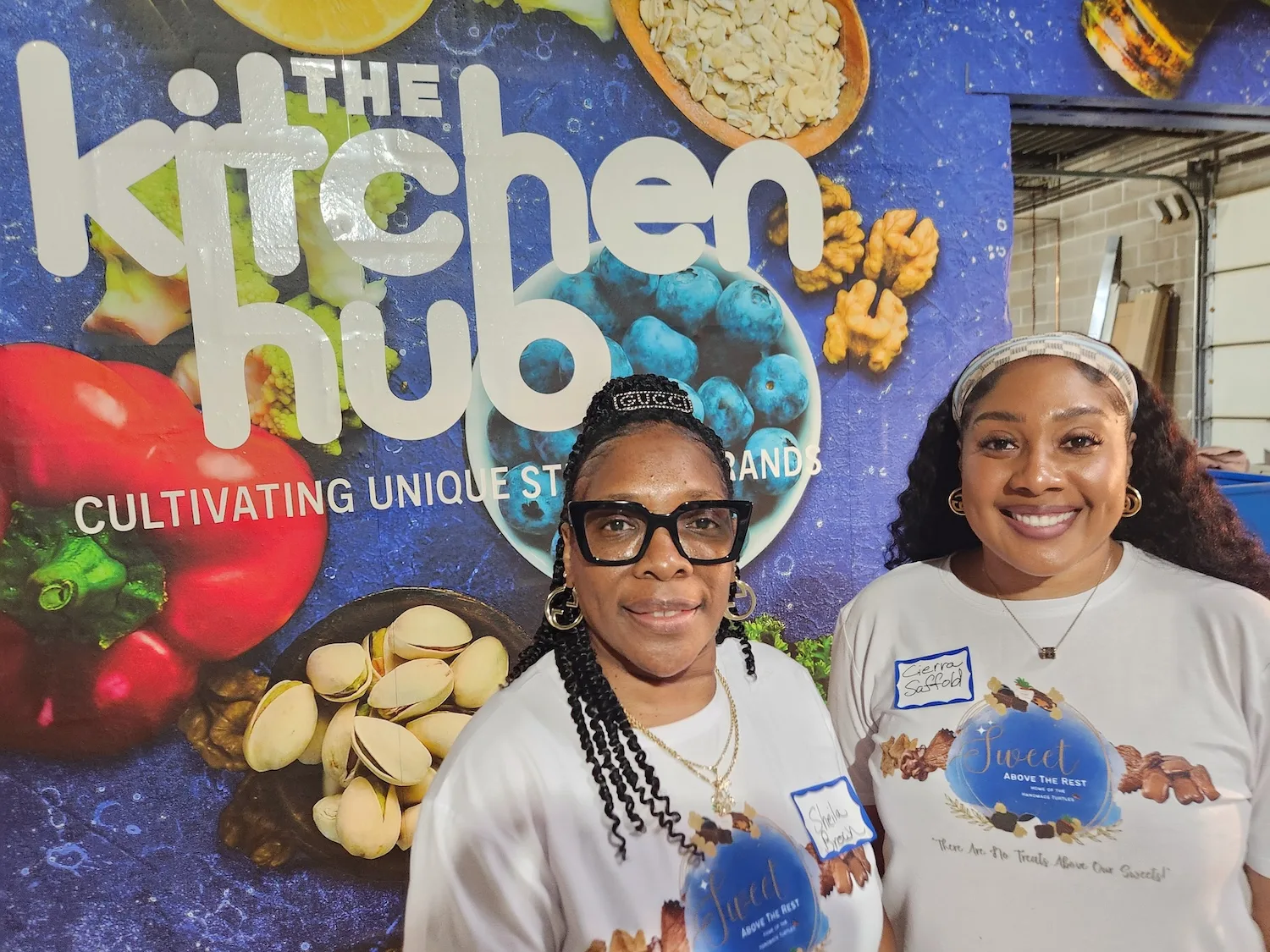
Sheila Brown craved peanut brittle. She was at home in Maplewood several years ago, felt a hankering, and cooked some. She gave a portion to her brother-in-law. He bit off a piece and chewed. “If you start making turtles,” he told her, “I’ll be your best customer.” So she did. She even got herself a thermometer and began whipping up her own caramel, tweaking the recipe through trial and error. At first, Brown would sell these sweets to family and folks from church. But then, she recalls, “It just took off.” Her daughter Cierra Saffold, who was then a dental assistant, joined her in the kitchen as a way to spend time with her, and eventually told her: We could make this into a business. Brown, who had quit her job and needed something to do, agreed. Thus was born Sweet Above the Rest. Their problem: They lacked food-industry expertise—and physical space to boot.
A business coach at the Urban League suggested they check out The Kitchen Hub STL, a food industry incubator and commissary that has one location in High Ridge and a second about to open in Kirkwood. For fees ranging from $125 to $200 a month, the Hub offers local food makers not only access to shared kitchens but also something many of them consider even more valuable: consultations with industry insiders. The Hub’s insiders helped Brown and Saffold figure out proper labeling, code compliance, and pricing, and also helped connect them to Straubs. That grocery chain now carries six of their products. Sweet Above the Rest also sells at Midtown Market in St. Charles and the St. Louis History Museum gift shop, as well as to other Hub members. Saffold even quit her job in dentistry to pursue the business, which has given both mother and daughter a surge of upward economic mobility. “It became very lucrative,” Saffold says.
Keep up with local business news and trends
Subscribe to the St. Louis Business newsletter to get the latest insights sent to your inbox every morning.
The Hub’s insiders are Joel Austin and Brett Tintera. As neighbors in 2006, they merged their backyard gardens, and a few years later, sold their first jar of salsa as Two Men and a Garden. They’ve since branched into pickles and, on their path to success, have made countless mistakes that they want to help up-and-comers avoid. And there’s no shortage of aspirants, marvels Tintera. “The amount of makers in St. Louis is crazy,” he says. Of the 106 members at the High Ridge facility, most use the shared kitchens, but there’s a waitlist for the private kitchens—a wellspring of demand that led the partners to acquire the Kirkwood location and devote more of that space to that need. And all this is happening without the Hub advertising itself; the demand has come from word of mouth among makers.
And the Hub’s makers are clearly eager to meet one another, as was evident at a recent networking event at the Kirkwood location, which is still under construction. About 50 people showed up to mingle, sample pasta, barbecue, and cookies, and gather in the back where, prompted by Hub president Karen Beckman, members passed around a microphone to introduce themselves. They mentioned their various specialties: microgreen juices and powders, kettle corn, fermented vegetables, brisket, elderberry products, grilled cheese, baked goods, barbecued wagyu beef.
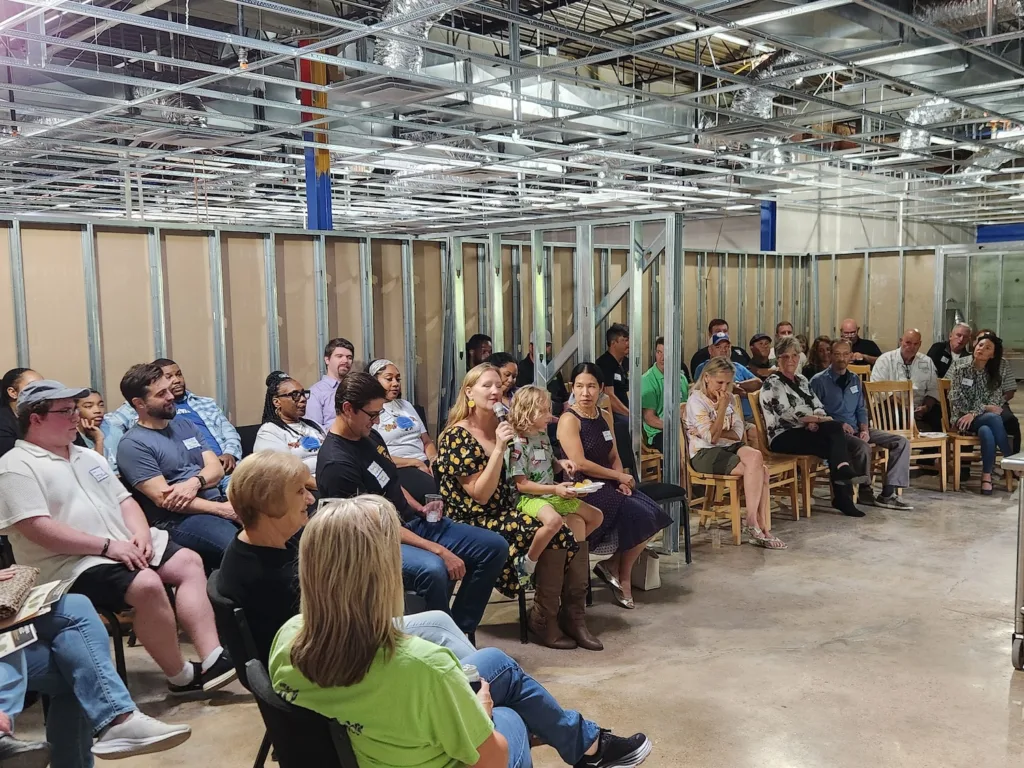
The general manager of Anthonino’s Taverna told the group: “When we first met Joel and Karen and Brett, we were just selling some jar sauce out of our restaurant and that’s all we were doing. And since then, the connections that they’ve made for us, it’s taken off tremendously.” Rob Smith of Pizza Parm, which makes a spicy-cheesy seasoning for Italian food, lauded the Hub’s concept. “I wouldn’t know where to go or where to start if we didn’t have a place like this,” he said. Tintera in turn praised all the members for showing up and trying to make it in a tough business. “This is not easy,” Tintera said. “If this was easy, everybody would be doing it.”
Indeed, ambition can make the ride even rougher. Take Stein Bros., which makes hot sauces and hot honey. It was launched by Gabe Stein, who says he grew up “super poor in a wealthy community” (Ballwin). Because of family circumstances, he struck out on his own at a young age and also began caring for his brother, who has special needs. Stein wrestled at Lindenwood and even fought professional MMA for a time before launching, with his brother and two best friends, the hot sauce company. They didn’t know what they were doing. “You think, I just want to take hot sauce, put it in a bottle, give it to you for money,” says Stein. “There’s actually like eight million more steps that go in between that.” When they got to the Hub, though, they received help with FDA certification and ingredient tracking. Beckman and Austin also introduced them to distributors. “That’s a big reason that we’ve been able to expand at the rate that we have,” Stein says. His business partner, Matt Marshall, lays it out: Over the last year and a half, we’ve gone from just a couple stores that would throw us a bone to 92 stores.”
But that’s not even close to their goal. Stein is hell-bent on his company becoming a national brand. The partners not only procure, cook, package, and ship everything themselves, but they’re also plowing their revenue back into the business, without taking out loans. “Just making it all happen on our own dime is hard,” says Stein. “But we’re building a money machine. I know when we pull the cord, it’s going to run forever.”
Asked what makers tend to need the most help with, Tintera said: “Honesty about how hard it is out there, but also ways that we can help them get around that stuff ….We did so much and still do so much with Two Men that we can say, ‘Hey, we did this; try this.’ Or, ‘We failed here; try it this way.’”