Katie Lee is a success, by any metric.
She has four bustling Katie’s restaurants to her name in St. Louis and a line of packaged goods—jarred sauces and pasta bakes and frozen pizzas—selling at retailers across the U.S. She also boasts 500 employees and a brand synonymous with Italian chic.
Keep up with local business news and trends
Subscribe to the St. Louis Business newsletter to get the latest insights sent to your inbox every morning.
Lee’s new memoir, Unemployable: The Katie Lee Story, illuminates the unusual origin story behind her rise as a businesswoman: The up-and-down extremes of her junk picker father’s ventures as he struggled with drugs and brain damage from epilepsy. The way Lee herself turned to substance abuse—and became an alcoholic high school dropout at age 15—only to claw her way to sobriety and success. It’s a harrowing story, even as the reader comes in knowing Lee has survived, that the glamorous figure on the cover doesn’t have to be employable, that now she employs.
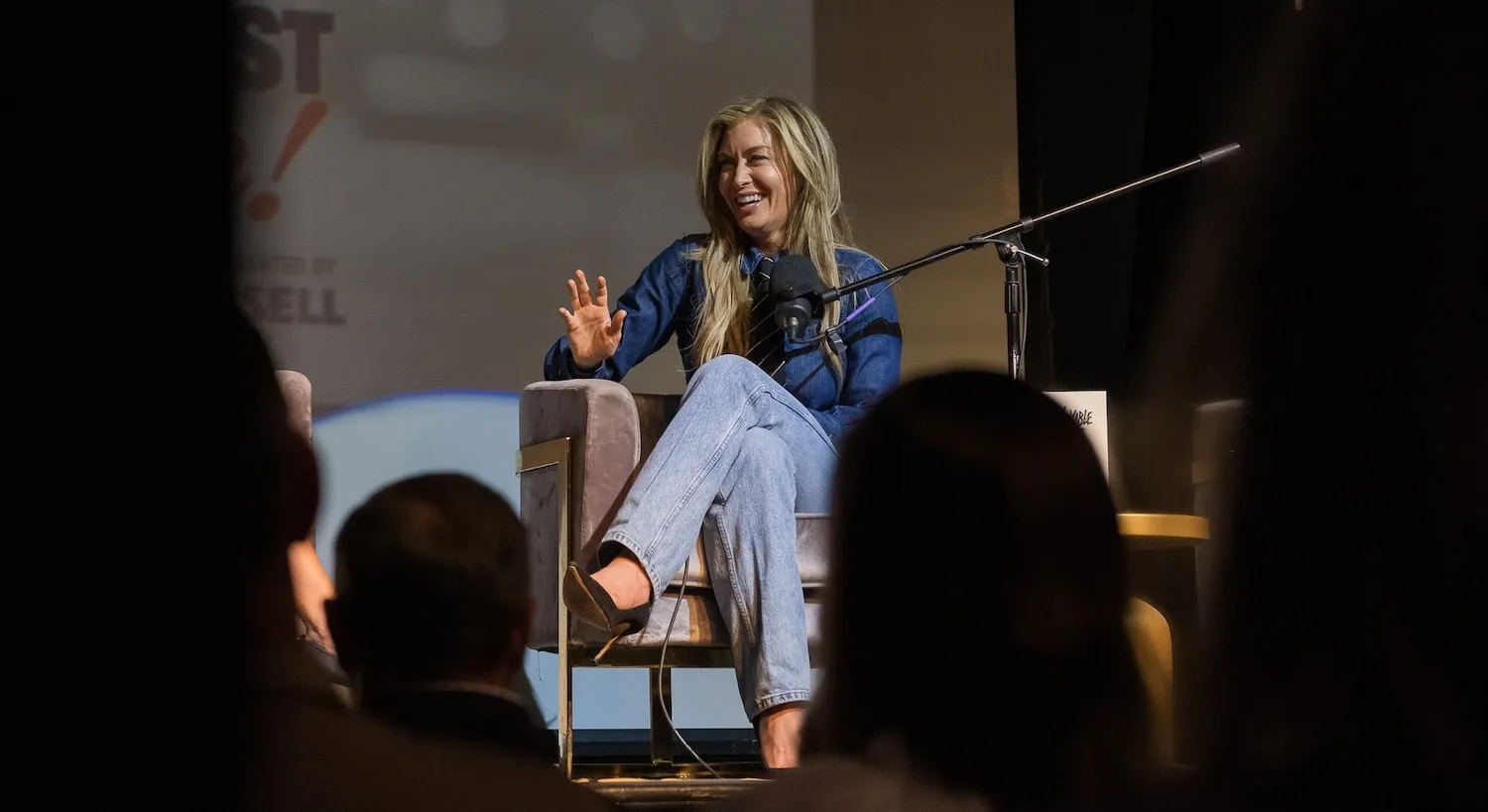
But as Lee tells it, she wouldn’t have the success she now enjoys without years of struggle. In a special live taping of The 314 Podcast, she explains that learning how to hustle was infinitely more important than anything she could have learned in school. And even today, she continues to trust her gut and uses the skills she honed when she was living on the margins.
“I really don’t care about a P&L,” she confesses, using shorthand for a profit and loss statement. “I care about how busy the restaurant is, the sound of the dining room, the feeling you get. To me that equates to success.”
Many restaurateurs try to create the frisson you feel at a place like Katie’s. Few succeed. Lee thinks she’s been able to achieve it precisely because she’s willing to take risks, because she doesn’t mind going for broke if it means achieving her vision.
“I’ve lost enough and been low enough that I know that I can sleep on a mattress or sleep in a car and be totally fine, that I will bet it all, all the time, and always make sure everything is fabulous and amazing and over the top,” she says. “I want to do cool things and I want to innovate, and you can’t do that if you’re worried about a P&L. You can do that if you understand that it could fail and you might need to sleep on the floor—and be OK with that.”
Lee opened her first restaurant in her 20s, a time when she was still struggling with drugs and alcohol. Her dad owned the place, but it was her name on the marquee—and her vision. The Katie’s Pizza that opened in Clayton in 2008 would seem familiar in many ways to anyone who’s dined at one of Katie’s subsequent, more polished iterations. (A successful Kickstarter allowed her to leave the business she ran for her dad and open one of her own, which ultimately led to three more). It’s not just the name, which she stubbornly refused to give up even when she left her dad and started a rival restaurant. It’s the black-and-white movies, the fried artichoke salad, the fresh Italian cuisine inspired by the time she’d spent in Italy with her mother, an artist. “I was locked in on that vision for many, many years,” she acknowledges.
Everything around it, however, has changed. The first Katie’s was outfitted with furniture from her father’s junk store, simply because they didn’t have the money for anything else.
“Everyone thought that was a cool design choice,” Lee recalls, laughing. “That was, ‘OK, we have to open this pizzeria, and the only way we’re gonna afford furniture is we have to close the junk store and move everything into the restaurant at night.’” Katie’s today, of course, is sleek and stylish. But that same go-for-broke bravado has fueled its expansion into packaged goods. At the outset of the pandemic, they nearly had to let everyone go. Instead, their pivot, along with a little trial and error, has paid off with a line now in Target stores across the U.S., among other national retailers.
Lee is gearing up to open a 50,000-square-foot manufacturing facility in Bridgeton to serve her line of consumer goods. And her memoir—written first as journal entries, then as stand-alone chapters sold at her restaurants, and later shaped into a book in a three-month sprint—is now for sale at Target stores across the U.S., along with traditional bookstores. None of it has been easy, but that chaotic childhood and wild adolescence has kept her hungry for more and ready to gamble, to risk total loss in order to go bigger.
“Every day to this day, every minute, we are on the edge,” she says.