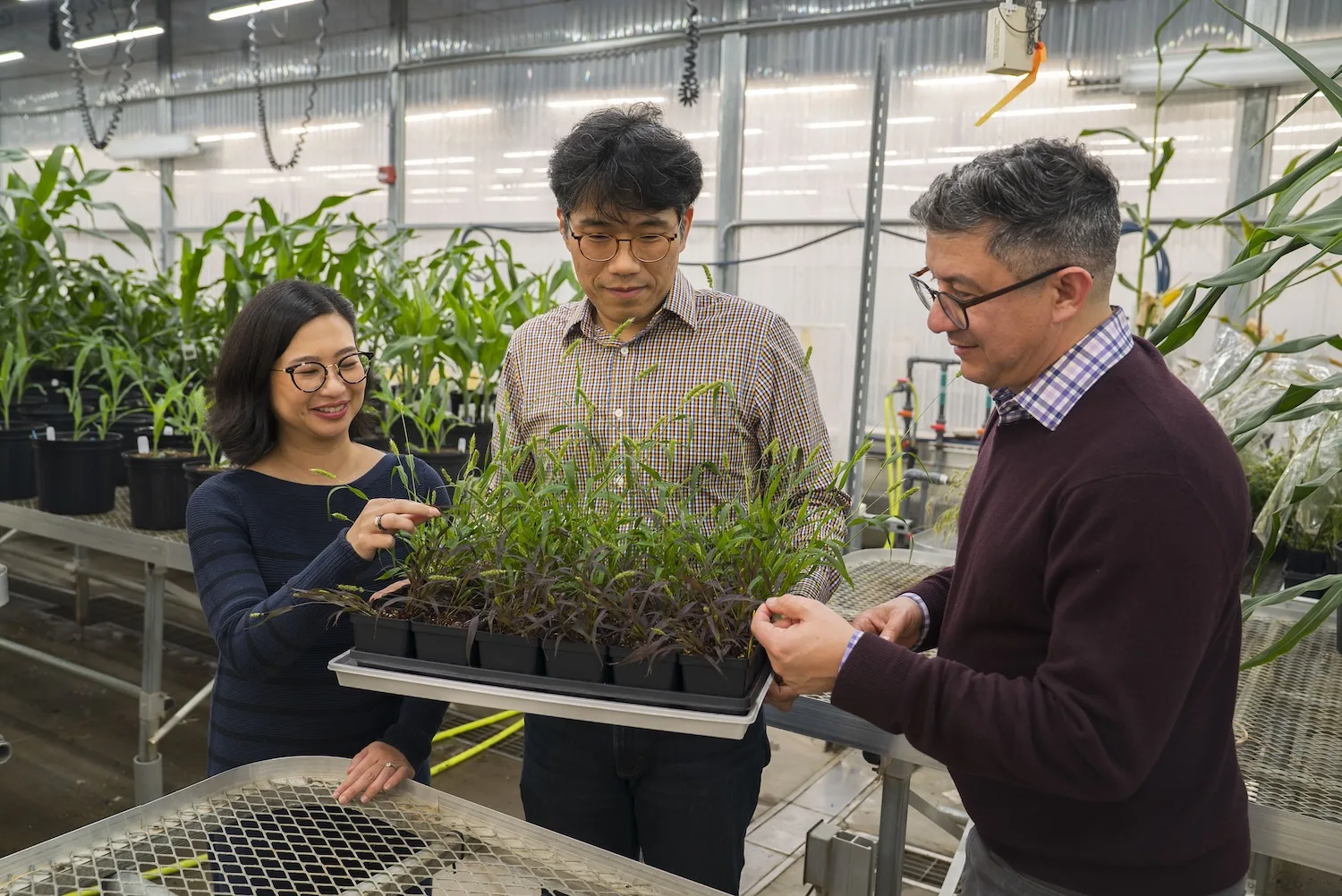
Researchers at the Danforth Plant Science Center are pioneering tools that allow grain crops such as corn, wheat, and barley to act as living biosensors, turning purple in the presence of certain chemicals.
The research led by Dmitri Nusinow and Malia Gehan, principal investigators at the Danforth Center, sought to engineer grasses that would make purple pigment in their leaves when proteins in them interact with specific chemicals.
Keep up with local business news and trends
Subscribe to the St. Louis Business newsletter to get the latest insights sent to your inbox every morning.
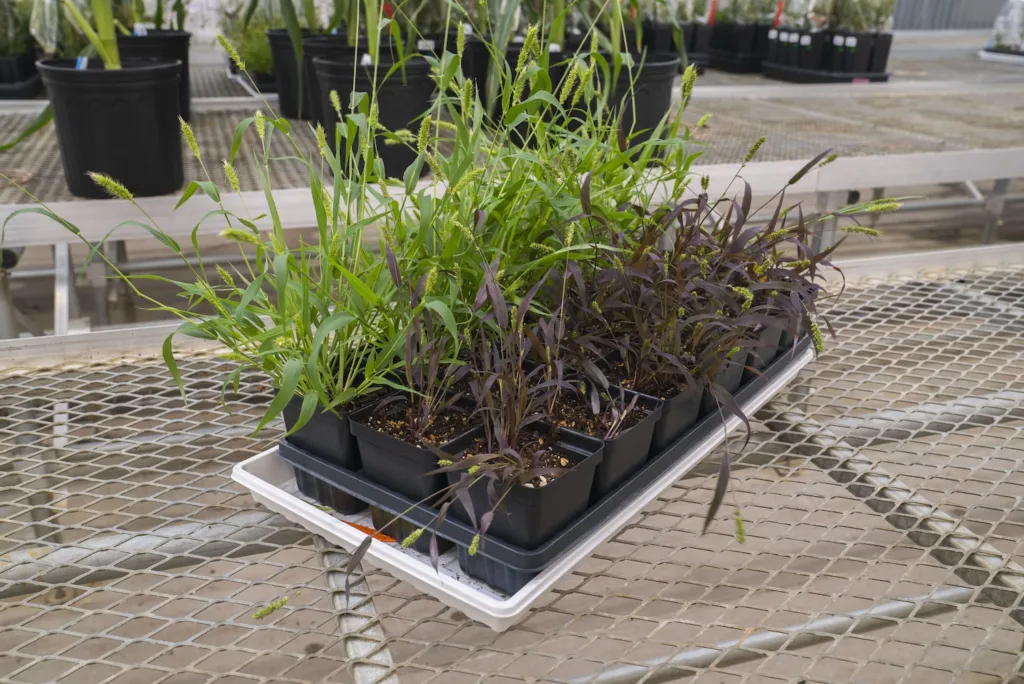
The pigments are naturally present in many plants. “What we did was connect a protein sensor to turn on a pathway to produce intense purple pigmentation,” Nusinow says, which could then be seen by cameras. Researchers—including people at the Danforth Center, the University of Florida, and the University of Iowa—also developed a methodology that could detect changes in coloration using a remote sensor, like a drone.
“For many people, plants are green, they’re very easy to ignore,” Nusinow says. “But if you have something where, side-by-side, the color difference is as striking as this, it’s very easy to see.”
Why It Matters: Grass crops, such as rice, wheat, sorghum, corn, and barley, are “where the majority of our food comes from,” Nusinow explains. And many different chemicals (both desired and undesired) can make their way to crop fields. Plants that can sense them and visibly change color can give farmers earlier indications of what’s going on in their fields.
“If you could detect unwanted pollutants inside the field, you could more quickly determine why maybe your crops aren’t growing as healthily,” he says. “Or if you could detect a chemical that a plant pathogen produces, you may be able to determine if there is a specific disease inside your field that hasn’t yet caused any problems, so that you could take some prophylactic measures to stop [it] in its tracks.”
It’s possible to program the proteins that trigger the purple coloring to react to different chemicals, leading to crops capable of detecting chemical pollution, different pesticides or the presence of compounds that beneficial microbes are producing, Nusinow says. The distinct purple color is also unmistakable for another kind of color change that may happen naturally, he adds.
“You know, it’s dying or it’s too hot, or other other environmental conditions,” Nusinow says.
What’s Next: For now, this research is still concentrated in the lab, since any new crop with the ability to turn purple would need to clear strict regulatory approvals for genetically modified plants. Nusinow says some companies, such as InnerPlant and Insignum AgTech, are already working on commercializing this kind of plant technology.
The Danforth Center’s research, supported by the Defense Advanced Research Projects Agency and published last month in the Plant Biotechnology Journal, focused on Setaria viridis, also known as green foxtail, what Nusinow calls “a model for corn sorghum and other grain crops.” He adds they were able to demonstrate the same purple coloring would work with corn cells.
Prior research into expressing colored pigments in plants had focused on tobacco and Arabidopsis, a member of the cabbage and mustard family, Nusinow says. The breakthrough into grasses required reengineering of the components that make plants express the pigment, he adds.
Nusinow adds that this research into expressing purple pigment in grasses is openly available for others to build off of, something he says already helped drive forward new discoveries and advances when it comes to developing plants as biosensors.
Hear from Danforth Plant Science Center’s new president on The 314 Podcast.