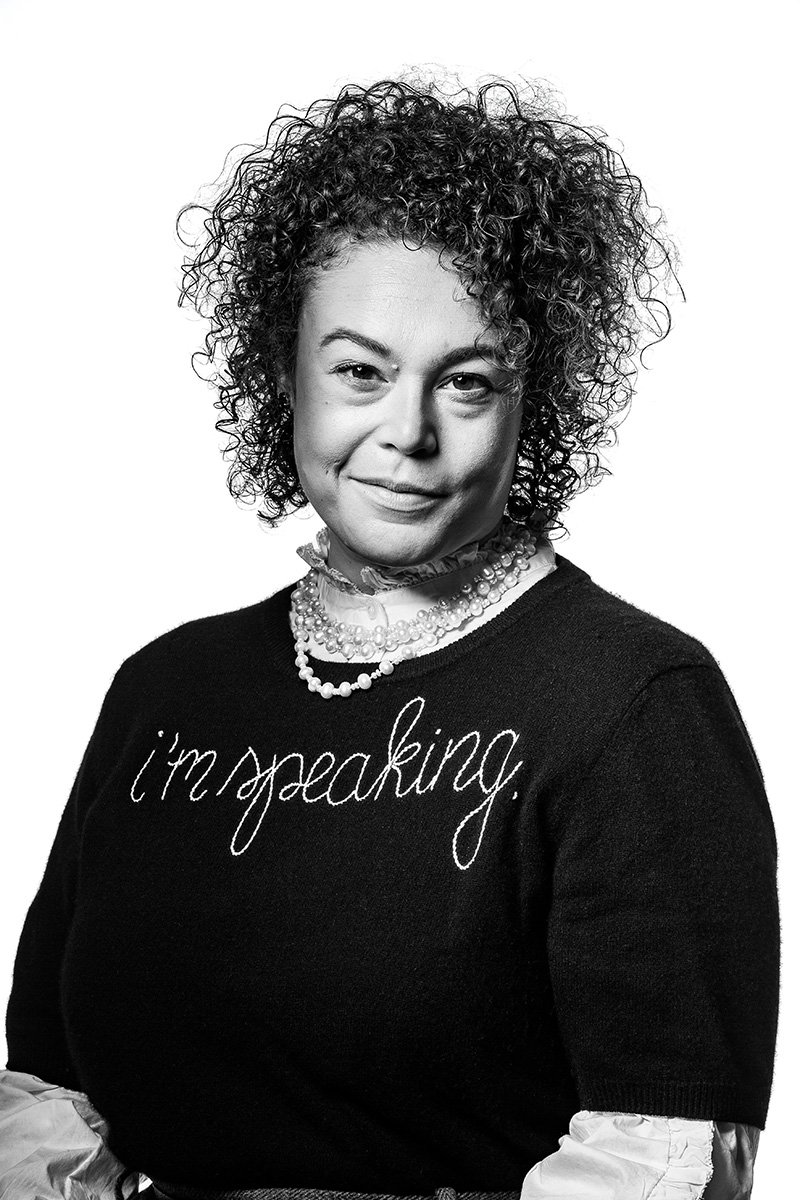
When Natalie Self moved to St. Louis in 2009 to participate in the Coro Fellowship, a civic leadership training initiative, the Chicago native found an apartment rental for exactly the length of the program: nine months. “I was sure I was going to leave the minute it was over,” she says. But Self soon discovered that St. Louis was a place where she could make an impact. She pursued a graduate degree in social work from Washington University, got involved in entrepreneurship, and collaborated with philanthropists, all while working to promote equity and inclusion efforts across several sectors. Now, Self is the vice president of equitable economic impact at Cortex, where she’s tasked with helping the innovation district develop opportunities for underrepresented communities.
What drew you to this mission at Cortex? In order for our region to grow, we have to do work in a different way. We have a vision and a hope that we can assemble resources to be a place that supports employers in making changes. I know from my past experience that, for startups, it’s far easier and more efficient to build inclusive cultures as a company is growing than to do it afterward. Cortex has the opportunity to set the table, where we can encourage employers and innovators in our startups to build that culture from day one.
Keep up with local business news and trends
Subscribe to the St. Louis Business newsletter to get the latest insights sent to your inbox every morning.
What does that work look like? It’s thinking about how Cortex can leverage its place, reputation, resources, and partnerships to support the goals of organizations that are directly embedded in communities of color. Cortex is not going to plant a flag in other parts of the region. However, we can support organizations that have trust on the ground in North St. Louis, South St. Louis, and immigrant communities. We’re also thinking strategically about Cortex’s role in convening workforce partnerships that fill needs in our geospatial, bioscience, and cybersecurity clusters. Another big part of my work is working with folks to ensure that everyone is thinking about their work through a lens of equity. So, pretty simple stuff. [Laughs.]
Why are you optimistic that this region can do the things necessary to create equitable opportunities? The work of activists on the ground after the [police shooting] of Michael Brown made it impossible for civic leaders to ignore reality. There’s a constant beat of folks who’ve kept the conversation going. One of the things that gives me hope is that I hear more and more, frankly, economically privileged white men saying, “No, it’s actually time that we do things different.” That’s what it’s going to take.
What will it take to see meaningful change? I can yell all day long about equitable economic growth, but until those who have privilege move money and power behind this cause, we will not see change. That’s what gives me hope. It doesn’t mean the work isn’t hard. It doesn’t mean I don’t wish it went faster. But I see movement in ways that make me more encouraged now than I was even two years ago.
The STEM pipeline itself isn’t very diverse. Even if companies want to hire equitably, will the pool of candidates limit their ability to do so? Your observation is partially correct. What is true is that women and students of color, when they enter college, they enter at the same rates in STEM [as white men]. But they don’t graduate at the same rates. I like to nuance our conversations around the pipeline because it is simultaneously true that we need to better support folks in training, but we also need employers to take responsibility for what their workplace is like.
What should people do if they want to support entrepreneurship among women and people of color? We need to listen. For me, that’s the thing that’s sometimes really frustrating. One of the joys of social work is that if you build trust and listen to understand, the answers are there. It’s not that we don’t know what to do. We just lack the will to do it.