Years ago, as Brian Pratt looked at a map of the city of St. Louis, the Downtown West neighborhood reminded him of a donut hole.
“You have the central business district to the east, there’s everything on the other side of Jefferson, and then the old highway interchange that kind of left things stuck in time,” says Pratt, managing principal and partner at St. Louis-based developer AHM Group. “I don’t know that Downtown West as a neighborhood—other than as a geographic indicator—really represented what the neighborhood was or could be.”
Keep up with local business news and trends
Subscribe to the St. Louis Business newsletter to get the latest insights sent to your inbox every morning.
Pratt’s firm is among several stakeholders working to cultivate a more evocative sense of place in the western half of Downtown West, reshaping what the neighborhood is—and will be. That includes the name. Last spring, developers such as AHM Group, Jassen Johnson of Renaissance Development, and Memphis-based Development Services Group, among others, rolled out a new name: City Commons, with boundaries of 17th Street to the east, Lucas Avenue to the north, Beaumont Street to the west, and Market Street to the south.
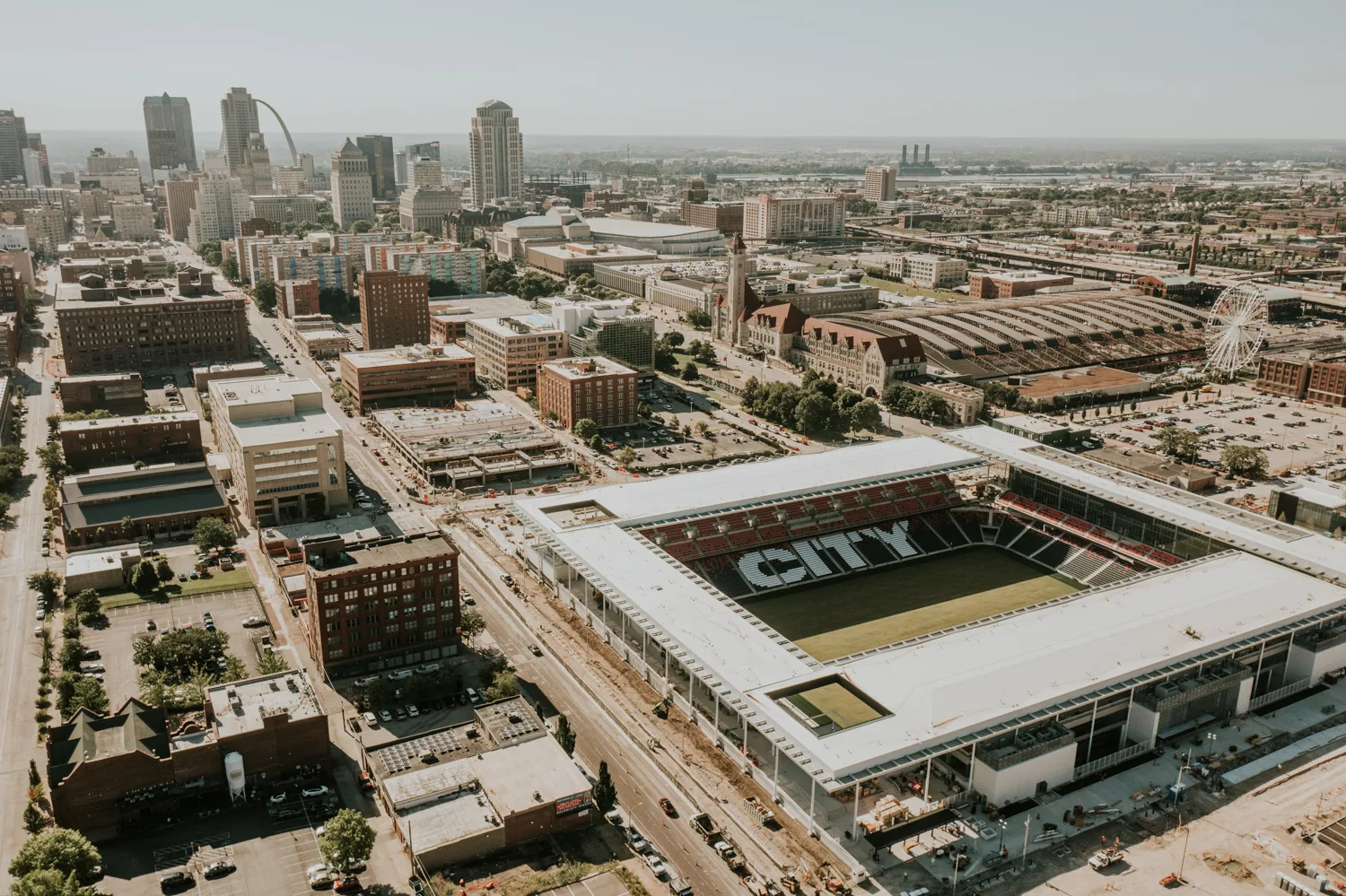
City Commons is a play on the former name of St. Louis CITY SC’s stadium Energizer Park, which was called CITYPARK from its opening in 2023 until a new naming rights deal with Energizer Holdings kicked in earlier this year. The stadium is the neighborhood’s main draw, though development on its surrounding blocks is helping to bring a live-work-play vibe to a central slice of the city that, for years, felt overlooked. Just as renaming the heart of Forest Park Southeast as The Grove helped solidify its place as a destination, they hope to help people see this part of Downtown West, creeping into Midtown, as a place with its own distinct identity—and desirability.
“We all agreed that this portion of the neighborhood needed to be reset from a public perception basis,” says Kyle Howerton, managing principal and partner at AHM. “The way to do that is to reset everyone’s expectations of this part of the neighborhood and show that we’re making a tremendous amount of progress.”
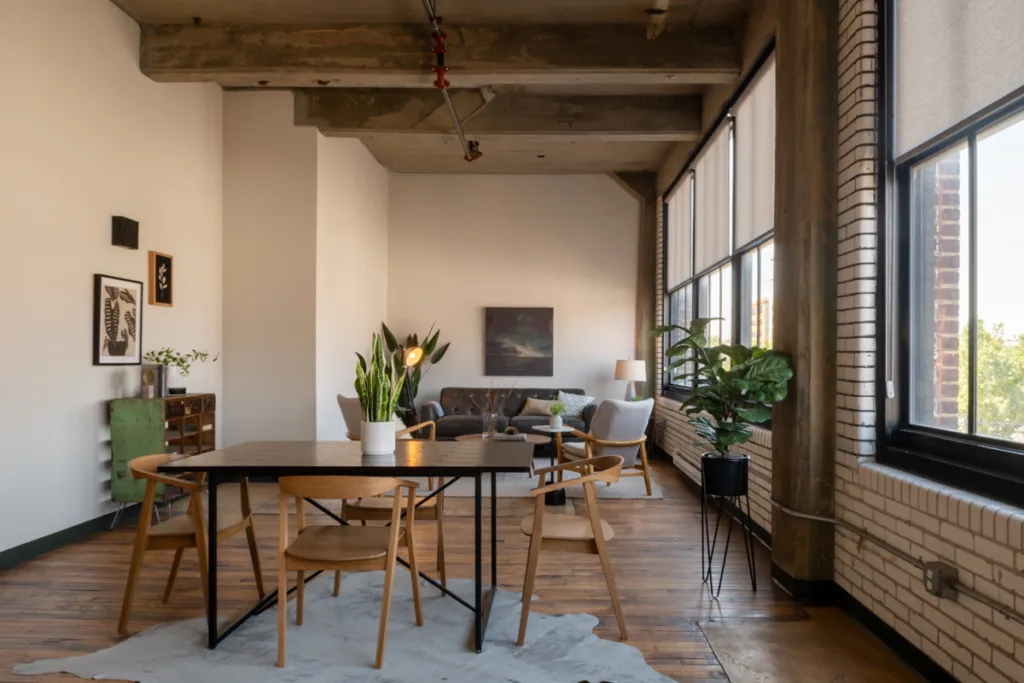
AHM says it has already invested $95 million in the neighborhood, activating such properties as The Draper, a 95-unit apartment complex at 2223 Locust. The building, AHM says, is now 93 percent occupied and has seen a 90 percent drop in emergency calls. AHM has seen similar success with The Vox, a 75-unit condominium development at 2211 Washington, and The 22, a 42-unit apartment complex at 2200–2206 Locust.
“We’re actively managing 350 apartments in the neighborhood,” Pratt says. “We’ve probably got upwards of 100,000 square feet of commercial space in some form of existing tenant, re-tenanting, or available for rent. And our vision is to transform the City Commons neighborhood into a vibrant, inclusive, economically thriving neighborhood. There’s immense potential.”
Pratt says scaling is the next step for AHM, which is preparing to shift its focus from the rehabilitation and renovation of existing building stock to overseeing new construction. A 29-story timber high-rise called The 314 could break ground in Downtown West later this year, bringing an additional 287 apartments and 15,000 square feet of commercial space to Locust Street.
“We’ve got approximately $400 million in investment programmed, and The 314 is another $145 million-plus of that,” Pratt says.
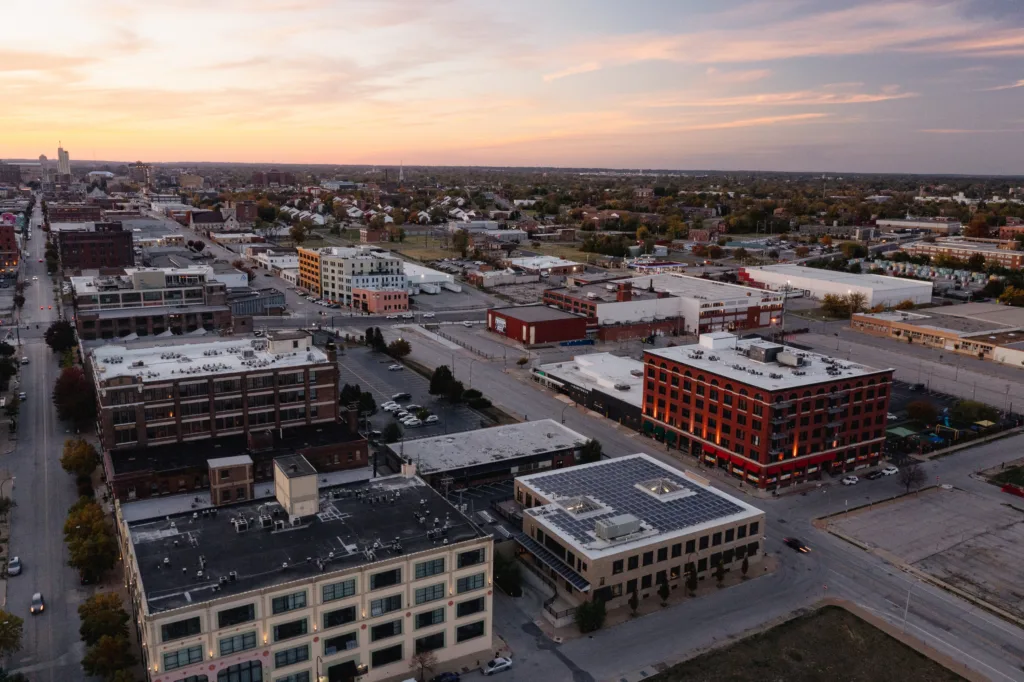
Additional new construction will be focused at 2125 Locust, where AHM is planning a 74-unit, ground-up project that will include 3,500 square feet of restaurant and retail space on the first level. One block to the north, at 2100 Washington, AHM is developing a 113-unit apartment building with 7,500 square feet of first-floor commercial retail space. The developer is also eyeing a creative office concept at 2101 Locust, and 45 apartment units at 2109 Locust. A 411-unit parking structure will serve these properties.
“We’re trying to fill a mix of uses,” Pratt says.
As for the name of the neighborhood, that’s also a work in progress. Howerton acknowledges that rebrands like this take time to catch on. They also require coordination.
“It’s much easier to have something like this take hold and become permanent when there are a half-dozen major stakeholders that accept it, support it, push it forward, and emphasize it,” he says. “It’s difficult to break the habit of calling a neighborhood by the name it’s had forever. Working together, we can do it.”