For Aaron Williams, the stories St. Louisans latch onto and share about the region are crucial. And for far too long, he argues, the wrong narratives have come to define the city, especially the North City neighborhoods he focuses on as the president of the 4theVille.
“A lot of the culture makers, history makers of the St Louis region are [from] the same places that people don’t want to go to or talk bad about,” Williams says. “We want to shift not only that narrative, but the thinking about the way we invest in those types of places.”
Keep up with local business news and trends
Subscribe to the St. Louis Business newsletter to get the latest insights sent to your inbox every morning.
Williams describes the nonprofit he leads as a “cultural heritage development organization,” keen on uncovering, sharing, and preserving the significant and rich Black history concentrated in the six north St. Louis neighborhoods it covers: The Ville, The Greater Ville, Kingsway East, Fountain Park, Lewis Place and Vandeventer. To that end, 4theVille recently brought on two new “memory tellers,” community storytellers who help develop and lead tours that highlight these stories and history.
“There are stories for days about St. Louis, about Black St. Louis, about The Ville, specifically that we can have pride in,” says Marvin-Alonzo Greer, 4theVille’s director of cultural heritage. “If more people knew about the amazing stories, the amazing legacy, I think more people would want to come here.”
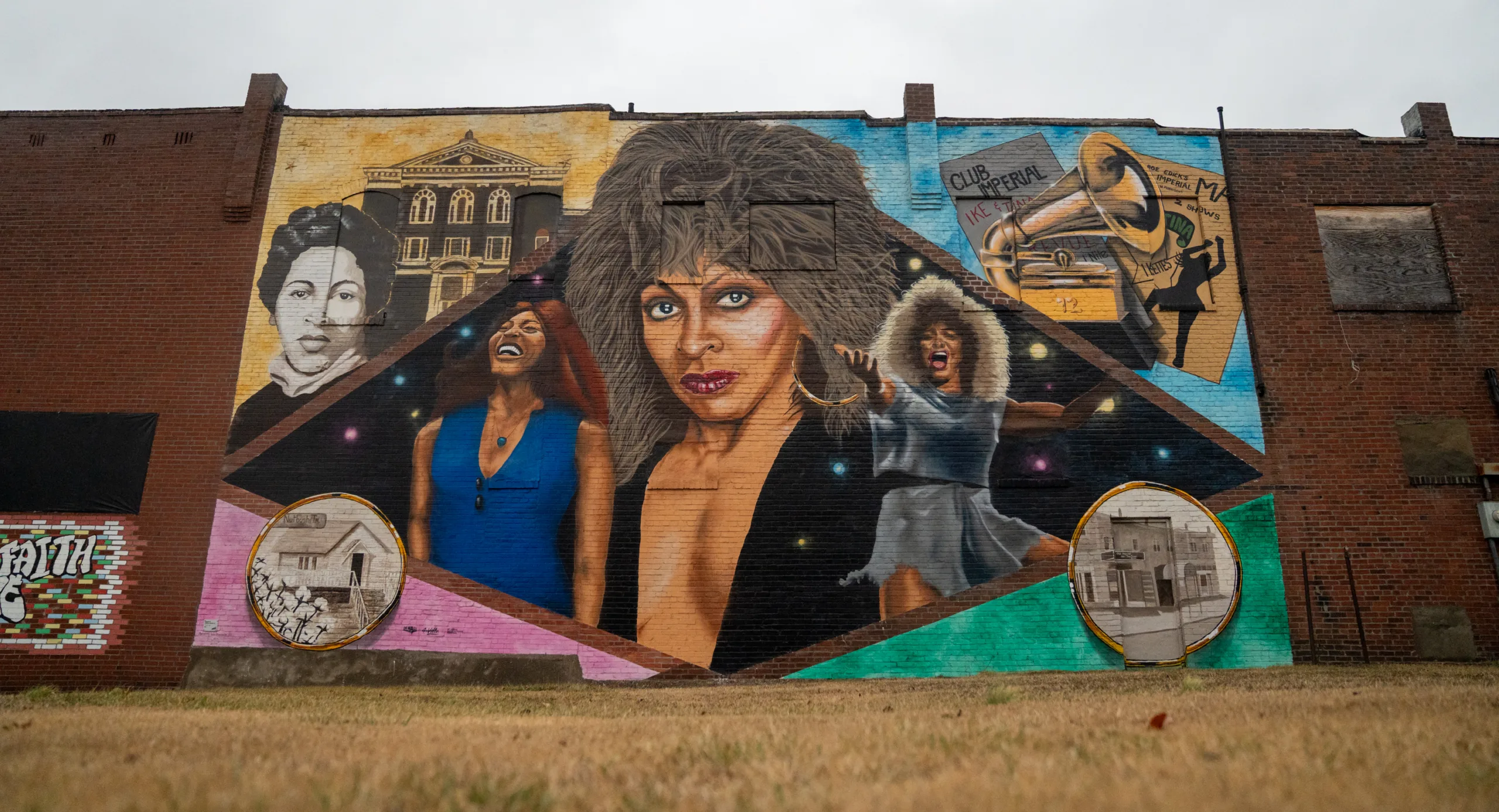
Places like Fairground Park, which Greer says is “the most important park in St. Louis and probably the most underfunded park in St. Louis,” despite being home to some of the first Black men to serve in the U.S. military after the Emancipation Proclamation opened the door to them serving as union troops in the Civil War. Or Sumner High School, which boasts as alumni Tina Turner and Arthur Ashe.
Despite having what Williams says is the “first of many” and “only of many” in terms of Black culture and heritage, St. Louis hasn’t historically attracted many visitors seeking out this kind of programming.
“That is a tourism deficit that 4theVille can fill, and whoever else wants to be our partner in that effort,” he says. “We need to do that, especially coming from a city that has a very deep and rich Black cultural legacy.”
He can count Brad Dean, Explore St. Louis’ new CEO, as one of those partners. Dean is keenly aware of that deficit, and says 4theVille’s programming comes at “exactly the right time” for the region, which outperforms the national average when it comes to visitors seeking out museums, landmarks, or historic sites, even as Civil Rights and Black heritage sites have seen far fewer visits.
“It’s shocking to see how few people come to St. Louis to explore, experience, and learn about African American Heritage, given the extraordinary heritage and legacy in St. Louis,” Dean says. “People don’t travel to collect postcards anymore. They travel to collect meaning and experiences and culture helps differentiate St Louis in that realm.”
For St. Louis, tapping into that desire is just good strategy: Travelers seeking cultural experiences tend to spend a lot more money within local communities than the average leisure traveler, he says.
And it’s especially critical this year, Dean says, as 2026 was already set to be a soft year for meetings and conventions in the Gateway region. He believes St. Louis can benefit from people traveling for events like the United States’ 250th birthday, the Route 66 centennial, and the World Cup, which will have matches across the state in Kansas City, Dean says.
“That’s why I think this is so perfectly timed, because we’ll have visitors who were never thinking about St. Louis now within our reach, and we need to provide the reason to bring them here,” he says.
He adds that it’s crucial for his organization to support and amplify 4theVille’s offerings when marketing St. Louis as a destination this year and into the future. “St. Louis is a special place, and its contributions to American history are undeniable and immensely consequential,” he says. “ But we don’t do ourselves any favors by hiding parts of our history.”

The cultural tourism programming is also key to, in some ways, setting the record straight about north St. Louis and helping shift how people relate to the area, Williams says.
“So that people say, ‘Oh, it would be nice to live in The Ville, that’s where the trap run was, or that’s where the Juneteenth bike ride was, or that’s where that really cool Tina Turner monument is. It would be dope to live there,’” he explains.
Greer sees the tours and storytelling as helping to dismantle stereotypes about northside neighborhoods. He adds there’s only so much a plaque or monument can convey, making “continuous reuse of spaces really important.” That means 4theVille is looking beyond just developing cultural tourism, to things such as art and storytelling, preserving historical buildings, and broader community development, Williams says. His organization sees those as verticals that “amplify the other,” with the end goal of creating a stronger and more vibrant area, eventually yielding much needed development.
“The best way to preserve this legacy is to make it stronger economically,” Williams says. “There’s only so much begging for free money that you can do and there’s only so much you can do with no money. At some point, the dollar has to start to turn in the community so that the people that live here and work here can realize its benefits.”
Williams explains 4theVille is intent on developing Dr. Martin Luther King Drive as a “cultural boulevard” and “commercial spine” for the area by facilitating new storefronts, new plazas, more public art and programming, and helping to organize the existing residents and businesses so that they can “sing the same tune” about the area.
“We don’t exist to be private real estate developers. We don’t want to develop MLK [ourselves],” he says. “We just want to create and support the infrastructure that will allow other people, especially people from this community, to develop MLK.”
Williams admits there’s always the risk that such improvements can lead to the displacement of current residents and businesses. To combat this, Williams says 4theVille intentionally looks to work with those who’ve remained, like helping to find commercial or retail tenants for the spaces along MLK owned by neighborhood resident Jerry Bevin, or having programming link in with enduring local businesses, like JaDen’s Diner, Ozella Foster’s Funeral Home, and others.
“They’ve sustained businesses in an economically depressed community. There is no business more successful than theirs, right? If you can scale them up, then you already know that’s a guarantee,” he says. “You already know it works, because they figured out how to do it with much of nothing.”
And Williams says it helps that much of 4theVille’s planning around the vision of Dr. Martin Luther King Drive is reflected in the nearby neighborhood plans the city has now adopted. He’s confident 4theVille can execute on its goals of turning the area around given how similar cultural programming in other parts of the country and world has done the same.
“This is not magical, you know?” Williams says. “This is like, I can’t believe we haven’t done it yet. When you have something like The Ville, how have you not done it yet?”


