As Route 66 marks its 100th year, a stretch of highway in southwest Illinois is preparing for a busy year. Known as the Last 100 Miles of Route 66, the corridor runs through a string of small communities where the Mother Road’s legacy is woven into everyday life, local businesses, and visitor stops.
For the region served by the Great Rivers & Routes Tourism Bureau, the milestone is less about nostalgia and more about momentum. Communities along the route are planning festivals, restoring landmarks, and welcoming a new wave of travelers drawn to one of America’s most storied highways.
Route 66 Character in Every Mile
What sets the final Illinois miles apart is the density of Americana packed into a relatively short drive. The route passes through at least 13 communities, each with its own Route 66 personality.
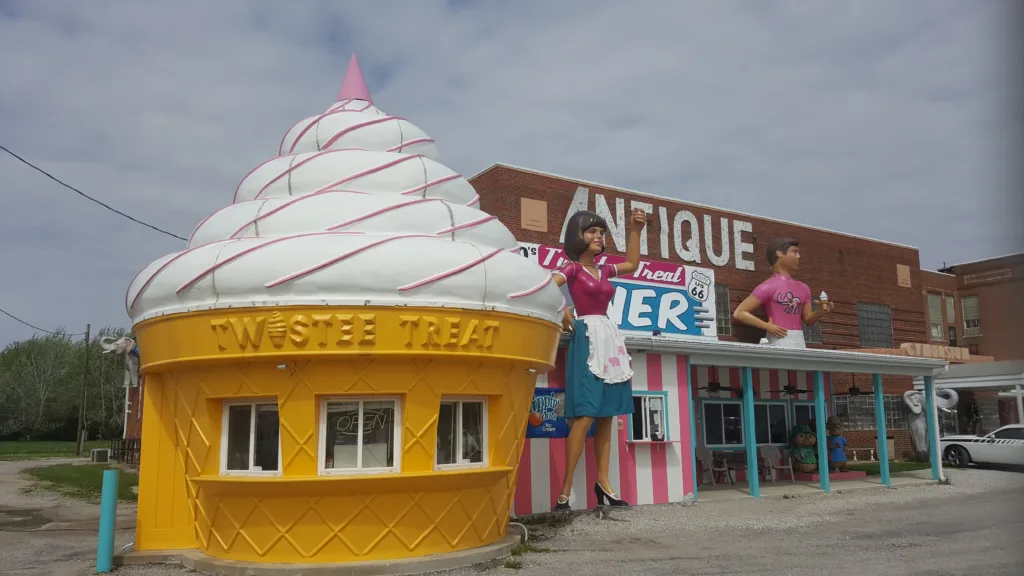
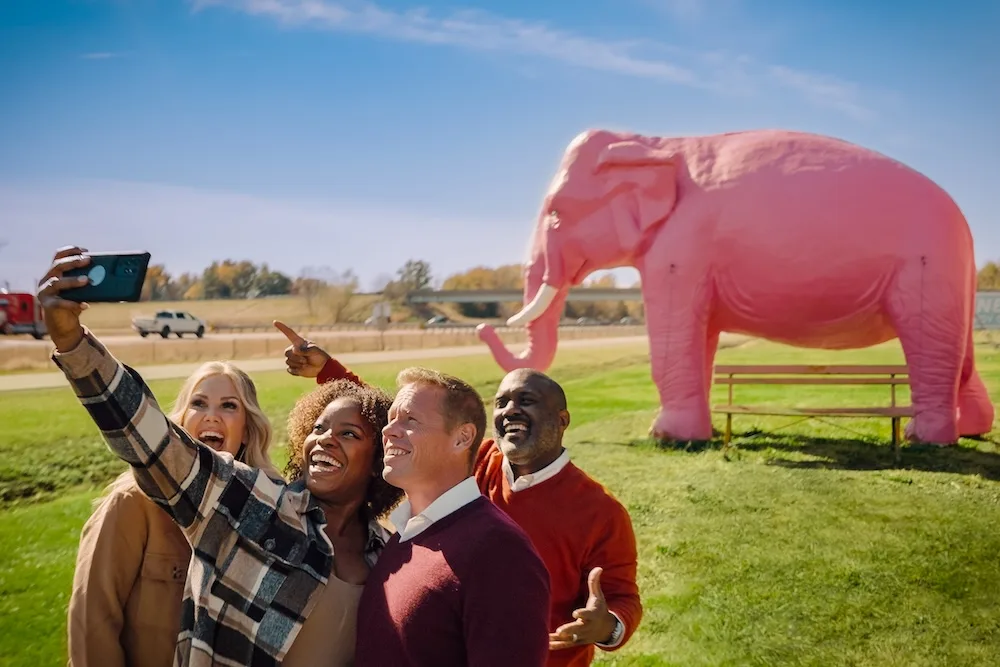
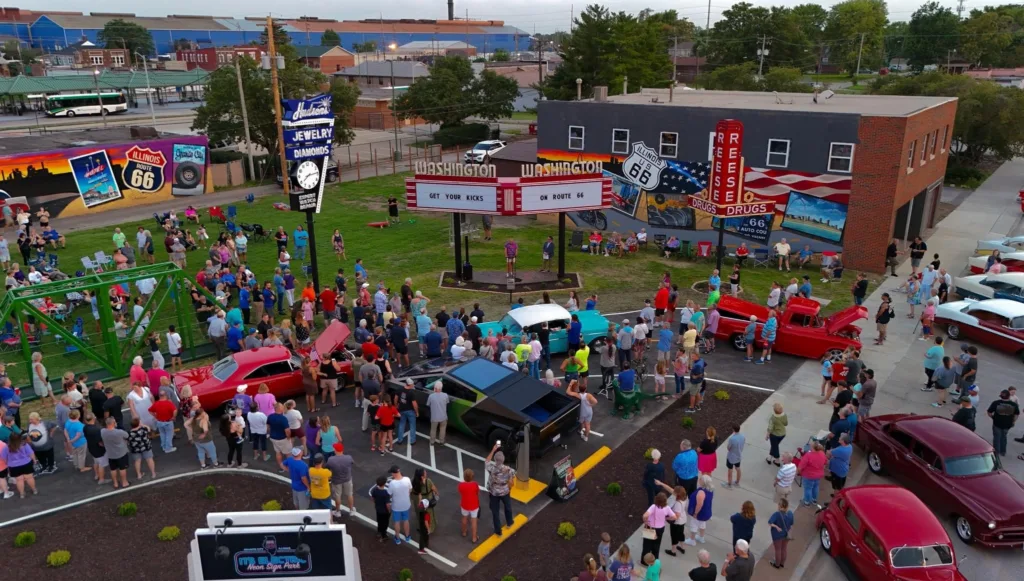
In Livingston, visitors are welcomed by the towering pink elephant outside the Pink Elephant Antique Mall, a classic roadside photo stop that captures the character long associated with the Mother Road. In Granite City, newer additions like the neon sign park and oversized roadside sculptures honor the corridor’s past while creating new stopping points.
Brenda Whitaker with the City of Granite City, who has helped guide the evolution of the city’s Route 66 attractions, says the work reflects a broader effort to reinterpret local history for today’s travelers.
“Route 66 has always represented movement and possibility,” Whitaker says. “In Illinois, and especially in communities like Granite City, we’re rediscovering that spirit in a new way. Our Route 66 attractions reflect our authentic industrial roots—steel, rail, and hardworking people—while being reinterpreted through public art, roadside experiences, and community-driven spaces. This stretch of the Mother Road reminds people that small communities still have big stories to tell.”
The region’s importance to Route 66 runs deep. Cheryl Eichar Jett of Edwardsville notes that Illinois is often called “where the road begins,” reflecting Chicago’s role as the eastern terminus and the state’s early leadership in paving the highway.
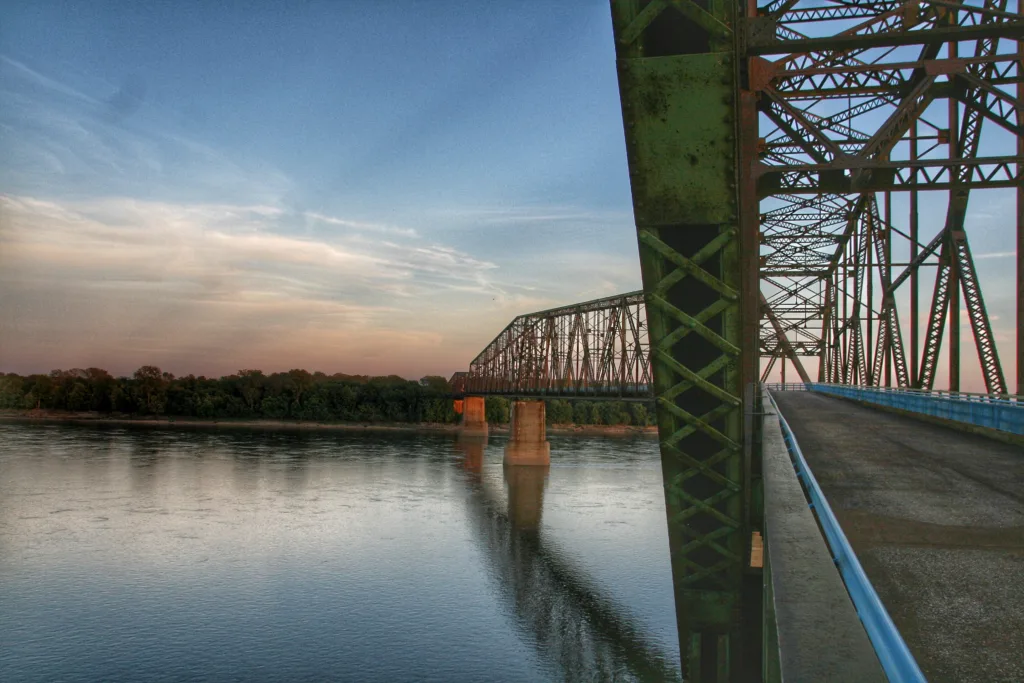
“This stretch was an important link between Chicago and St. Louis,” Jett says. “Today in southwest Illinois, we continue to celebrate that history through everything from the Chain of Rocks Bridge to quirky landmarks like the World’s Largest Catsup Bottle and Granite City’s neon sign park.”
Historic landmarks continue that story across the region. The Chain of Rocks Bridge remains one of the few places where travelers can walk across the Mississippi River, while Carlinville’s massive courthouse and the Cannonball Jail highlight the region’s long past. Together, they show why Route 66 continues to draw travelers from across the country and around the world.
Communities Preparing for the Centennial
With the 100th anniversary approaching, towns along the route are coordinating a full calendar of events designed to draw new attention to Route 66.
- Catsup Bottle Festival | June 20, 2 p.m.
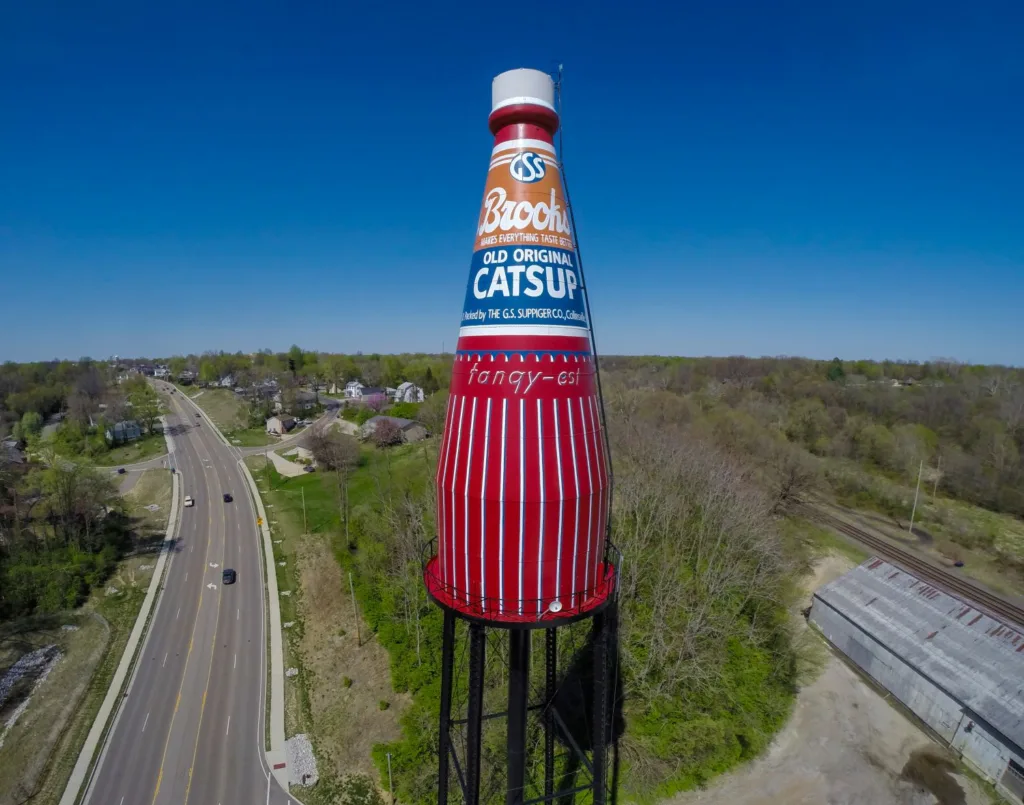
Collinsville’s annual celebration honors the World’s Largest Catsup Bottle, one of Route 66’s most recognizable landmarks. The festival typically features live entertainment, food vendors, family activities, and opportunities to experience the historic site up close, welcoming both returning fans and new visitors. Michael Gassmann, who created and directs the festival, says the event was designed to recognize the community effort behind the landmark’s preservation. “The Catsup Bottle Festival was created to celebrate the successful saving of Collinsville’s landmark,” Gassmann says. “It’s a giant thank-you to everyone for a job well done.” He adds that the event is intentionally designed to feel welcoming across generations. “The festival is structured as a big birthday party for the catsup bottle and it’s all about bringing the community together,” he says. “It’s an amazing multigenerational event. Everyone invites friends and family from around the country.” - Hemmings Great Race Stop| June 20, 3 p.m.
Later the same day, Collinsville will host an official stop of the Hemmings Great Race presented by Coker Tire. The nine-day vintage rally spans more than 2,300 miles and is expected to arrive with roughly 120 antique vehicles, along with an international field of drivers and spectators. The public can view the cars and interact with participants during the stop. Local organizers Judy Demoisy and Michael Gassman, who helped lead the effort to preserve the World’s Largest Catsup Bottle, say the timing was intentional. Together, the festival and rally are designed to create a full day of celebration in Collinsville while introducing new visitors to the region’s Route 66 heritage. Additional community celebrations are planned throughout the year, culminating in a two-day regional festival on October 10 and 11, which will span all 13 communities along the Last 100 Miles corridor.
Preservation Efforts Keep History Visible
Behind many of the route’s most recognizable stops is a sustained push by local groups to protect historic sites before they disappear.
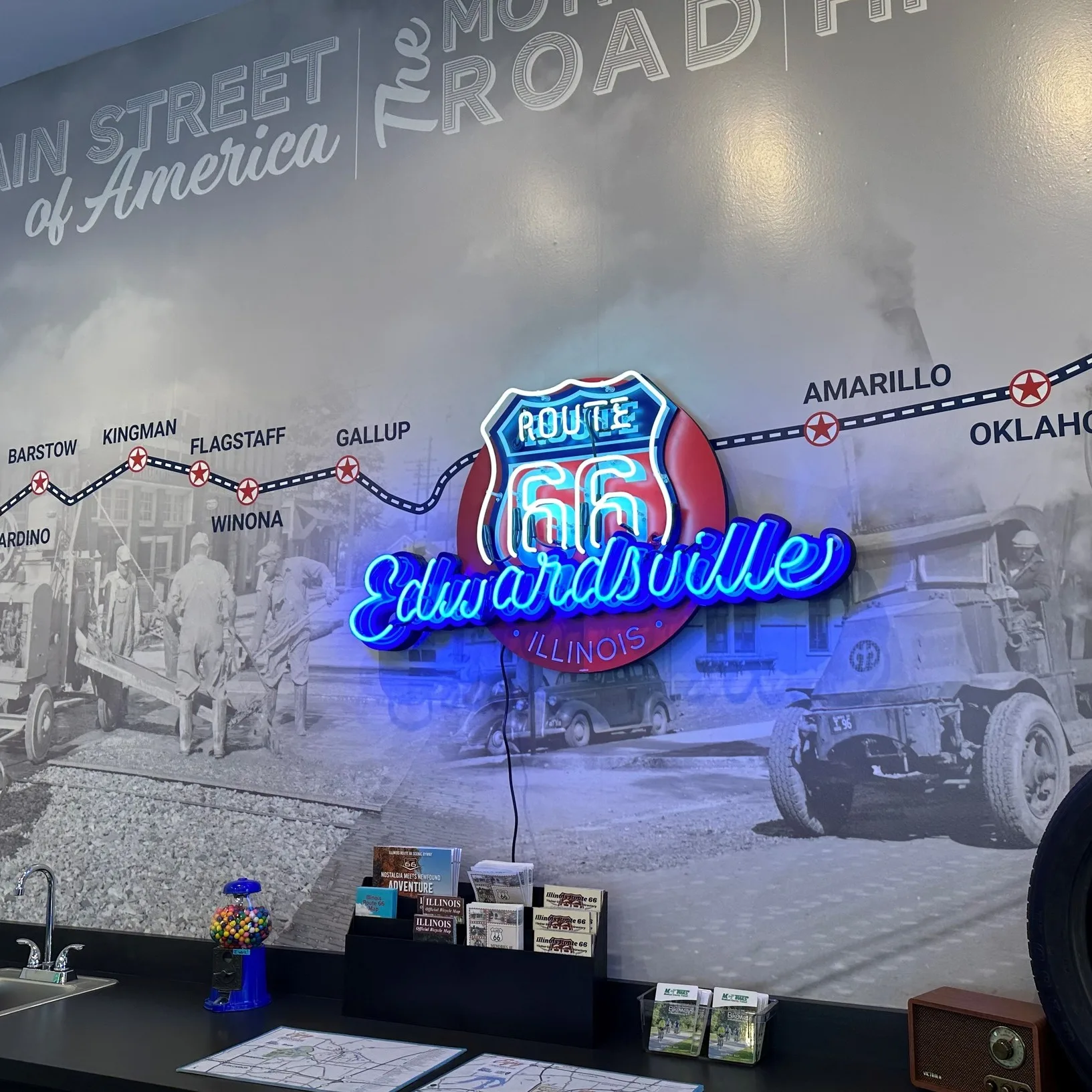
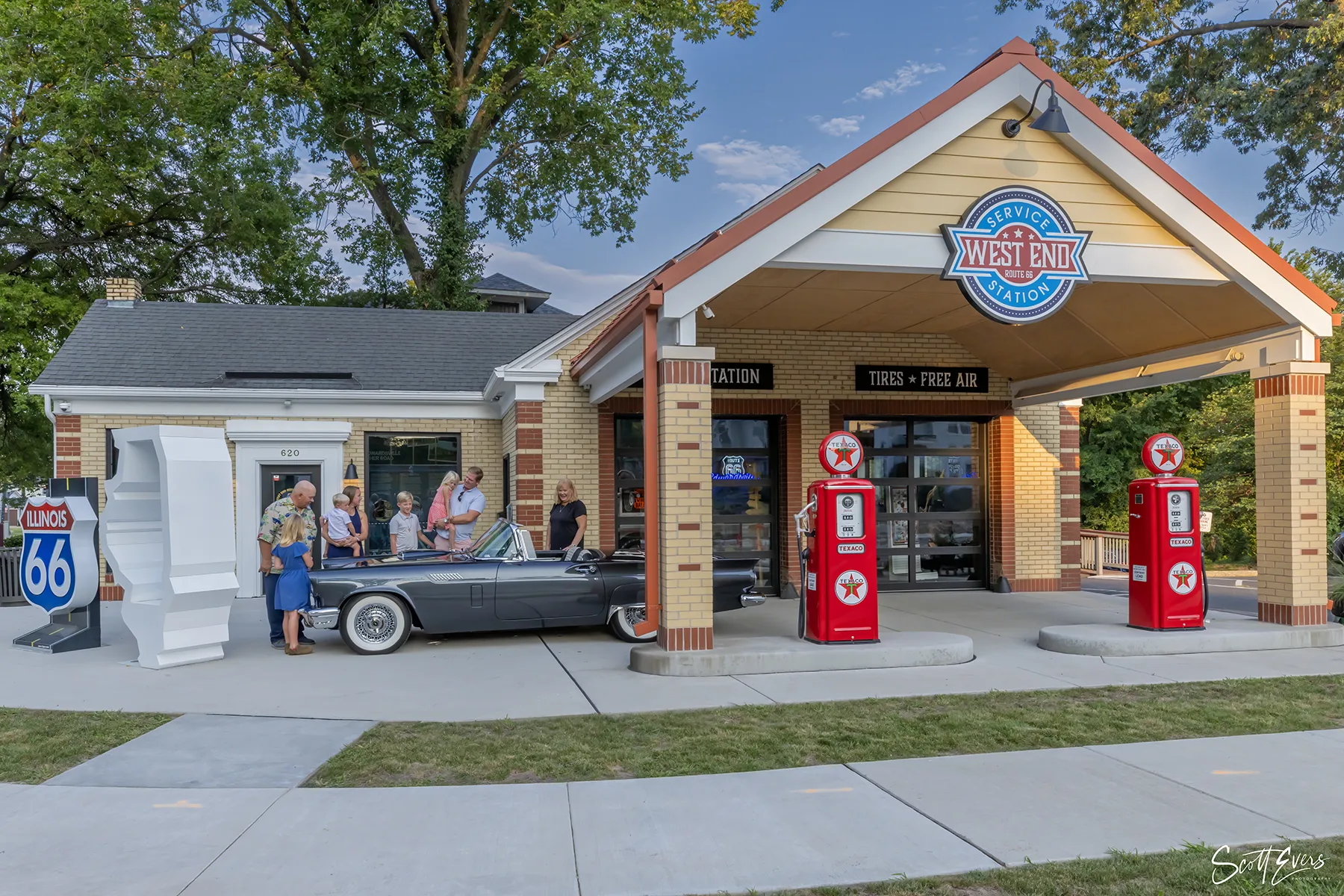
In Edwardsville, a partnership between the tourism bureau and the city helped secure grants to restore the West End Service Station, which now operates as a Route 66 welcome center and museum. In Mount Olive, Soulsby Service Station remains one of the few original 1926 stations still standing, giving visitors a rare look at early highway travel.
One of the most famous preservation efforts happened in Collinsville, where volunteers rallied years ago to prevent the Catsup Bottle water tower from being demolished. Today, the structure stands as one of the most photographed Route 66 landmarks in the Midwest and a symbol of the community pride that continues to leave its mark on the region.
The Road Ahead for Route 66
Nearly a century after its debut, Route 66 continues to draw travelers with its iconic history and nostalgia. International visitors still follow the highway from Chicago across the country, while many domestic travelers are rediscovering the route through shorter trips that spotlight heritage towns, neighborhood businesses, and classic Route 66 attractions.
Across the Last 100 Miles, the goal is simple: welcome visitors, encourage exploration, and protect the character that made Route 66 famous for the next generation.
This post was created by SLM Partner Studio on behalf of Great River & Routes Tourism Bureau. Travelers can explore attractions, trip ideas, and upcoming events at riversandroutes.com.