A bee lands on your arm, and digs its stinger into your flesh. Instantly, you smack the sore spot. That reaction eases the anguish, because the brain can’t focus on two sources of pain at once. Dr. Eugene Pereira, director of SLUCare’s Pain Management Center, suggests treatment for chronic pain can follow the same reasoning.
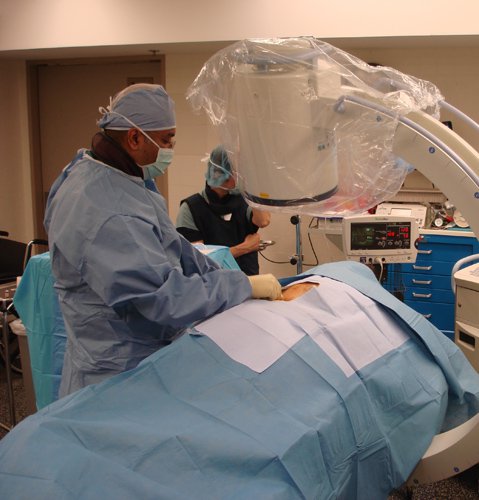
As part of spinal-cord stimulation treatment, Pereira inserts a pacemaker device at the base of the spine, which sends electricity through the back at a controllable rate. The stimulus overlaps the spot causing transmission of the patient’s chronic pain. “This therapy works very well for pain that is from damaged nerves,” he explains. “If you fractured your ankle or had arthritis, it would not help that.”
While the pacemaker may not be practical in every case, it’s sometimes a positive alternative to narcotics, he contends. “Strong narcotic medications leave the patient groggy and constipated, without much interest in daily life,” says Pereira.
Before patients purchase the device, Pereira places it partially into the patient’s back. A weeklong trial period allows patients to monitor the treatment’s success before deciding whether the pacemaker should be fully inserted. “There’s no other therapy that I know of that you can try before you buy,” he says. “With any other injection or surgery, you just have to hope it will help.”
The medical risks of the pacemaker include infection, nerve damage—plus the chance of equipment malfunction. The treatment ranges from $20,000 to $25,000, but Pereira argues alternative methods like back surgery are nearly as expensive. “If you look at in perspective you spend the same if not more to try back surgery which involves plugging in screws or plates which does not help in some cases,” he explains.