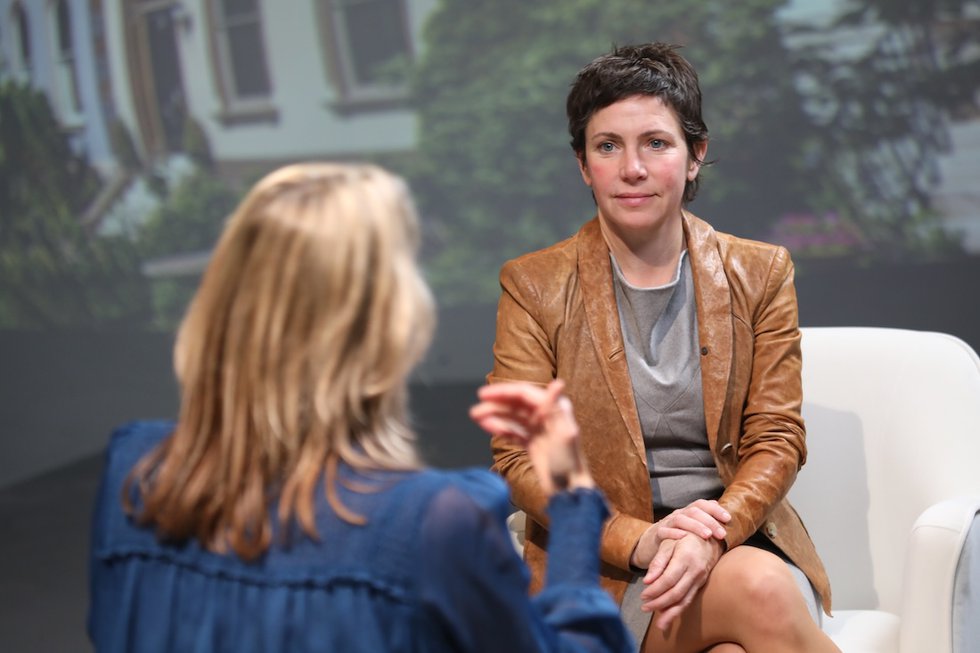
Alderwoman Cara Spencer sat down with Nine PBS and SLM for an interview focused on the five items identified as most important to residents via the Citizens’ Agenda. This is a transcript of her remarks. See more coverage of the agenda and other candidates at ninepbs.org and at stlmag.com.
Sarah Fenske: Okay, first item, transparency and accountability, and we’re gonna start this. Olivia has a video from one of the people who participated in forming the Citizens’ Agenda.
Get a fresh take on the day’s top news
Subscribe to the St. Louis Daily newsletter for a smart, succinct guide to local news from award-winning journalists Sarah Fenske and Ryan Krull.
[Citizen Video]
My name is Aminhan Lobster and I’m a resident of the Midtown neighborhood. My biggest concerns in regards to the future of the City of St. Louis involve transparency, accountability, and planning for the future. In regards to transparency, I would like to see more active ways in which the community can get involved and readily informed about the status of programming within the City of St. Louis, the status of the city services. For example, when citizens submit requests, I would like a more active portal so citizens can be aware of where those requests are and the status of being answered. In addition, I would like more accountability. I would like continued public hearings and forums in order for citizens of St. Louis to talk to whether that be the Board of Aldermen or even the Mayor’s office in regards to offering feedback and also getting status updates toward their concerns.
SF: So there’s plenty of public hearings at City Hall, but there’s a sense that decision-makers don’t really want to hear from people, that they’re just kind of checking a box, or that there’s not enough chances for people’s voices to truly be heard. What will you do to incorporate the voices of the communities you serve when you’re making decisions that impact them?
Cara Spencer: Yeah, and you know, I want to say Ms. Lobster has attended so many of the forums, and she always has really fabulous questions and really insightful issues that she brings up. Transparency is one. You know, I think a lot about, you know, building trust in our system. I think a lot of people have just lost faith in government.
They’ve lost faith when they submit a request to the Citizens Service Bureau that it’s not just going to go into a drawer and not be dealt with. And so one of the things I’ll bring to the table is a true accountability of citizen service requests, how long it really takes to fill a pothole, not just in a broad sense, but specifically. I mean, I think we need to look at these things geographically.
When you see the population loss that we’re seeing in the city coming out of a very specific geographical area, you know, it’s very clear to me that we have got to address equity in city services, and we’ve got to do a better job of it. You know, a program like CitySTAT is something that I think can be very, very helpful, not only internally to make the systems work better, but to describe and really provide to the public what it is the city’s doing. You know, I have seen a failure really to have any level of transparency from sunshine requests, you know, to reporting on these very basic city services requests. And I think it’s incredibly important to building trust in the community.
SF: You mentioned one part of town that’s lost a lot of people. Are you talking about North City there?
CS: I am, yeah. And you know, Sarah, the population loss that we’re seeing in our city is nothing new. It’s been happening since I was born, frankly, but it has quite literally fallen off a cliff recently.
I think there are around 800 places in the United States that have a population over 50,000 people, and there are only three losing population faster than the city of St. Louis. And we can see from census numbers that that is coming from North St. Louis, and that is a tremendous loss. We know people with children are leaving.
We know it’s people of color. And we also know that communities that are growing and thriving are growing in communities of color. And so it’s a double, triple whammy for us, really, because losing kids, losing communities of color, and losing an entire geographical area is a really, really big problem for our city’s tax base.
SF: You’ve been on the Board of Aldermen now for many years. Do you think that that board does a better job of getting that public input and hearing from the community than the administration?
CS: Certainly, I think the Board of Aldermen does a better job, I think, having robust opportunities for the community to engage.
And to be fair, I think that’s a product of the board. You know, we have public hearings, and the mayor’s office hasn’t typically had those. But something that I have seen shifted in the recent years under this current administration is the mayor’s office is now closed. It’s literally locked, whereas under previous administrations, the mayor’s office, the doors, the physical opportunity to engage and enter the mayor’s office was something citizens could do on a daily, regular basis. And to have that physical locking, have that monitoring of the door, really communicates to the public that this is not for you. The doors are closed, quite honestly, quite literally, to the mayor’s office right now.
And I think that is not only just a physical barrier, but it really communicates to the public that we don’t want to hear from you.
SF: So residents also talked about the need for follow-through. They feel like the city is constantly commissioning studies. They’ll hire consultants to look at stuff. And then that seems to just lead to commissioning another study. What will you do as mayor to move past that study stage and actually put things into action?
CS: Yeah, I mean, you know, we’re talking right now about giving raises to city workers. And this is coming, of course, at the very end of session after the Board of Aldermen really can, under our rules, without suspension of those rules, address raises. And so it’s coming at the 11th hour, essentially.
But it’s also preceding a study, a comprehensive pay study that should be done this spring. This is following a pay study that was done in 2021 that really went on a shelf and clearly did not address the pay parity or the lack of pay parity that was driving vacancies across city departments. And this is a huge problem that plays out in a failure to deliver city services.
You know, it’s also quantifiable. We had an enormous surplus last year in our budget, $42.1 million driven by vacancies in city departments. And we know that paying people what they deserve and what they, you know, frankly, need to feel compensated and really want to work for the city is not something that the city has taken seriously.
But you’re right. What we need to do is put these studies across the board from the pay studies, from the work we’re doing in zoning, from the jobs plan, from an equity accountability standpoint. We have so many studies, and it’s time to do the work of putting them into place.
SF: So that 2021 study, it’s interesting to hear because the mayor was touting these very recent pay raises. Could the Board of Aldermen have done more to say, hey, we’ve got this study right here. You need to move faster on this. The study’s already been done.
CS: Look, the Board of Aldermen is the legislative branch. And so it’s real. When you look at how government is structured, you have the legislative branch, of course, the judicial, the courts, and then you have the administrative branch, which is the mayor’s office, which really drives how the city delivers city services. One of the things, I mean, people, the Board of Aldermen is the recipient of the complaints from the public, but you really don’t want the legislative branch punching the administration into functioning correctly. There’s got to be some leadership coming from the organization, the portion, the segment of city government that’s driving how we’re delivering city services.
And we haven’t seen that leadership in the last few years, and the result of which is the Board of Aldermen trying to ram administrative solutions through. But that really isn’t the best way to do things.
SF: So something else that residents brought up at these sessions is the recent very negative headlines about the St. Louis Development Corporation, also some of the scandals in the building division. I know you’re well aware of both of these stories. What can the city do to keep public funds from going to bad actors? And do you feel like leaving the board of the SLDC, that that just opened the door to more potential problems?
CS: Oh, gosh. Well, SLDC is a quagmire right now, certainly. And, you know, I think it’s helpful to describe how it really is structured.
It’s a separate entity that is outside of city government. We’re somewhat unusual in that our economic development agency isn’t in-house. And so SLDC, St. Louis Development Corporation, has this awesome, and by awesome I mean huge and very impactful responsibility and role to drive economic development in our city. And they do that with funds that would otherwise be tax dollars. So it truly is a huge, huge responsibility there. Under the current structure, you know, you have an organization that has a CEO, which is really chosen by the mayor.
You also have a board of directors that oversees the organization. In this particular case, this administration, this mayor has chosen to have the chair of the oversight board be the CEO of the organization it’s supposed to be overseeing. And as a member of the oversight board, I was getting throttled in requests for information from the chair.
And when you have that breakdown of oversight, I realized over the course of my service there that the oversight was truly a sham. And it was not something I could continue under good conscience to participate in. You know, showing up to hearings and meetings without the information I had requested that I needed to cast votes resulted in me having to vote present.
And that’s not an acceptable form of oversight. I think it’s important that from a policy perspective that we prevent that from happening ever again.
SF: And so that’ll be, you’ll make a structural change there.
CS: Absolutely.
SF: You’ll make sure the chair of that board is not the CEO of that nonprofit.
CS: Not only would I never make that appointment. And frankly, that is just good governance of any organization. But I will make sure that we change the bylaws, which is incumbent upon the mayor to do, to make sure that that never happens again.
SF: Would you retain Neal Richardson if he wants to stay on as CEO of the development corporation?
CS: You know, it is my observation at this point that SLDC has unfortunately lost the faith and the trust of the community. And they’ve lost my faith as well. And, you know, I think when you look at the right, excuse me, the ARPA funds, you know, we allocated through the Community Development Agency, we allocated $37 million to St. Louis Development Corporation to invest in North City businesses that were truly struggling to get through COVID. And here we are four years later. The vast majority of those funds have not even gone out the door. And the list of awardees includes vacant buildings, vacant lots.
You know, it’s really, truly devastating if you’re a business or just a resident in North City and you’ve seen businesses not only struggle, but go out of business, you know, and this once in a lifetime opportunity is quite visibly squandered. So I think that breakdown of trust there is something that we will have to work very hard to repair. And it does look like new leadership.
SF: So we’ve sort of jumped into city services because city services affect everything. Of course, that’s so related. But I do have a couple more specific city services questions. So we’ll go to the second agenda item. Residents told us that the inadequate nature of services makes them feel like they aren’t valued by the city. Do you think that’s fair?
CS: I do. Yes, absolutely. I mean, as an alderperson on the front line, you know, when somebody’s garbage doesn’t get collected and it’s piling up. And mine right now is absolutely piled up. We are stockpiling our own garbage in our house. And I’m not kidding you. It is wildly disgusting.
SF: The two-day blitz did not hit your dumpster.
CS: It did not hit my dumpster. And it did not hit dumpsters in Lafayette Square and other parts of the city that I represent. Because I’m hearing from residents, I’m seeing the photos, which are truly, truly disgusting. And, you know, I mean, you pay into these services.
And at the end of the day, a municipal government is a service delivery operation. You know, it’s our job to provide basic city services, public safety, and a plan for growth. It’s very simple.
And we’re not doing those things in a way that folks feel is a return on their tax dollar investments in our community.
SF: So you were impacted by the January 5th snowstorm. You’ve been very vocal about the fact you couldn’t even get out of your house. But then the mayor’s people kind of snapped back and said, You’ve been on the Board of Aldermen all these years. If you didn’t like our snow removal policy, why didn’t aldermen bring this up before then? Is that fair?
CS: Oh, my gosh, it’s not fair. I will say that it is not fair. It is absolutely ridiculous to point to the Board of Aldermen as needing to pass policies to do basic city services.
You know, it’s interesting that the mayor said that, especially given, you know, you look at the comptroller issued that letter requesting that we call a state of emergency to hire additional contracts for snow removal. And the mayor snapped back and said, Thank you very much, but an emergency order isn’t necessary. We can do all this work without you. Right? I mean, that’s very, very true. And, you know, we do not need policies to say all hands on deck. We do not need policies that say we’re going to clear the streets. We do not need policies to be able to pivot and be nimble, okay, when unprecedented and unusual weather events take place.
You know, it would be crazy if we had a flood or some massive, massive emergency to say, Well, the Board of Aldermen didn’t tell us what we need to do here. No. Do your job of administering city services, be nimble, be able to pivot and be able to serve the citizens.
It is not the job of the Board of Aldermen to dictate every single aspect of how the administration functions.
SF: So at the same time, there have been a lot of American Rescue Plan Act dollars, and the Board of Aldermen put some of them into various pilot programs, you know, wanted to get lawyers for people facing eviction, examples like that. Do you think that the Board of Aldermen should have been more focused on trying to shore up the basics with those funds?
CS: I do, Sarah. And, you know, the proposal to spend that unprecedented once-in-a-lifetime $498 million came from the mayor. And, you know, the Board of Aldermen had to jockey around and try to make it better.
But at the end of the day, this was an initiative that was put forward by the mayor. And I absolutely advocated for and still advocate for additional funds going into infrastructure. Let’s take, for example, streets.
We have over 1,000 miles of city streets, and we know that if we were to just maintain them at a baseline, it would cost us between $12 and $13 million a year just to keep, you know, paving, replacing potholes, this sort of thing. But right now, we put between $2 and $3 million into street maintenance. That’s a deficit of $10 million a year.
Under the proposal to invest the ARPA funds, as was presented and worked through by the administration, we put $40 million into streets. $40 million. It sounds like a lot, but it really is just that $10 million deficit over four years.
So what that did was just get us at a baseline through these four years. It didn’t do anything to address the years of inadequate funding for streets, and it certainly didn’t put us ahead of where we need to be going in the future. Looking at some very, very dire budgetary years ahead, we have the Trump administration, which is clearly cutting funding to cities, clearly doesn’t know how they’re doing it, but has made some very, very clear policy, you know, priority statements that have indicated that.
We have our earnings tax, which has not only been threatened, but we’re seeing the real results of lawsuits that are resulting in shortening budgets, not to mention the exodus of taxpayers that is really, really driving an overall deficit in our ability to deliver services.
SF: Do you think the proposal to bring in a city administrator or a city manager would help solve some of these problems?
CS: You know, the idea of a manager or administrator is an excellent one, and I have to commend Alderwoman Velazquez on this effort.
This concept is one that we toss around a lot, but it really came out of the Charter Commission conversations, and she’s run with it, and she’s done a lot of work on it, and I think the idea of professionalizing how we’re delivering city services is an excellent one. How you do that, however, the details of it, there are a million ways to do it, quite frankly, and the confines of our unusually structured city government, I think, really, really mandate that we take a very, very careful look at this, and so I’m hopeful that this is a longer conversation that we can have, you know, ongoing as we move forward and we don’t rush something through, because we’re one of the few cities that have a Board of Estimate and Apportionment. Okay, we still have the Board of Alderpersons.
We have a whole host of county offices that are not under the city, and so when we’re looking at how the administrator or a manager would A, be approved, potentially through the Board of NA, potentially through the Board of Aldermen, what that process looks like, you know, what departments are under them, I think we need some restructuring of city government, so it’s my hope that we can take this concept, hold it as a good one, and then move forward with a community conversation about how exactly to put it into effect.
SF: So let’s move to our third agenda item. This is public safety and policing. Jay Schroeder, who’s the president of the Police Officer Association, he says the department has lost 512 officers since 2021. That’s when Tishaura Jones took office. Do you think her administration is to blame for them leaving? Is there anything the Board of Aldermen could have done or should have done?
CS: Well, I think it’s a whole host of things, but I do think the administration shares some blame on that. At the end of the day, we have a shortage of first responders across the board, people to answer 911 calls and people to respond when we have emergencies, and I, for one, am somebody who lives in a neighborhood, a part of our city that has a lot of challenges, and I have called 911 countless times in my experience as a resident here. So I can say that I think it’s important, imperative that we have a fully staffed police department.
I think we need to do a few things to make that happen. We need to pay them in a way that is commiserate with the rest of the St. Louis region, in a way that can attract and retain officers, and we need to be an employer that our police officers want to work for. Right now, our state, the state of Missouri, is strongly considering taking back control of our police department, and that’s not something I support.
In fact, I strongly support retaining local control, and while we’re having those conversations, I think the strongest argument, the best way for us to retain local control would be to be an employer that our city officers want to work for. Right now, both the POA and the Ethical Society of Police, the police officers union that represents primarily officers of color, both of those entities would rather have the state of Missouri be their employer.
SF: What would you do to change that?
CS: Well, sitting down and listening to the officers themselves and those organizations that represent their best interests addressing the issues that would make them want to work for the state of Missouri, and those include obviously pay, but they also include basic bureaucracy. The hiring process is largely considered to be a major impediment to getting officers in. Recruitment, you know, empowering and really funding a recruitment through the ethical society to increase diversity in our police department, it’s basic things like ordering shirts, getting their police cars fixed, these aspects of being a police officer that under the city have become a lot less functional and the day-to-day lives of police officers that we can and we should have addressed long ago so that our police officers would rather be under city control. And if I’m elected mayor, that’s one of the areas I’m going to absolutely focus on is addressing those day-to-day issues that make our police officers rather work for the state than the city in which they serve.
SF: At the same time, you have some residents who are frustrated because they feel like the police are violating people’s civil rights. People bring up the Bar: PM case where an officer crashed his SUV into a bar, then another officer came and arrested the owner. The city is continuing to try to pursue that criminal case.
I guess first, do you think the city should drop that case? And second, do you think we’re doing enough to hold bad officers accountable?
CS: First of all, on the back end of that, you know, I think one of the best ways that we can support our police department is to call out bad policing when it happens.
And we need to do a better job of that, and I absolutely don’t think that we did that in this case. You know, it was jaw-dropping to me after the officers drove into the bar to have the administration say, well, it’s just really difficult to drive an SUV. You know, my officer friends and folks that I talk to were so offended by the idea that a police officer is going to have a difficult time driving an SUV.
I mean, it was so insulting to our police force to identify that as the reason. I can drive an SUV, okay? I mean, we all can.
And it isn’t difficult to do, and I do think we have to call that out when it happens because, you know, our good officers, and by the way, the vast majority of our police department are good officers, right? It’s offensive to not call out the bad actors within them, and I think that’s a gray area that we’re going to have to walk through, and I will walk through. I think it’s important to do that.
And so to your question, yeah, I mean, absolutely, we have to call that out, and we’re not doing that well enough right now.
SF: So one other area where people just don’t feel safe is as pedestrians, as cyclists. It took the city more than two years after two fatal crashes at Ted Drews to get these improvements that are now underway to make that area safer.
Could the city have done that faster? Are there things you would do to move those things along more quickly?
CS: Absolutely. I mean, first, having a focus on pedestrian safety. We have a pedestrian fatality rate, Sarah, three times the national average. And, you know, as a single mom with a son in school, I often send him to school on his bicycle, and he rides back home or he walks, and I am quite literally terrified of his bodily harm potential, not necessarily by violence but by vehicular violence.
And I do think that we need to have a stronger approach to pedestrian safety. And it looks like enforcing laws, existing laws on the books. I mean, this morning when I was dropping my son off at school at 6.50 a.m., the two cars in front of us pulled up to a red light and just kept going. There was absolutely disregard for the laws on the books, and we need to come down harder on that. You know, I have taken a couple steps, put in a couple bills that will allow us to essentially take your vehicle, impound a vehicle of somebody who’s driving it like a weapon. And I think it’s important to be thinking outside the box when it comes to public safety in this way.
We have failed to enforce any sort of laws related to licensing a vehicle. And when you have that sort of complete disregard for the safety and well-being of the community around you, it’s time for the city to step up and be harsher on those things. It looks like infrastructure in the case of what you were just mentioning, but I think a willingness to enforce our basic city laws is a critical component to that.
SF: So we’re going to go to our fourth agenda item. This is revitalizing downtown, something I know you really care about. We’re going to kick this one off with another video that Olivia will play here for you.
[Citizen Video]
My name is Ron Crooks. I live in the Central West End. I think we have to understand that and agree that there is a critical lack of momentum in the single most important demonstration of a city’s viability, and that is our downtown. We’ve got to be asking ourselves some hard questions about this and really look into whether or not we’re doing everything we can to build a downtown that is attractive to business and to residents and potential residents and tourism. There simply must be a plan to improve both the reality and the perception of St. Louis’ downtown viability to these strategically important audiences.
CS: It’s so true.
SF: So Ron was talking about this momentum that seems to have gone away. Ten years ago, downtown felt maybe like a more desirable neighborhood. What do you think happened to that momentum?
CS: Yeah, you know, I mean, even 20 years ago when I was much younger, I spent a lot of time going out on Washington Avenue, and it was very, very vibrant. And, you know, look, there are some really impressive things going on downtown, you know, the soccer stadium. What’s happening on the Lacledes Landing is really, really impressive. But we have a lot of challenges.
I’m lucky enough to have stepped into the 8th Ward, which includes a portion of downtown. And one of the first things I did, Sarah, was issue eminent domain for the city’s largest building, the Railway Exchange Building. We did that over a year ago, about a year and a half ago, actually, passed that through the Board of Aldermen.
And it’s been really disappointing to see the administration sit on it for over a year and finally move forward with eminent domain without a developer lined up, by the way, which I think is a huge mistake for the city. You know, the issuing of eminent domain really could have been more effective if we put out a call to developers and had them lined up. But, you know, I think we have to focus on downtown, and we have to be bullish.
You know, issuing my statements related to the Millennium and the threat of eminent domain on that building really spurred the developers, the owners of the building, to not only come to St. Louis and beg that we not move forward with eminent domain, but they put it on the market and they sold it. So now what is next with that? And I think your caller is absolutely right that we have to focus on it.
That’s why when looking at the Rams settlement funds, it’s imperative that we invest a large chunk of those in downtown. We have a vacancy rate right now of 23%. It’s a huge, huge problem for our community, much higher than the national average.
And not only that, but the rents for our downtown commercial space haven’t moved in a decade. This is a huge problem and should be a wake-up call. And for those of us who don’t live in downtown, and that makes up the majority of our residents, you know, a successful city has a flourishing downtown that subsidizes the function of the rest of the community.
It’s the beacon that visitors come and often, you know, is the reason why people are visiting our communities. And I think it’s imperative that we get serious about it. It does look like more public safety, not only the gun initiative I did last summer, which really, really helped downtown.
SF: To stop young people from being able to conceal carry.
CS: From openly carrying.
SF: Openly carrying, yes. That’s right.
CS: So we can’t, unfortunately, prevent the concealed carry, but we can and we do now prevent the open carrying of firearms, which we were seeing rampant. But it looks like coming down on liquor licenses that are running amok, people that are purveyors of liquor and other things that are operating outside of the law, and getting serious about the reckless driving. We have seen some enormous tragedies downtown with visitors losing limbs, losing their lives because of our failure to take seriously our downtown.
In the last snowstorm, you know, it was well weeks into the snow, and our downtown streets were still not clear. It’s very clear and apparent to me that we don’t have the, you know, the focus on our city, our region’s core that we need to to be successful.
SF: So what we have heard from downtown residents is that quality of life has noticeably improved in recent years, but there is such a perception out there amongst people who don’t spend as much time there.
Why do you think that is? And is it the mayor’s responsibility to tell a compelling story that is more positive?
CS: I do think it is the mayor’s responsibility to tell a more compelling story, but it’s also the Economic Development Agency, St. Louis Development Corporation. We have a regional responsibility to do that. I am excited about the new director for Explore St. Louis coming to us from Myrtle Beach, having a great reputation down there, driving business into that convention center there. But we do need to do a better job, and I’ll be focusing on that if elected.
SF: Do you think the mayor needs to be more proactive about luring developers to downtown? Some of these buildings are not easy things to redevelop. A couple of the ones you talked about, I’m thinking, who would want to take this on? Do you think we need to be more willing to give big tax breaks because of the challenge inherent in many of these buildings?
CS: Yeah, I think absolutely. Look, I think we need to do a better job of just communicating regularly with our CEOs. That’s something that this administration has gotten a lot of flack for not doing constructively, and I think it’s important to build those relationships and to hear from businesses why they may be thinking about leaving. And you’re absolutely right, thinking creatively about not necessarily enormous tax breaks, but recently Anders was considering …
SF: The CPA firm.
CS: The CPA firm was considering their lease, and they’re negotiating their lease with a bankruptcy lawyer right now.
So we came to the table with a creative way of incentivizing, filling the gap, so to speak, of getting them to stay and hopefully expand, and that was to rebate a portion of the earnings tax on new employees in their expansion. And this is revenue that we’re not currently enjoying, and recognizing the large vacancy in their building and the very tenuous nature of their lease negotiations, we were able to do that. And I think it’s important that we consider all ways in which we can support businesses.
I mean, we have to be realistic and make sure that our bottom line is healthy and that we are bringing in the tax dollars that we need to serve the businesses that we do have.
SF: So we’re going to go to our final agenda item. You’re almost at the end, and this is the idea of a vision for the city’s future. So we’ve got one more short video here.
[CITIZEN VIDEO]
I’m Sid Isser, and I’m in Ward 7, and with regards to the upcoming mayoral election, the most important issues for me are that we use public money, city expenditures, to fund non-charter St. Louis public schools and make sure that we increase the availability of free pre-K for everyone that needs it, after-school services, and various city social services for the populations that need it most. I don’t want to see city money going to fund corporations that are complicit in war crimes abroad and in weapons manufacturing, and I don’t want to see increases in police budgets. Instead, we need to reallocate money to make sure that the most vulnerable and our city public schools are properly funded, and that we need to make sure that we keep the money in our wards and in our city instead of going into the pockets of corporations.
SF: So he talked about a lot of stuff there.
CS: He did, yeah.
SF: A lot of good issues. St. Louis public schools. This is something the mayor doesn’t have direct control over, but it’s so important to retaining citizens. So many people leave as their kids get a little bit older. They don’t see the kind of school that can work for them. What would you do as mayor to deal with that situation?
CS: You’re absolutely right. You’re seeing people leave right when their kids are hitting school age or right after, and that’s bearing out in those census numbers. And I’m a proud mother of a city kid who is attending a St. Louis public school and flourishing, doing really well, and we’ve loved our experience of the education at SLPS, the lack of buses, and there have been some challenges. But so, Sarah, to your point in recognizing that the mayor doesn’t have authority over schools is a challenge, and it’s not one I’m currently advocating that I take over. Many cities do have the mayor over schools, and I’m not advocating for that. But what I am advocating for and what I will do if elected is appoint a person in my administration to focus exclusively on education with a focus on St. Louis public schools. Right now, St. Louis public schools is governed by an elected board whose elections also coincide with the mayor’s election. So I do encourage people to get engaged in those choices. But recognizing that these are volunteers, they’re unpaid positions to serve on that board, adding some agency and some capacity to that structure by having the mayor’s office, having a liaison, and a professional educational person dedicated to helping address issues, I think will do a couple things.
One, this last year we saw the lack of buses on day one come out of nowhere. I was surprised as a parent, the community was horrified about how their kids were going to get to school. This should never happen.
We should have some accountability in that space, and having a member of the mayor’s cabinet engaged in that process will prevent, I will never throw my hands up and say I just didn’t know. And the same is true of the budget issues and all sorts of things. Being a part of the process and being part of solving the issues is going to be a key component to making our St. Louis public schools successful. As we see that massive population loss, that population loss is coming out of our St. Louis public school population. And so moving through the conversations about school buildings that are half empty, it is incredibly inefficient to be paying for HVAC and all sorts of building maintenance for buildings that are half empty when those funds could go into better educating our kids. And to Sid’s point, wraparound services and additional resources that our kids need to flourish.
One thing, he also mentioned this early education component and some of these other things. One thing I think we need to be very, very careful when we’re considering those initiatives is that they serve all of St. Louis. And they are not targeted at a specific or a small segment of the population.
Pilot programs can be helpful, but I am very concerned about the city taking on more and more programs when they’re not delivering the basic city services that our residents across the board need to flourish.
SF: Looking at that bigger picture, there’s a sense amongst many of the residents that we talk to that St. Louis is falling behind Kansas City. Is there anything we can learn from what they’re doing right over there?
CS: Yeah, I mean, absolutely. We talked a little bit about St. Louis Development Corporation earlier in encouraging development. I think having a playbook, having a consistency is something Kansas City does very well. In the last snowstorm, they delivered. They cleared their streets. It’s about basic functionality, and Kansas City is, quite frankly, kicking our behinds on that. And we need to take that very, very seriously.
I mean, I’m encouraged by the growth over there. I think coordinating with Kansas City, capitalizing on some of their creative communities, their segments of population that are really growing, they’re catering to a whole wide segment of their population. At the end of the day, they’re delivering services in a much more reliable way than the city of St. Louis is. And we need to do just that.
SF: So one of the big things we heard is that residents say they want a mayor with a vision for a better St. Louis. So last question here today, what’s your vision?
CS : Oh, my gosh. My vision for St. Louis looks like a million things. You know, I think about cities that inspire me, and the first ones that come to mind would be Berlin in the early 2000s.
You had a city that was so widely and very, very, very concretely divided and destroyed in many ways, and really the rebirth, capitalizing on their tech, their creative communities, and really rebuilt that city from the ground up in a very inclusive way. Cities like Indianapolis through the 70s coming back and reuniting with their county, and cities like Detroit with a downtown that is quite honestly flourishing, capitalizing on the private investment of some of their major, major corporations, and rebuilding their downtown that is really, really, really inspiring and impressive. And I think St. Louis, harnessing some of our biggest businesses, the folks that have the most to invest, concentrating that in our downtown and in our city in a constructive way is my vision for St. Louis. It’s a downtown that’s flourishing, that has residents from all over the world and all over the region visiting on a regular basis that are telling the story about St. Louis, including our downtown in a constructive way, and engaging our secondary educational opportunities. We have more top-notch universities than almost any city in the world, and we are educating kids here, providing the best education that is available to humankind, and these folks are leaving. Taking the concerns of the universities and their students, figuring out how to ingrain them into our communities, harnessing that enormous, enormous brainpower that we’re producing here, and pulling it back into our communities is my vision for St. Louis. But it’s one where residents trust our city, where city services are delivered on a regular and reliable basis, and one in which we all feel proud to be part of the future of a better city.
SF: Well, Alderwoman Cara Spencer, thank you for joining us.
CS: Thanks for having me, Sarah.