It’s hard to say exactly when so many gas stations across Missouri began to resemble dens of gambling, but the future of many of the gaming devices found inside the minimart next to the gas pump could be decided in a federal court in St. Louis as early as today.
This is likely to be the final day of testimony in a trial that hinges on whether machines made by Torch Electronics, which can be found in gas stations and convenience stores across the state, are gambling devices. Torch’s owner Steven Miltenberger said in testimony Friday his company makes games that “mimic slot machines,” but playing them is not gambling—and so they have every right to exist outside casinos.
Get a fresh take on the day’s top news
Subscribe to the St. Louis Daily newsletter for a smart, succinct guide to local news from award-winning journalists Sarah Fenske and Ryan Krull.
The trial stems from a 2023 lawsuit against Torch filed by TNT Amusements, which makes arcade, touch screen and other games that don’t involve gambling. TNT accuses Torch of “repeatedly and systematically” making false claims about their games not being gambling machines. Because of those false statements, it alleges, Torch has convinced businesses to allow them on their floors—”some unwittingly, others with full knowledge of the illegal nature of the devices.” TNT argues that, because these businesses have limited floor space, the Torch games are crowding out TNT products.
TNT is based in West Sullivan, Missouri. Torch operates out of Wildwood. According to the Missouri Independent, Torch devices are “in almost every county of the state.” Many of the businesses housing them have come to depend on their revenue, which in many cases is split evenly between Torch and the host site.
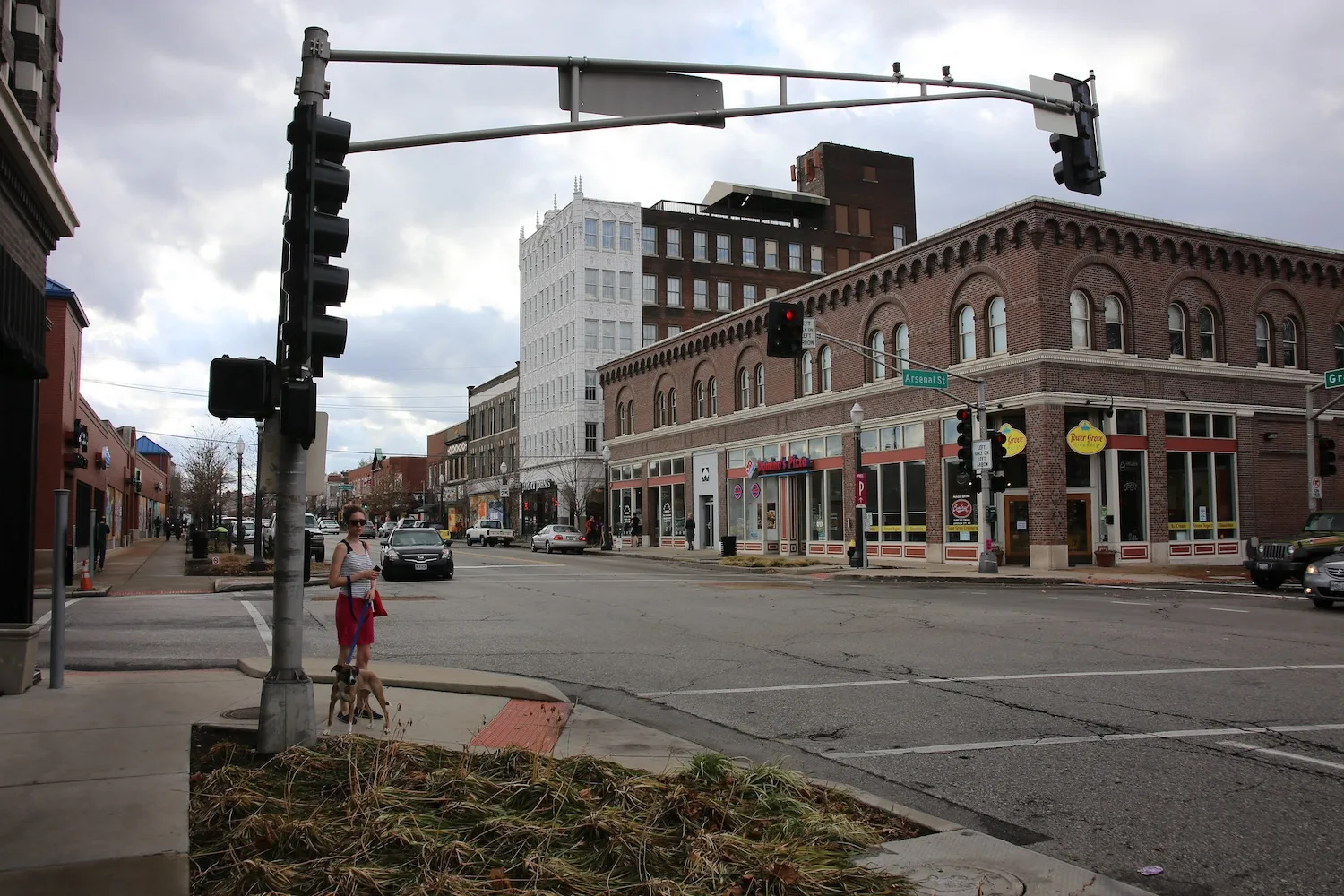
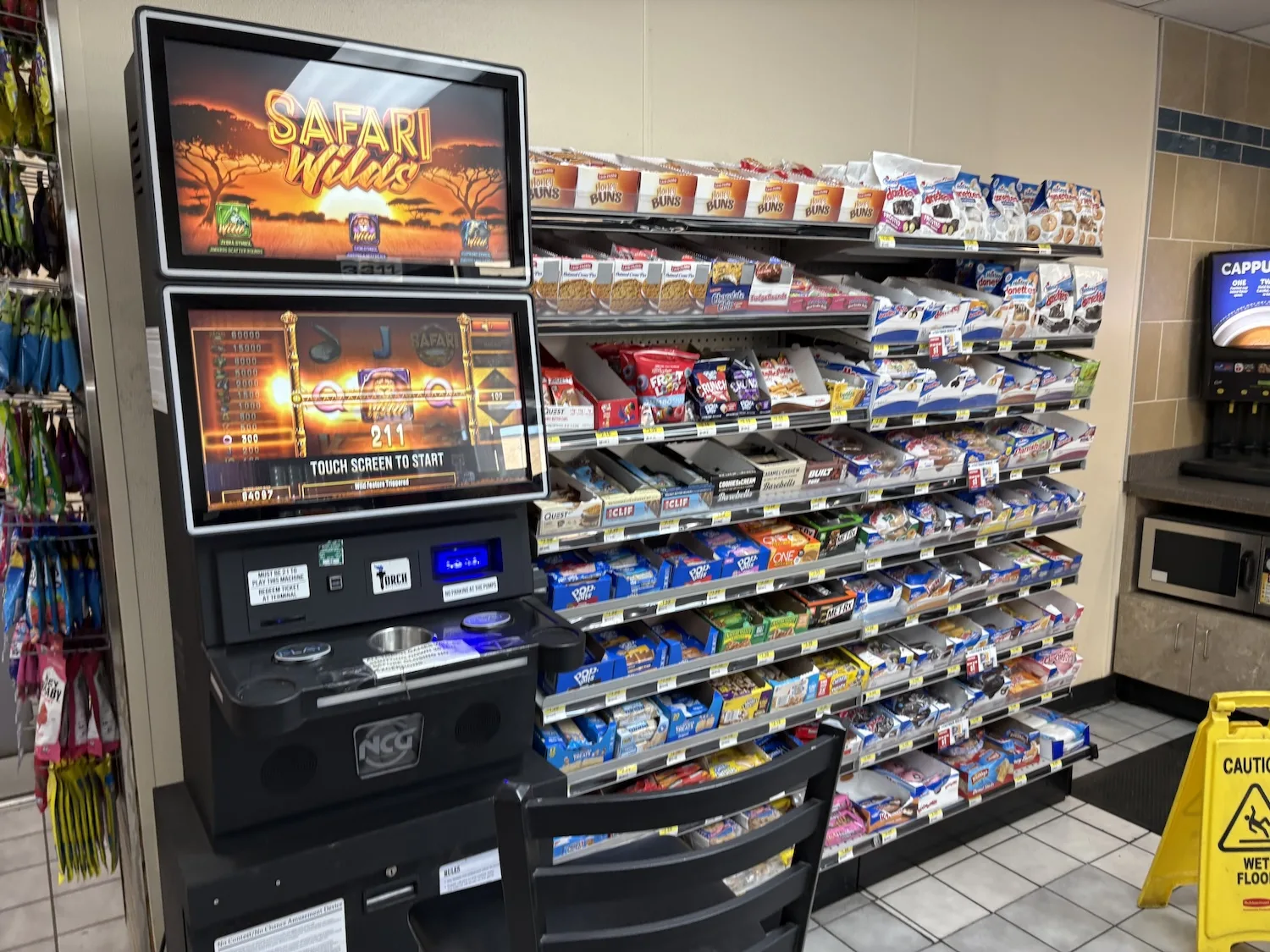
At least aesthetically, the Torch games resemble the sort of devices that can be found row after row in a place like River City Casino. On a recent day, a Torch machine at a Tower Grove South gas station offered users a choice of playing “Bonanza Bucks,” “Tomb of Treasures,” or “Triple Diamond Deuces,” among other options. If you put in money, select a game, and press a button, a series of columns spun in the manner of—there’s no other way to describe it—a slot machine. A player’s balance rises or falls as he either wins or loses (on this visit, it was more losses than wins). Any balance of more than a dollar could be redeemed at an ATM-like device also in the gas station, between the Rap Snacks and the cold drinks. (The player in question did not need to avail himself of this second machine.)
The Torch machines have been able to proliferate because they occupy a legal gray area thanks to their “prize viewer” feature, which allows players to press a button and see what they’ll win if they play another turn—it’s analogous to knowing where the ball in a roulette wheel will land before the croupier gives it a spin. This, according to Torch, makes the games “no chance” rather than gambling. But the catch is that, even if you know the next outcome is going to be a bad one, you have to play through it if you want the chance of a better prize the turn thereafter. You can also just turn off the “prize viewer,” and the Torch machine is basically just a slot machine. However, not only are the regular slot machines at a place like River City heavily regulated by the Missouri Gaming Commission, but the lion’s share of the gaming tax collected through their play goes to the state—which is not the case for the Torch device next to the slushy machine.
A good chunk of last week’s testimony was highly technical in nature, including from a pair of experts who came down on opposite sides of the trial’s fundamental question.
On Wednesday and Friday (the trial was put on hold Thursday for Yom Kippur), lawyer Rich Finneran tried to pin down Miltenberger on the basic nature of the Torch devices. The Torch owner testified the “entertainment” of the game (its visual element, the cowboys, pharaohs or other shiny things) is random, but the “outcome” (the money each spin will yield) is pre-determined.
Finneran also sought to poke holes in Miltenberger’s credibility. On Friday, the Torch owner testified that his company had no exclusive agreements with the businesses that housed his company’s machines. Minutes later, Finneran presented copies of contracts, entered to buy gas stations across the state, that seemed to indicate that these spots agreed to host no other amusement devices other than Torch’s. Finneran also referenced a deposition Miltenberger gave last year in which he said he didn’t know how much the company paid for the machines or how the games that operated on them worked.
Torch Electronics has often made the news for its lobbying efforts in Jefferson City. The company gave $250,000 to Governor Mike Kehoe’s American Dream PAC in the run up to his election last year. Prior to that, the company as well as the parent company of a gas station chain hosting many of the machines cut checks worth $350,000 to PACs tied to lobbyist Steve Tilley. In 2023, then-Attorney General Andrew Bailey had attorneys for his office exit a case in which Torch Electronics was suing the Missouri Highway Patrol to try to stop that agency from cracking down on the games. (Private lawyers subbed in; Torch’s lawsuit was dismissed.) One need not be a cynic to think that Torch’s machines being able to remain in a legal gray area for so long has something to do with its largesse.
Representing Torch in court is Todd Graves, a former George W. Bush-appointed U.S. Attorney, former chair of the Missouri Republican Party, and brother to U.S. Rep. Sam Graves (R-Missouri).
TNT also has politically connected representation. An attorney at Bryan Cave Leighton Paisner, Finneran was the Democratic nominee for Missouri attorney general in 2020, losing to now-Senator Eric Schmitt.
Earlier this fall, SLM talked to a former employee of a gas station in Tower Grove South who still visits his former place of employment to play the Torch machines. He said that the most he ever won was $1,200, and that was the direct result of the prize viewer. One day he saw a guy getting up from the machine and, on a whim, he clicked the prize viewer and saw “$1,200” pop up on the screen—a payout for a $2 bet. To play was a no brainer. He said that he’s heard of people going from one gas station and retail spot to the next clicking on the prize finder to see if there’s any free money to be had.
“If you do a story, don’t tell anyone about the prize preview,” he said.