St. Louis CITY SC wants to be a good neighbor.
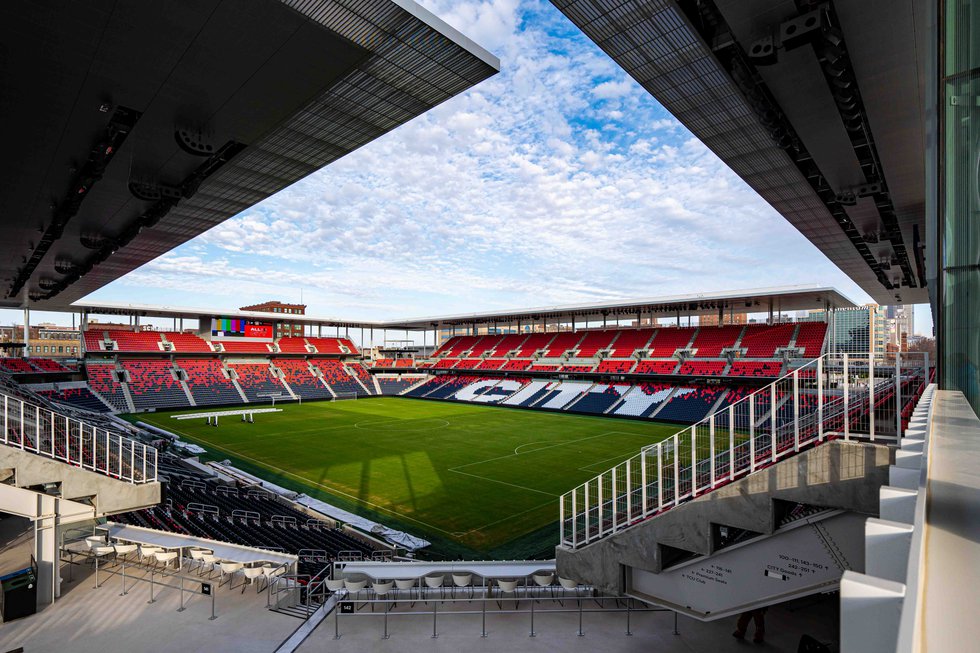
The club’s goal is to be “of the city, for the city,” and the work they are doing to fulfill that commitment can be seen throughout the CITYPARK campus. Their partnerships with local restaurants are a visible and delicious sign of their motto, but more subtle signs of the club’s intention to be an asset to the region are starting to appear, as well. Sustainability efforts, both small and large, are being built into the stadium and the club’s processes, from 27 electric car charging stations and 100 bike parking spots, to even the steel that built the stadium and the lights that illuminate the field.
Are you a CITY SC fan?
Subscribe to the CITY Scene newsletter to get a fan’s guide to the pro soccer scene in St. Louis.
For CITY, the structural features are just one component of the organization’s sustainability efforts. Beginning with the first home game on March 4, CITY will introduce a series of fan-focused initiatives designed to make CITYPARK a zero-waste facility. It’s an ambitious undertaking that the club hopes will make it not only a good neighbor to St. Louis, but to the planet.
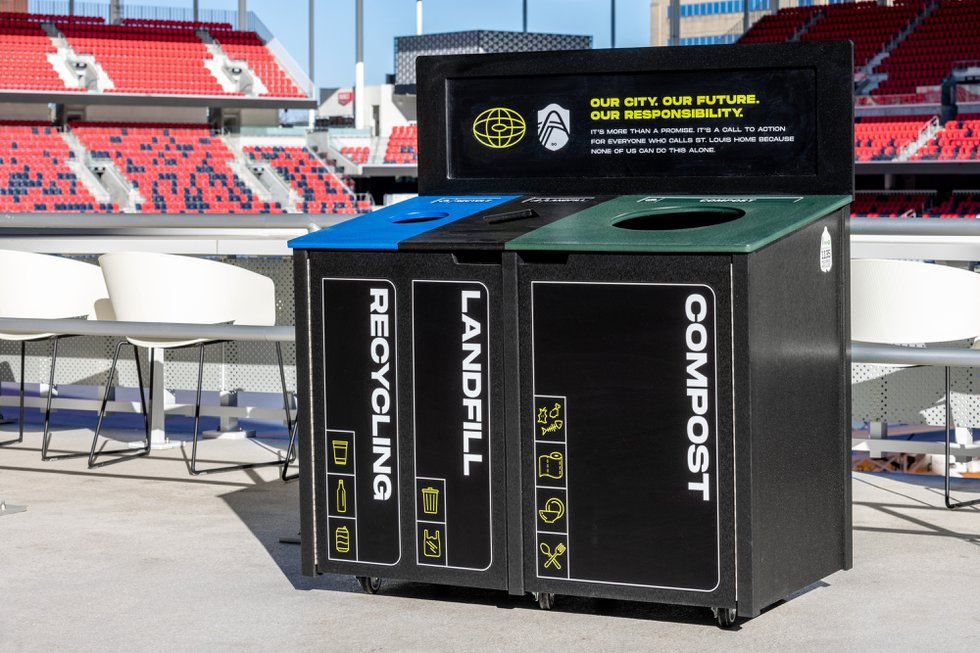
“We’ll actually have some messaging inside the stadium to help educate fans on how to compost,” says Courtney Mueller, CITY’s director of public engagement. “It will be a big part of ensuring that we become a truly zero-waste facility, and fans can take that knowledge home with them.”
Another mechanism that will help CITY keep waste out of landfills is a partnership with Operation Food Search, which will collect leftover prepared food after matches and deliver it to local families in need. This will allow the club to reduce food waste and help alleviate food insecurity in the region. Kristen Wild, Operation Food Search’s president and CEO, estimates that the collaboration will help her organization divert 3,000 pounds per year of leftover food from landfills to the homes of St. Louis families.
Other, more permanent sustainability strategies, have been part of CITYPARK since its groundbreaking. For instance, CITYPARK itself was designed to utilize 100 percent recycled structural steel. The stadium lights take advantage of LED lighting and a high efficiency control system, and everything from the bathrooms to the green spaces around the stadium have been created to reduce the club’s environmental impact. Team officials are also taking steps to ensure that the water that comes from its campus in Downtown West is clean and safe before it flows into the Mississippi River.
CITY isn’t the only Major League Soccer club to embark on a sustainability mission. The Philadelphia Union’s Subaru Park has been striving to become a zero-waste stadium, too. Union officials say their initiatives keep 350,000 pounds of trash out of the ground, though approximately 10 percent of the items—utensils, potato chip bags, and bathroom products, among others—that are thrown away inside the stadium cannot be recycled or composted. Those items are sent to one of the Union’s environmental partners, the waste-to-energy company Covanta, which incinerates the garbage to create steam and generate electricity in the Philadelphia area. The Union are but one example of a sustainability-minded MLS club that CITY can emulate. Atlanta’s LEED-certified Mercedes-Benz Stadium features a community garden from which vendors source ingredients for food inside the stadium.
In St. Louis, CITY will continue to search for ways to fulfill its own environmental goals in ways that are the best fit for the region.
“We just want to be true to our core values of being a good neighbor to the community,” Mueller says.