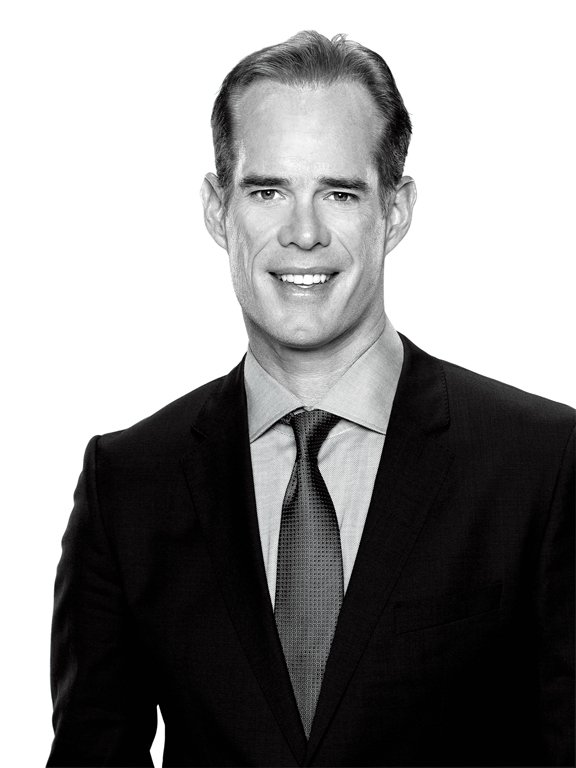
What is Joe Buck like beyond the broadcast booth? Someone who can joke about eating pot brownies, being addicted to hair plugs, and (gasp!) once rooting for the Cubs. The St. Louis native shares those anecdotes, as well as details of his relationship with his legendary father, Jack Buck, in his new memoir, Lucky Bastard: My Life, My Dad, and the Things I’m Not Allowed to Say on TV. Before the book comes out on November 15—and before Jon Hamm interviews him about it at Chaminade’s Skip Viragh Center for the Arts, on November 21—we caught up with the outspoken broadcaster.
You’re only 47. Why write the book now?
Are you a CITY SC fan?
Subscribe to the CITY Scene newsletter to get a fan’s guide to the pro soccer scene in St. Louis.
The kickstarter was the first chapter, on hair [plugs], on getting through that and wanting to talk about it. Maybe, deep down, I don’t like the idea of not being honest back then—or I just want to get a lot of stuff off my chest. I told the publisher, “I’m sure you don’t want to hear me say this, but I really don’t care if one person buys this book or 1 million. It felt good to write it.”
Was it difficult to be so brutally honest?
To be honest, it wasn’t—you can write anything on a piece of paper. The anxious part will be when the book goes out and the story that I reveal becomes common knowledge. For a guy who was picked on in grade school, that will be the anxious part.
Are you worried about a particular revelation?
No. Maybe I should be. Michael Rosenberg, the guy I wrote the book with, was the governor on what I’m revealing. Let’s just say that if the first [draft] came out, I’d have a lot to be nervous about. By the time it went through the process…I’m comfortable with everything that’s in there. It’s warts and all.
Including some of the parts about your dad.
As much as my dad is my hero and best friend, he was a real guy. He had flaws like everybody else. I think, as time goes on, the statues get a little bit more polished. This is the dad that I knew. We had a really great, unique relationship—more friend-to-friend than parent-to-child. This wasn’t somebody who was plastic; he was a flawed, great human being, like many people.
So much of this book is a look into a celebrity life that we’ll never know. But you pull back the curtain on your dad’s death. That’s something we all have or will have to deal with.
Everybody experiences death. And everyone, to some degree, experiences the loss of a parent. And to be in his hospital room for seven months straight, every day, was a learning experience for all of us. It tested all our patience and certainly my strength, what it took to walk into that hospital room every day. But it was cathartic to write it, and hopefully somebody else can take something from it. And the words that he gave me when he was in the ICU, saying, “I hope that me lying here teaches you that when you’re in this position, it’s too late—live your life.” I think everybody can take something out of that.
You also write about your half-siblings and first wife.
I took great care to be really respectful of what everybody dealt with along the way. If anything, it’s almost like I get it now, from my half-brothers and -sisters. We have never been close. We will never be close. But I understand that now more than I did when I was a kid. I came along at a time when it was really painful for them. And then I’m the one who’s going through divorce and my kids have had to experience that. I wrote this book knowing that I wouldn’t put anything in there that would embarrass my children. Both of them have read it. It was assigned reading by me. I felt like if it got past their sensors, it was okay to put in the book. I’m not looking at some sort of exposé or tell-all. It’s tell the story and be respectful of the people who are in it. And I feel like I walked that line pretty well.
There’s a part in the book where you talk about [your second wife] Michelle’s first impression of you as being vein?
Arrogant. That was her word. That’s verbatim. She formed her entire opinion on every part of my life from a 30-second car commercial. I was walking along, and I said, “Choose any car in the lot. Now that’s a good call.” She thought I looked like a smug jerk when I said that.
What do you hope people take away from the book?
More than anything, I’d like people to get to know my funny side. I think this book is as funny as it is emotional in regard to my dad. People will see a different side of me, just as the subtitle suggests… If I were to be hooked up to a lie detector, I think maybe my desire is for people to know that I’m more than the impression is out there. People here locally believe I still do the Cardinals every day and that I’m still riding on my dad’s coattails. I have been able to accomplish some things. I’ve put together a solid career, and I’m proud of it.
There’s also a narrative arc—you learn something about yourself.
I think it happened to me before I wrote the book. I think I realized it to a much greater degree after I wrote it or while I was writing it. I think I’m smart enough to realize how lucky I am. It’s where the title of the book comes from. It’s a literal and a figurative look at me. But I think, once I got remarried and once I found Michelle and I was able to share my life with her, I was able to understand to a greater degree how lucky I’ve been… My dad had a line at a banquet years ago: He and my mom were in bed one night, and my mom said, “What would you say if you met God?” My dad said, “I would ask him, ‘Why have you been so good to me?’” I can’t come up with anything better than that.