

When European immigrants first brought bowling to this country, it was seen as a seedy sport akin to cockfighting, played by drunks and criminals in the backrooms and basements of saloons. So in 1916, when Maplewood Planing Mill owner Albert Carl Blood put Saratoga Lanes on the second floor of his new office building, he did so to symbolically elevate the game. Respectable upstairs alleys attracted blue-collar bowlers in leagues sponsored by industrial firms, and nowhere was this more successful than in Maplewood, which took pride in having a more working-class identity than tony Kirkwood or Webster Groves. The sport was such a sensation that in the 1930s bowling scores often ran next to war coverage on the front page of the Maplewood News-Champion. Saratoga became so popular that it was the only alley in St. Louis County to survive the one-two punch of Prohibition and the Great Depression. During this time, it also became one of the first alleys in the country to host women’s and mixed leagues.
See also: Maplewood Pays Tribute to Saratoga Lanes on October 8, 2016
Get a fresh take on the day’s top news
Subscribe to the St. Louis Daily newsletter for a smart, succinct guide to local news from award-winning journalists Sarah Fenske and Ryan Krull.
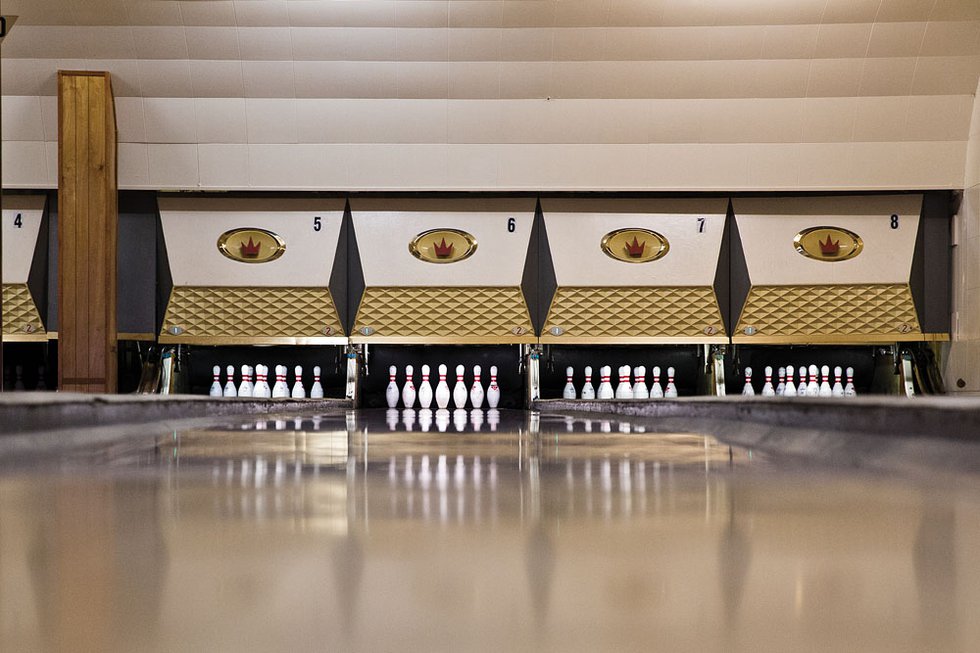
After Blood, the alley was run for decades by the Stein family, then St. Louis’ most famous bowlers. Hall of Famer Otto Stein Jr. won the national ABC Tournament in 1929 and the National Match Game title in 1934. His brother Clarence took Saratoga to new heights, hosting celebrity matches pitting Otto and his Maplewood fellows against legendary bowlers from across the country, a validating experience for factory workers who came to see their neighbor whip some champion bowler from New York. After World War II, Stein earned eternal customer loyalty when he forgave the tab of anyone who fought for the United States. In the 1950s, a renovation to add automatic pinsetters and ball returns allowed Saratoga to survive the birth of suburban standalone bowling complexes. As other alleys came and went, Saratoga always found a way to keep on.
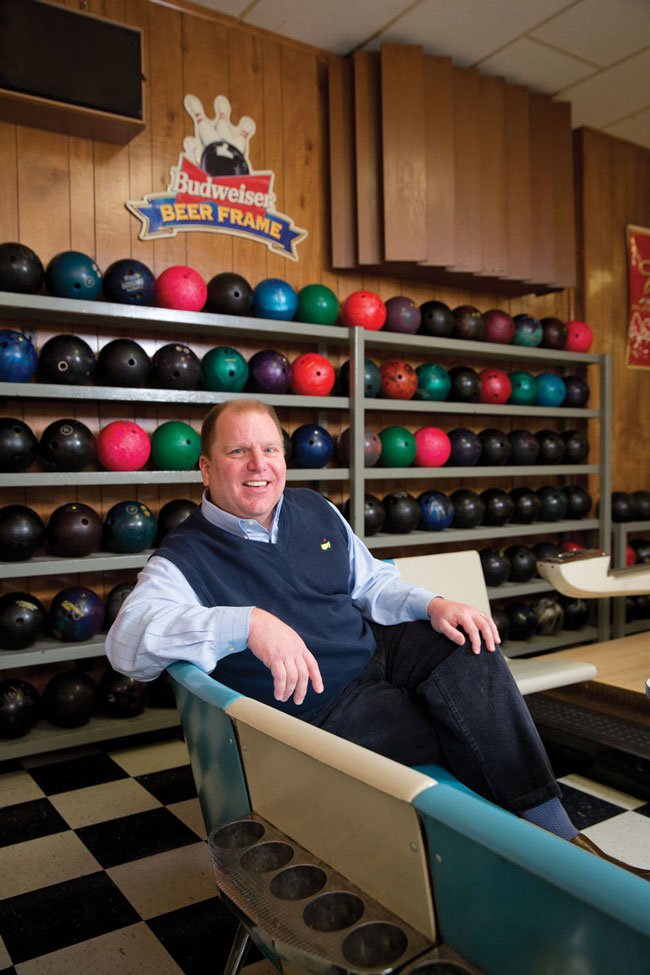
Current proprietor Jim Barton, who’s run the place since 1985, has seen a decrease in league bowling, but he’s compensated by hosting private events, including a surprise wedding. “Saying the Our Father was different here than it had ever been,” he says. Over the years, he and partner Tom Buck have resisted the urge to cut out smoking or add automatic scoring, though some customers complain about having to do it by hand. “Whoever keeps score has the best chance of winning,” Barton jokes. Sure, some modern bowling alleys seem more like nightclubs, with flashing lights and bottle service, but that just wouldn’t be Saratoga’s style. “There’s sort of a Cheers feeling here,” Barton says, “but we always want to welcome new people, too.”