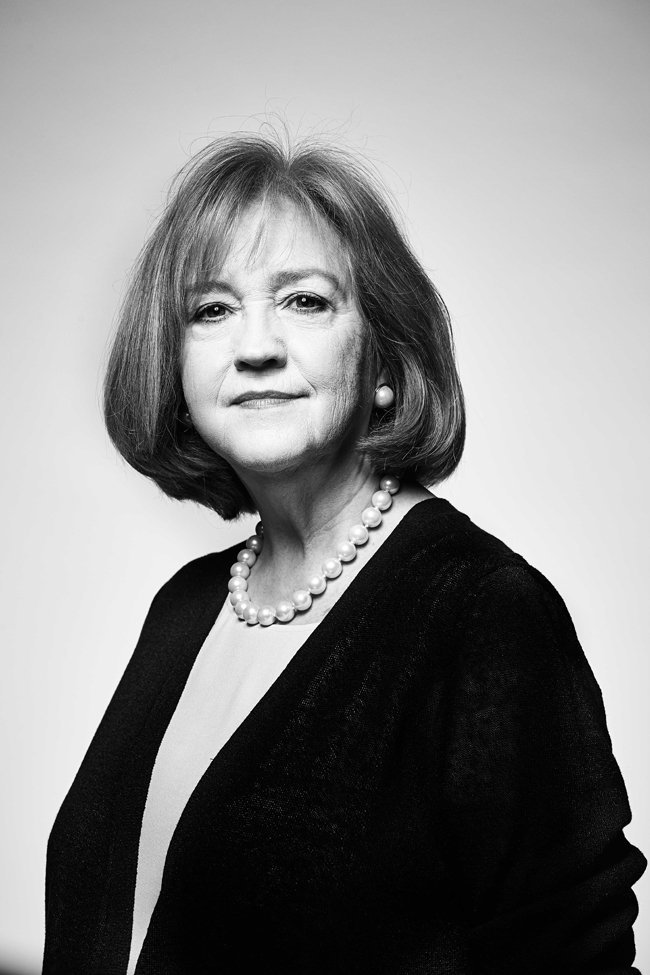
There will be long, regular strolls through Forest Park and hours spent lounging at coffee shops. For Mayor Lyda Krewson, retirement will mean catching up on the things that she couldn’t always fit into her schedule in the past. After 24 years inside St. Louis government, including 20 as an alderwoman of the 28th Ward in the Central West End and the past four as mayor, Krewson is looking forward to a more relaxed experience living in the city that she’s long served. Next Tuesday, April 20, marks the final day in office for Krewson, the first woman to become mayor of St. Louis. Her lone term was highlighted by renovations, revitalization, and development in the heart of the city. Her tenure also coincided with a raging pandemic, waves of protests over policing and criminal justice, and a plague of escalating gun violence across St. Louis. It’s been an eventful four years, and now Krewson has time to reflect.
Now that you’ve had some time to reflect, what are your proudest accomplishments? There have been a lot, but I’ll put them in two categories. One, I think our COVID response has been an accomplishment in trying to keep people safe and, at the same time, trying to balance businesses and jobs, making quick decisions, being decisive, spending the CARES Act money that we have had very wisely, and, frankly, managing through a $70 million budget decline caused by COVID.
Get a fresh take on the day’s top news
Subscribe to the St. Louis Daily newsletter for a smart, succinct guide to local news from award-winning journalists Sarah Fenske and Ryan Krull.
What’s the second category? The momentum that we have going in our city. That remains today when you think of the momentum with the National Geospatial-Intelligence Agency campus, with Cortex, with Union Station, the aquarium, with Square, MLS, and so many residential renovations.
What do you believe your tenure did to prepare St. Louis for the future or even just the next decade? We’ve had over $500 million in building permits issued just in 2021, so that momentum that we had pre-COVID is still there. The other thing is the steps that we have taken to quell the violence in our community. We all know that gun violence is a major public health issue in our community. But we’ve put in place things that include Cure Violence and Proposition P, which provided raises for law enforcement and the fire department. The lifting of the residency requirement, which will help us recruit and retain police officers. The implementation of body cameras. The implementation of the 911 diversion and Cops and Clinicians. So I think as we look to the next three to five to seven years, some of those programs that are longer-term will begin to pay good dividends.
Big problems such as crime and violence have rightfully received a lot of attention. But is there another problem or issue that you feel doesn’t get enough focus? Maybe something that people don’t realize is a big thing that needs to be addressed? The city has, for at least the last couple of decades, been living hand to mouth, paycheck to paycheck. There is never enough money in this city to do the things that need to be done. We are always on the verge of being broke, of not being able to invest in our infrastructure, whether that’s roads or streets, buildings, or people. There just has not been the money available to do that. So you’re constantly—I’ll use the old phrase—robbing Peter to pay Paul.
Why does that continue to be an issue? We do not have the revenue structure here that we need to have. A lot of it is because we are a city of 300,000 people with most of the major community assets in the city, which we’re very happy with—hospital systems, parks, cultural institutions, stadiums. But our whole region does not participate in supporting those. That goes back to the structure of government in the region: 89 municipalities, 54 police departments, 43 fire departments—that very, very fragmented government that we have in the region. I don’t expect that to change, by the way.
There’s a lot of bureaucratic clutter in this region when you consider the power that the Board of Aldermen and the Board of Estimate and Apportionment have, and then all of the warring fiefdoms that dot the area. It’s a lot. What are the challenges that the St. Louis mayor faces in making sure that office is heard? In the city of St. Louis, our structure is pretty archaic. It was originally designed to be very diffuse, and it certainly is. For example, the mayor can’t expend any money without going through the Board of E&A. So you just have to work cooperatively with the president of the Board of Aldermen and the comptroller. Sometimes, that limits your ability to move quickly on things. That is one of the challenges of governing under the structure that we have in place. The other thing I would say, though, is that it’s the structure that we have in place. It’s the structure that people have chosen. There have been various initiatives that have been put forward over decades to change that structure and the people of St. Louis have not wanted to do that.
Do you think the fact that progressives now have a majority on the Board of Aldermen might help Mayor-elect Tishaura Jones more easily navigate the constraints of the office? I think there’s no one definition of progressive, any more than there is one definition of Democrat. We will see. I think they will act individually because they each got individually elected, so just putting that label on them as progressive doesn’t ensure that they’re all going to act in unison.
Are there parts of your tenure that, looking back now, you wish you would have done differently? Any regrets? When I look back, frankly, I’m really proud of our accomplishments over the last four years. In government, as in life, you can’t spend your time looking backward. You have to get up every day and look forward and continue to make the best decisions that you can and run your operation the best way you can. I’m proud of our accomplishments. You don’t get the luxury of do-overs or mulligans.
You took a lot of heat, both locally and nationally, last summer when you identified protesters. I know you apologized for doing so, but where does that rank in terms of regrets? I think that is a situation where I would probably do it differently. However, I also think that when people bring letters to the mayor’s office, they want you to share those letters. They want that to be known. But I think that I would not have made that information that was given to me so public.
What would be your advice to Mayor-elect Jones? I’m not going to give advice unless I’m asked for it. I have met with Mayor-elect Jones, and I know she and her team are meeting with all of my directors and heads of departments, so she’s getting a good orientation. If she asks me, I’ll give her advice in private.
Over your last few days in office, have there been any memories of days on the job that have been on your mind? There have been several, but I’ll mention just a couple. One, the day that we turned over the 100-acre site to NGA is a vivid memory and really a transformative action for St. Louis. The day we broke ground on the new MLS stadium. There have also been sad days, like when we had four police officers shot in one night. There are many, many vivid memories. Truly, it’s been the greatest honor of my life to have served as the mayor of St. Louis.