This year’s city election brought out an inordinately high number of voters. Thirty percent of registered voters in the city went to the polls Tuesday—nearly double the percentage of voters who turned out in 2013 (12 percent) and 2009 (17 percent).
And while the 27,363 voters who supported subsidizing a Major League Soccer stadium represented more votes than the total cast in the city’s last general election, Proposition 2 fell 3,300 votes short.
Get a fresh take on the day’s top news
Subscribe to the St. Louis Daily newsletter for a smart, succinct guide to local news from award-winning journalists Sarah Fenske and Ryan Krull.
Both Proposition 1 (a half-cent sales tax increase, in part to fund a MetroLink expansion) and Proposition 2 (a corresponding increase in the use tax, in part to help subsidize the stadium) had to pass for the proposed soccer stadium to receive an estimated $4 million per year. And while Prop 1 did pass, with 60 percent of the vote, Prop 2 received 47 percent of the votes.
Kicking an MLS Stadium to the Curb?
After the results came in Tuesday night, members of the SC STL ownership group addressed a disappointed crowd at Union Station. SC STL investor Dave Peacock admitted that he was upset about the outcome, having spent the past several years trying to build stadiums in St. Louis, first for the Rams and later for an MLS team.
Peacock then struck a more positive chord. “I hope the same energy that is in this room, that tried to make something happen, will get people to get off their asses and get involved and try to make something good happen in the city,” he said. “It doesn’t have to be soccer. It can be city-county, public safety—whatever you want.”
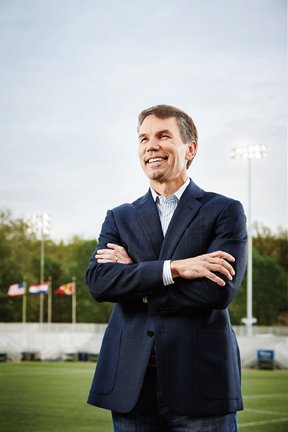
SC STL vice chair Jim Kavanaugh, CEO of World Wide Technology, offered a similar sentiment. “Losing sucks. We are not happy about this,” he said. “But I am inspired by this group. I am appreciative.
“It was a great experience, just not a great result.”
See also: For soccer to return to the city, it will take more than an MLS stadium
Jeff Rainford, who worked for the stadium campaign, pointed to several reasons for the unusually large turnout. “Our win number was 20,000; we got 27,000,” Rainford said. He suggested that energized soccer fans, as well as third-party and independent mayoral candidates, drove voters to the polls. A contested 16th Ward aldermanic race also produced a 50 percent turnout in a vote-heavy ward.
“Here’s my educated guess on who did not support soccer: older voters, Republicans, supporters of third party and independent candidates, and African-American voters,” Rainford speculated. “Who supported it? Soccer fans, younger voters, Democratic voters, and parents with children.”
A Closer Look at Prop 1
About 60 percent of the $20 million to be brought in annually by Proposition 1 is planned to be used for MetroLink expansion. Mayor-elect Lyda Krewson has said she expects it to be a “savings account” for the proposed North-South MetroLink extension.
See also: Lyda Krewson to become city’s first female mayor
Although the city treasurer’s office will not play a role in the dispersion of those funds, Treasurer Tishaura Jones, who came in second during last month’s Democratic mayoral primary, pointed to a lack of certainty about how the increase might be used. “We are facing a $20 million budget shortfall, and there’s nothing in the bill that guarantees that the money will be spent on Metro link expansion, improving public safety, and workforce development.”
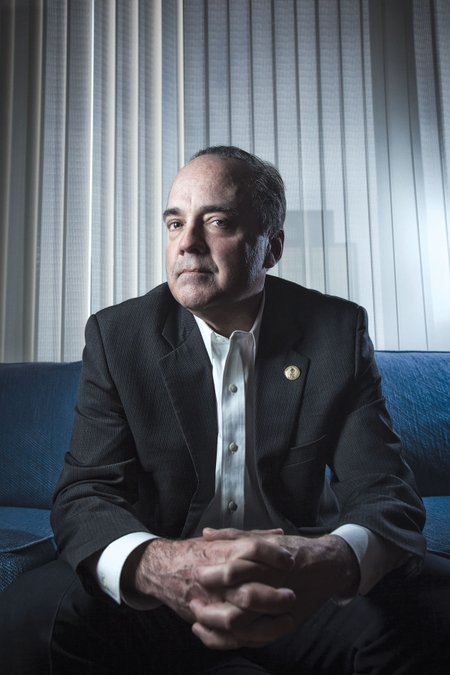
Rainford, who was chief of staff under Mayor Francis Slay for more than three terms, also questioned how the $4 million from the use tax, triggered by the sales-tax increase from Prop 1, will be designated.
“It will become part of the general fund budget. If left up to the budget director, it will be used to offset any shortfalls elsewhere in the budget, never to be seen or heard from again,” he said.
“But Mayor Krewson and the Board of Aldermen may want to use it for something specific, like increasing police salaries.”
In the meantime, increasing police salaries in St. Louis County will soon become a reality. County voters overwhelmingly passed Proposition P, a half-cent sales tax increase to fund police pay raises and new hires, with 63 percent of the vote. About $46 million of the increase will go toward public safety expenditures, and about $34 million on a per-capita basis will go toward the county’s 90 municipalities for public-safety needs.
Coming Up Short
Proposition 2 wasn’t the only proposed legislation in the city that didn’t pass. Both Proposition A—which would have eliminated the office of the Recorder of Deeds—and Proposition B—which would have moved city municipal election to the fall during state and national elections—failed to reach the required 60 percent approval.
“Some opposition to Propositions A and B stems from [political activist Rex] Sinquefield’s support and his agenda of consolidating and merging city and county governments,” the St. Louis Post-Dispatch‘s editorial board had noted before the election. “Good ideas should not be discarded simply because Sinquefield supports them.”
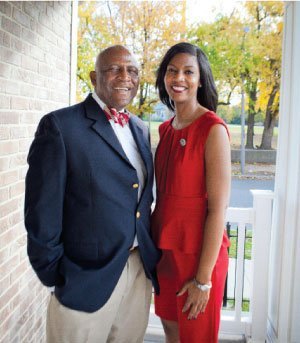
Nonetheless, Jones—who opposed the propositions, as well as Prop 2—said she believed that “voters have caught onto Rex” and what she called “his anti-city agenda.”
“We have to stop coming to citizens when we need their vote,” said Jones, “and involve them in the decision-making process.”
Proposition NS also failed to get a two-thirds majority. The proposition would have provided $6 million per year through a bond issue to stabilize and prepare vacant buildings to be sold to rehabbers. (There is a possibility of a legal challenge to the Prop NS result, as the 58 percent of voters supporting it would have been enough in a state general election, though a city ordinance has a two-thirds threshold.)
Kevin McKinney of the St. Louis Association of Community Organizations (SLACO) emphasized the ongoing need to address vacant buildings and lots. “SLACO and the 30-plus neighborhoods organized behind NS will work to keep the issue of vacancy and the concerns of neighborhoods front and center,” he said. “We plan to work closely with the board of alderman and the mayor-elect on citizen-driven solutions to an issue that continues to plague our city.”
See also: A guide to Tuesday’s ballot measures in St. Louis City and County