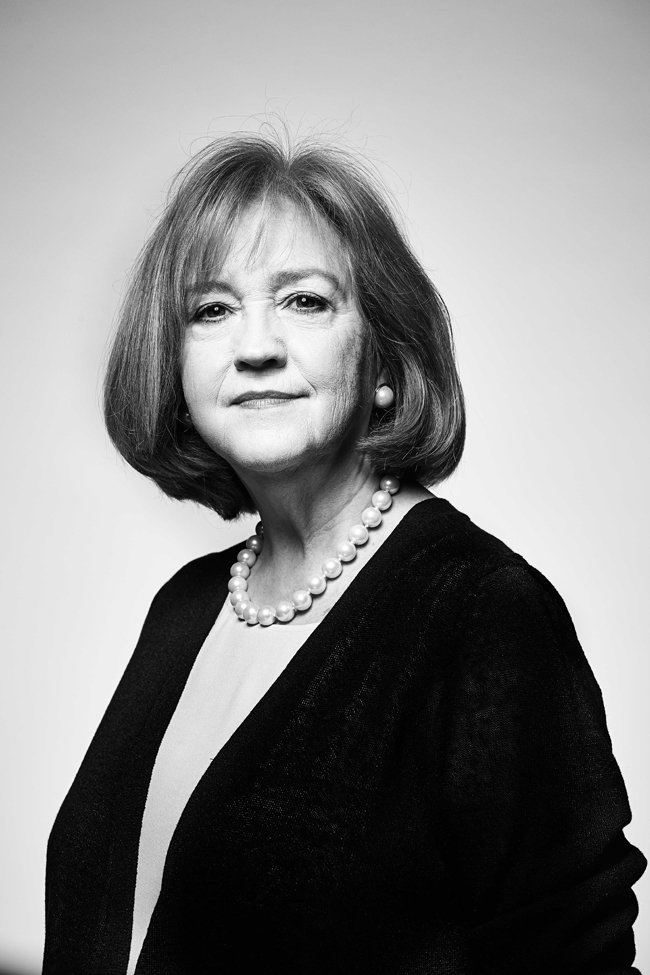
Lyda Krewson is not one to sit still. While running for mayor, she also served as the 28th Ward alderwoman and chief financial officer of architecture/planning firm PGAV. She narrowly won the crowded Democratic primary but swept the general election, becoming the city’s first female mayor. We caught up with Krewson several times on the campaign trail, talking both politics and her personal life.
You earned undergraduate degrees in psychology and special education. At that point, did you have any political ambitions? I originally wanted to be a teacher, but then I decided to become an accountant… When you’re young, you explore things. But when I was 21, I wasn’t thinking about running for public office. In seventh grade, I did run for officer of my class; I was also officer of my senior class in high school—so I guess maybe I always had the political bug.
Get a fresh take on the day’s top news
Subscribe to the St. Louis Daily newsletter for a smart, succinct guide to local news from award-winning journalists Sarah Fenske and Ryan Krull.
Why did your campaign TV ads mention the fatal shooting of your first husband? People want to know who you are, so we tried to tell people that. My husband was carjacked in front of our house. Our kids were in the car. That’s all part of who I am. That influences how you think and the decisions that you make.
What will be your top priority as mayor? Neighborhood safety. There are two parts to that. The first part is prevention: after-school jobs, summer jobs for young people, alternative dispute resolutions, alternative sentencing, more recreation and youth programs… The second part is law enforcement. The city is currently budgeted to have 1,300 police officers; right now, we have fewer than 1,200. This is because our officers are not paid competitively with St. Louis County. We have a residency requirement. So we need to hire additional officers. We need to have a more diverse police force with more training so we can work to mend the frayed relationship between our communities and law enforcement.
Do you support the Black Lives Matter movement? I do. I think the phrase “Black Lives Matter” is just stating that all the decisions that we make in government, and in life, should take into account how they will affect African-Americans and other groups who have not received the same opportunities that whites have received. The goal of the movement is, of course, racial equity. We can all say those words, but the proof is in how are we actually going to make decisions and take that into account to make sure that there is more opportunity for every single one of us.
Some critics have described you as a status quo candidate. How do you respond? Look back at my record and the progressive stances on issues that I’ve taken over the years.
What criteria should be used to determine which developers receive tax incentives? Tax incentives—whether a TIF or tax abatement—are about half science and half art. The city should strive to give the developer as little incentive as possible without killing the project. Certainly there should be more incentives in areas that need more development, but you have to take every project based on its own situation and see how that project benefits the city… The scrutiny should be part numbers—Is the city better off financially?—and part art—Does it increase quality of life?
Should the city and county unite? Yes, I think the city and county should become one, whatever the form… We’re not the first people to think about this. Louisville has done it. Indianapolis has done it. Nashville has done it. We can figure this out… When I’m talking to groups in the area, it’s invariably one of the first questions I get; five years ago, no one ever asked me about it. Today, I think we’re at a tipping point.
What is the best way for St. Louisans to help the city progress? Participate. Go to neighborhood meetings. Reach out to your alderman. Express your opinion.