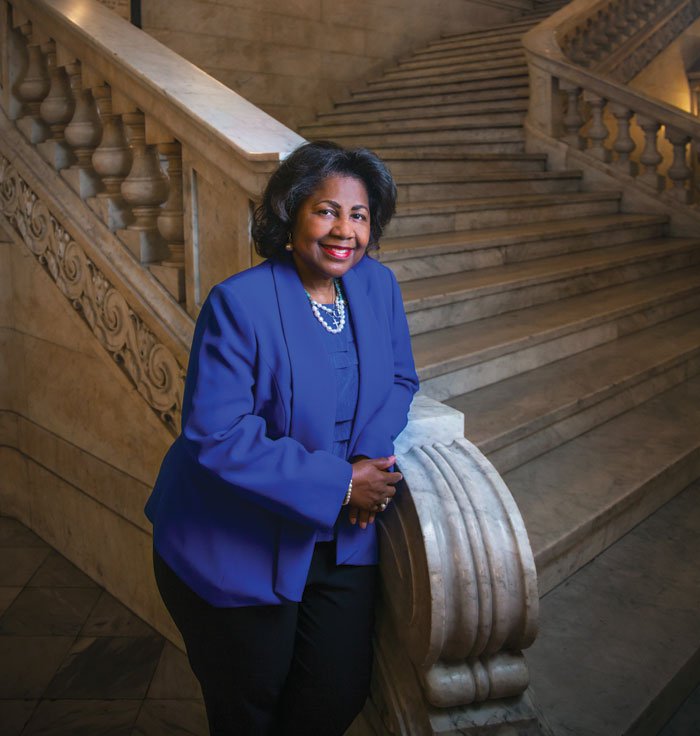
For two decades, St. Louis Comptroller Darlene Green has served as the city’s chief fiscal officer. Along the way, she’s taken strong stances on hot-button issues (the proposed NFL stadium, body cameras for police) and faced criticism (using—then giving up—a city car). Since 2011, she’s also served as one of Missouri’s 12 Democratic superdelegates. SLM recently caught up with Green to talk about the election, the city’s financial picture, and whether she has other political ambitions.
Early on, you pledged your support for Hillary Clinton. How do you decide?
Get a fresh take on the day’s top news
Subscribe to the St. Louis Daily newsletter for a smart, succinct guide to local news from award-winning journalists Sarah Fenske and Ryan Krull.
I look at what’s going on with the economy: what our needs are and who best meets those needs. I think, in this particular economy, Hillary understands that there is a process when it comes to bailing out Main Street. Bernie Sanders’ camp illuminated the fact that while Wall Street was bailed out, not one consumer can say they were bailed out—and that has to happen. We need to reduce poverty and increase job opportunities, which means more training and educational opportunities. We also need to be looking at bank and credit card fees—fees that are robbing the hardworking families on Main Street.
So you base your decision on what you feel is fiscally responsible because that’s your background?
Yes. I knew what Bernie Sanders had to say was very important and it shaped what the future should look like for education and an economy that’s fair. Hillary expressed those same concerns, but she was looking at it from a more experienced perspective. She has broad experience going all the way back to serving as First Lady and having been in the trenches as when she worked on developing a health care system that worked for everyone.
Do superdelegates ever have meetings where they decide, debate, or discuss who they are backing?
No, I haven’t met with any other superdelegates. But I have had letters from Democrats both with the Bernie camp, saying, “Take a look at Bernie! Don’t give up on Bernie,” and letters from the Hillary camp thanking me for being a Hillary supporter.
There’s been some criticism that superdelegates are not bound to any popular vote. Do you deal with any flack?
I haven’t experienced any flack, whatsoever.
Do you agree with the superdelegate system?
The superdelegates have never made the difference, and they will not make the difference. What’s going to make the difference is the popular vote.
What’s at stake for St. Louis in this election?
I’m hoping the outcome will signal a chance to work on job growth by rebuilding this country and removing barriers for people to get a quality education. That’s going to affect our local economy.
Speaking of the local economy, what is your sense of the city’s overall financial picture moving forward?
Presently, according to all three major credit rating agencies, the city has a stable outlook. Strong fiscal management and positive liquidity levels were highlighted as reasons for sustaining an A+ rating from Standard and Poors.
You’ve been outspoken about protecting the city’s financial stability, especially during negotiations over the proposed NFL stadium.
I believe if we had overcommitted ourselves, the city would be in a bad financial situation, and I felt it was my responsibility to raise the red flags. While I was sorry to see the Rams go, the success in keeping NGA and its $1.75 billion in building and development was a far greater win, and, long-term, it’s going to help transform the near North Side.
You’ve also spoken out about the importance of funding body cameras for police. Why is it a priority?
Studies show cameras are effective in reducing crime, but it’s only one of several public safety resources needed for creating peaceful communities. Sensitivity training is important; de-escalation, instead of use of force, is better for building peaceful communities. Finally, crime prevention and intervention funding is needed to reduce incidences of crime. I have a great deal of respect for the job that police have to do, but I also know they can do a better job when they have the goodwill and trust of the people. There are people who have lost faith in the justice system, and we need to do more to bring people together.
Do you have any political aspirations beyond comptroller?
While it is always flattering to have people mention your name in regard to higher office, I enjoy serving the people of St. Louis and being their watchdog. My future aspirations include focusing on plans for enhancing revenues for the city while seeking reelection as comptroller next spring.