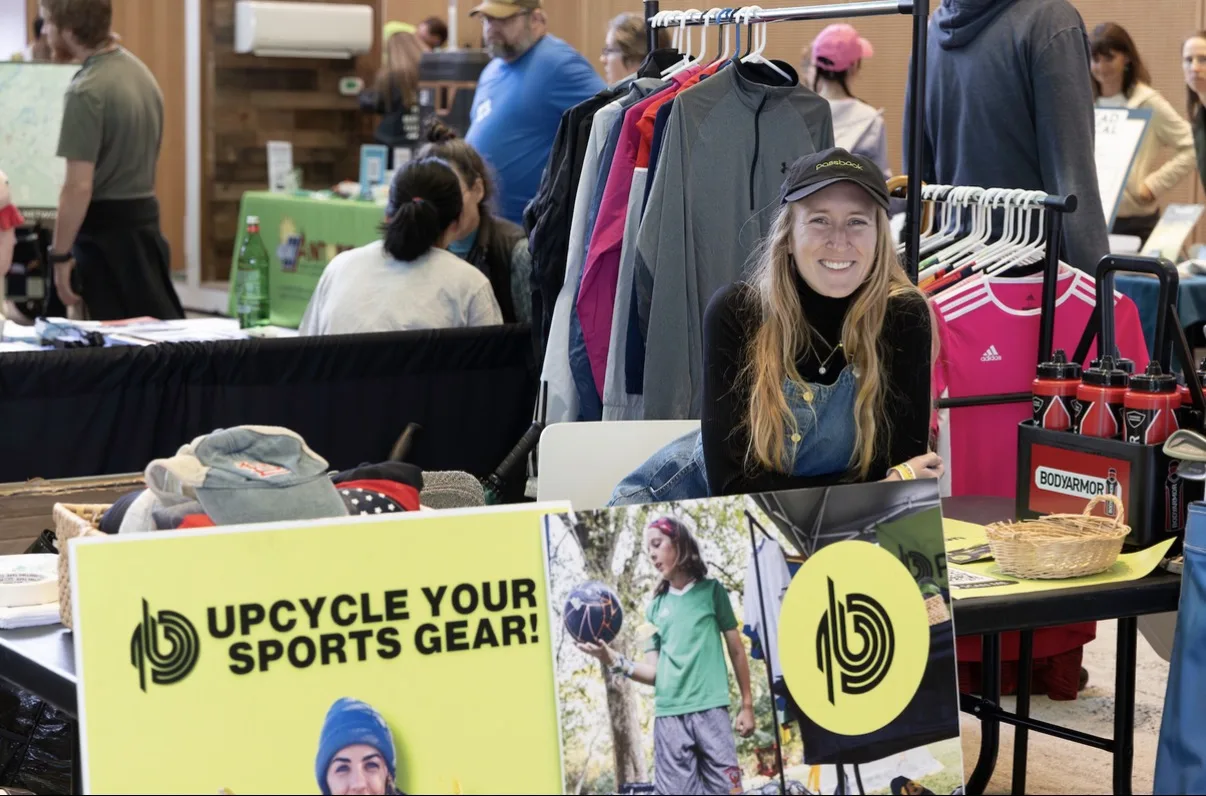
Magdalen Sparrow grew up on St. Louis’ soccer fields chasing after stray balls and picking up lost water bottles to put in overflowing lost and found bins. Then known by her maiden name, Magdalen Pike, she went on to play D1 soccer at Southeast Missouri State University, accumulating a closet full of sports gear in the process.
But unlike most people in her situation, Sparrow found a way to turn that clutter into something good. In 2023, she founded Passback, a nonprofit focused on redistributing sports equipment to kids, especially those from underserved areas.
Get a fresh take on the day’s top news
Subscribe to the St. Louis Daily newsletter for a smart, succinct guide to local news from award-winning journalists Sarah Fenske and Ryan Krull.
As of Passback’s second fiscal year, it has recirculated more than 11 tons of plastic and metal items, directly equipping around 7,000 kids with sports equipment. “I think what has surprised me is that if you can find a niche that is a win win win, it’s pretty easy to make this change possible, especially if you get everyone on the same page under one mission,” Sparrow tells SLM.
Passback also boasts that it’s prevented an estimated $22 million in healthcare costs. Although that might seem like an astronomical number, Sparrow explains that she partners with Washington University students to help her solve business problems and see her work from new angles (Sparrow earned an MBA from WashU in 2023). Last fall, students in an undergraduate business class studying social impact suggested to Sparrow that she find the public insurance data on the preventive healthcare costs associated with kids playing sports.
“It’s research-backed, it’s data-backed, and I’ve had a third-party approved, too,” Sparrow says about the estimate. “It has unlocked a new framing of what Passback has been able to create just by quantifying it.”
Aside from WashU, the nonprofit has more than 50 partners including manufacturers, retailers, sports clubs, and schools. After the organizations donate items, Passback evaluates if the equipment is new, used, or needs refurbishment—which normally consists of a good clean—or if it needs to be downcycled in a textile or recycling plant. Athletic directors and coaches, who provide Sparrow with “wish lists” of items they need, are invited to pick up the gear for free from the warehouse.
Passback also holds sponsored gifting events, where staffers give the equipment directly to kids while educating them about the circular economy.
Corporate sponsorships are one source of funding for the 501c3, along with a variety of grants and some sales of the recycled sports equipment. Sparrow says she aims to sell 25 percent of the donations she receives to use the money to further Passback’s mission.
As for costs, Sparrow estimates that they have spent around $10,000 on refurbishing equipment to date, but says without the help of volunteers, including her grandmother, it would be much higher. She is grateful to the many volunteers and community partners which enable Passback’s business model.
Another key member of the operation is Hayden Sparrow, Magdalen Sparrow’s partner in life and business, as well as Passback’s part-time CFO (their 2025 wedding garnered coverage by Greener Gatherings for their commitment to having a sustainable ceremony).
“He is so integral to this, and I’ve loved building with him,” Magdalen Sparrow tells SLM. “I think [that] sometimes causes fires, but we’re able to see through them. And the confidence that builds every time we’re able to solve a problem that might come up is so cool, and then to ride the highs and successes with him too.”
While it may seem like sports retailers are direct competitors with Passback, Sparrow found that they appreciate the opportunity to get rid of excess inventory and the good publicity that donations bring.
“My favorite thing to say is systems change is a team sport, and it literally takes all the players across the linear economy for us to make this change,” she says. “Whether it’s the manufacturers, or the retailers, or the businesses, the sports clubs, the consumers, the recyclers, they all want to make a positive change, and what I’m doing actually benefits every single one.”