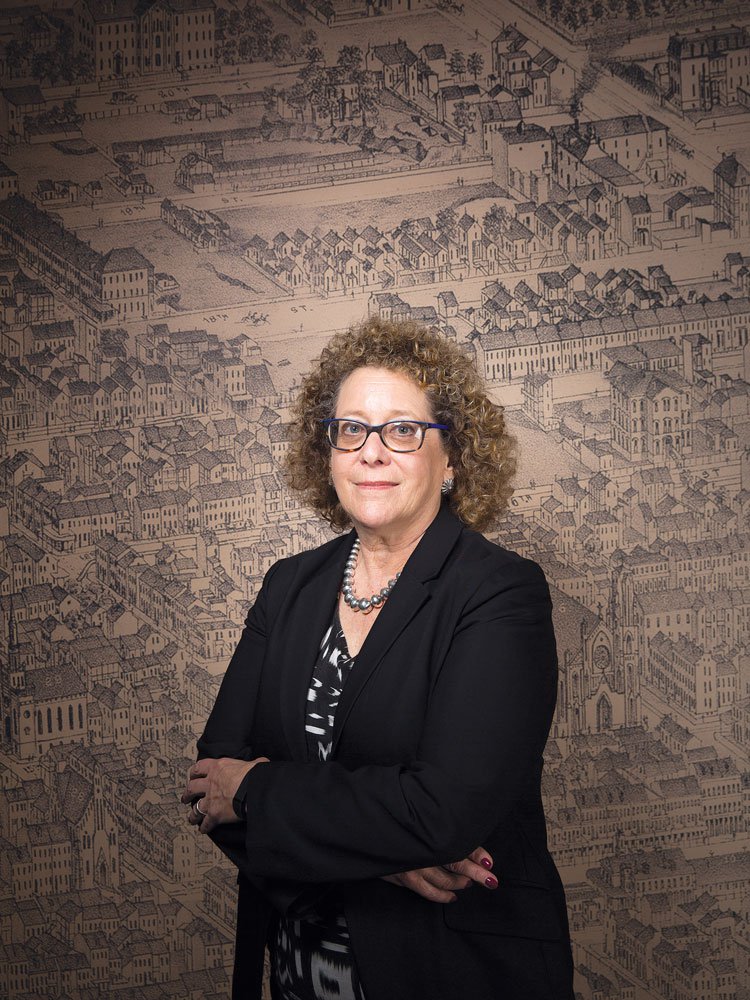
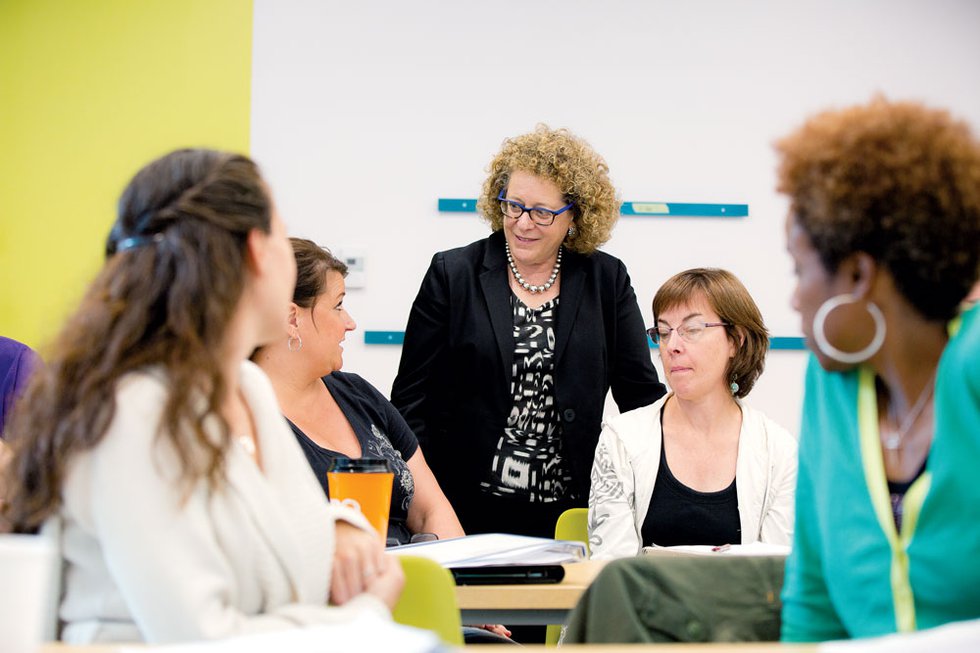


When the Missouri History Museum announced last year that Frances Levine would become its new president and CEO, the museum made its own kind of history: It marked the first time that a woman would lead a Metropolitan Zoological Park and Museum District institution. Considering Levine’s previous stint as vice chair of the New Mexico Public Records Commission, it also marked a step toward transparency, what some critics accused her predecessor’s administration of lacking. Levine took the job in mid-April, just months before the death of Michael Brown sparked a new chapter in St. Louis’ history.
What are your impressions of St. Louis after being on the job for a year? One of the things I heard was that St. Louis is the “North of the South” and the “South of the North.” The city has a very Southern sensibility in some ways, and it certainly has a legacy. It’s interesting to live in a place where history is still so present.
Get a fresh take on the day’s top news
Subscribe to the St. Louis Daily newsletter for a smart, succinct guide to local news from award-winning journalists Sarah Fenske and Ryan Krull.
You’ve never lived in the Midwest before? I grew up in Connecticut. Where I grew up just looks like St. Louis. I was driving through Ladue and came around the corner and literally took my hands off the steering wheel and said, “Oh my God! I’ve moved back to Fairfield, Connecticut!” The economic range of people is very similar: very poor neighborhoods right up against very wealthy neighborhoods.
What is going well in St. Louis? The cultural life. It is quite remarkable for a city of this size to have the museums, the symphony, and the breadth of music. I love music. I can hear opera one day, blues the next. I can even hear blues in the morning, opera in the afternoon, blues again at night, and jazz on the weekend. And it’s such a great food city. I just went to the Tower Grove Farmer’s Market on Saturday. I like Soulard Market, too. I’ve been there several times. I don’t get to cook often as I want, but when I do I like how I have access to great bread, cheeses, and ethnic food.
We’ve all had to confront that legacy of the North and the South, of discrimination, of racial conflict.
How could St. Louis improve? It’s been a year where we’ve had to confront our history. It was very emotional to live through last August and into the fall. It was very palpable—I think we could feel the tension. We’ve all had to confront that legacy of the North and the South, of discrimination, of racial conflict.
What role does this museum play? Even before I arrived, the staff was examining the history of racial tension and conflict, desegregation, and discrimination in St. Louis. Now is the time, more than ever, for the museum to have a role in what brought us here. This is a time where it benefits from history being local. It’s important that we don’t look away and say, “Oh, but it’s also happening in Baltimore and Cincinnati.” We need to deal with our issues here. We have started the Ferguson Collecting Initiative because we are here now at this time. So our staff has been working with the City of Ferguson, the Ferguson Police Department, and families in Ferguson, collecting what artist did on plywood.
What has been the public’s reaction? Most feedback has been very, very positive. We’ve only had a few negative comments, and most are from people who don’t understand how museums collect. Museums have to take the broadest view, and we can’t wait until five years past the event. Museums used to have the attitude that we waited until someone donated, but you can’t do that anymore.
What do you say to people who want to repeal the ZMD tax district? One of the signature assets of the city is the cultural assets. Why would you take away that public benefit? The diversity of the visitors who come here because it’s free is more important than ever.
How are you working to rebuild trust in the museum? Our focus is on our region, the issues the region is facing, the issues that connect. You know, someone asked me why we did State of Deception [an exhibit on Nazi propaganda]? I said, “Because every family was impacted by World War II, every community.” I grew up with stories of my uncles’ service after the war. Joe Pulitzer was one of the first correspondents who reported on concentration camps. So we have that immediate connection to World War II.
A good director doesn’t say yes or no to exhibits but works with what the staff develops. The museum director shouldn’t exert that much influence—the best exhibits come from dialogue with the staff. The director’s role is to deepen the story and widen the perspective.
What exhibits do you have planned in the future? I would really like us to do an environmental history of the Mississippi River. I’m disappointed about how remote our relationship is to the Mississippi River. I have a greater tactile relationship with the Missouri River. You can walk and hike along that river. The Mississippi River is a very industrial river. I wanted that feeling of living on the Mississippi, like when I’m in New Orleans. I feel a little deprived of the river.
I also want us to do an exhibit on the Santa Fe Trail and the relationship of the Southwest with St. Louis. I was on the other end of the trail, and I was reading about Kit Carson growing up in Boonesville, Missouri. I read about people from St. Louis traveling to Santa Fe and reading how strange they thought it was. But what did Southwesterners think of St. Louis?