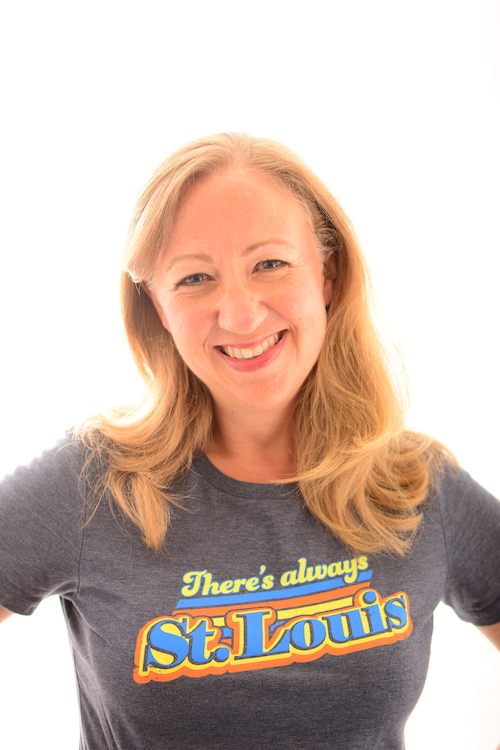
“I thought love had to hurt for it to be real.” There’s a stop-you-in-your-tracks intro for a book supposedly offering help and hope. But brutal honesty and even painful self-revelation were the only paths author Jen Satterly saw as legitimate when she started writing Arsenal of Hope, her new book with Holly Lorincz that offers tactics for spouses, companions, and families of those dealing with the monster of post-traumatic stress disorder (PTSD) in their loved one.
“I couldn’t be the authority with people I wanted to help without being vulnerable,” Satterly says with a chuckle, “even though with the book just out I’m still in that place of holding my breath when anyone tells me they’ve read it.” Indeed, it’s a tricky balancing act: the harrowing realities of emotional and physical violence, substance abuse, marital infidelities, self-sabotaging behaviors, and the constant fear of suicide figure large in her own marriage and the tales of other military families she relates. Satterly somehow manages to be both real and approachable—even funny—in her hard-won expertise on the subjects.
Stay up-to-date with the local arts scene
Subscribe to the weekly St. Louis Arts+Culture newsletter to discover must-attend art exhibits, performances, festivals, and more.
The table of contents reflects her background in snappy advertising copy. “Whiskey Tango Foxtrot (Seriously, WTF)” and “Magic Pills Are for Fairy Tales” title a couple of chapters. Inside, though, the situations and possible solutions are serious and substantive. Above all, Satterly wants to impart that what we’ve termed “PTSD” is biological, complex, debilitating…and treatable. Her training and personal experiences have shown her that nutrition, professional therapy of many modalities, peer and family support, and being able to repeatedly tell their own stories can provide the path to healing and wholeness that veterans and first responders so desperately need.
There’s an emerging consensus that even the name “post-traumatic stress disorder” needs an update: “occupational stress injury” is a new term that receives more acceptance among service members who shy away from the baggage-laden “disorder.” “When we call something what it is, an injury, people immediately understand it and are willing to do what it takes to treat it,” Satterly says. “Whether you break your arm in Iraq or in St. Louis, the treatment and healing of that injury are the same. When you have a brain injury because of the trauma and stress of what it takes to survive and succeed in warfare, there are treatments and ways of healing.”
Rewind: How did a girl who grew up in the St. Louis suburbs and spent the first part of her professional life immersed in art come to embrace first a rough-and-tumble career in film and video production of realistic military training exercises? And get from there to her role as a veteran spouse and co-executive director of a foundation focused on helping veterans heal from war trauma? Turns out it’s a love story…just not one you might recognize.
When she first reluctantly agreed to head out with Special Operations forces to film their training preparations, raids, and other exercises, Satterly became part of a world she knew nothing about. Always up for a challenge, she learned to suck it up when she was occasionally injured, to keep her head down (as frequently the only female anywhere around), and to respect the intensity of the environments her subjects were placed in. “It’s a dark and messy world, in many respects, and much more complex that I ever knew. Our warriors are remarkable human beings doing remarkable things, and also humans being trained, honed, and sent to do someone else’s bidding,” she says. Her tangential experiences when embedded with military units gave her a taste of the jarring disconnect between the skills and reactions that are required, and rewarded, while deployed versus the skills and reactions that contribute to successful relationships and harmonious households back at home.
When she met and eventually fell in love with her now-husband Tom Satterly, their backgrounds of trauma and stress injuries clashed frequently. Tom was a Delta Force Command Sgt. Major who’d seen it all during his 25-year career, including participation in the battle of Mogadishu and the capture of Saddam Hussein. Though they were intensely attracted to each other and wanted to be together, the ways they interacted left them both enraged and depleted. Jen tells the story in the book of how a single coffee cup left in the kitchen sink could set off an explosive storm of “random, misplaced rage” that made Jen want to hit back and be angry, too, which was “better than feeling afraid of him, of making myself small, like I had when I was a child.” It’s sometimes painful to read, and she doesn’t hold back the ugly or the profane.
“People who are in these situations feel deeply alone, and you are not, I promise you; it’s really quite common,” Satterly says. Tom told his own story last year in the book “All Secure: A Special Operations Soldier’s Fight to Survive on the Battlefield.” Seeing the outpouring of response, relief, and need from soldiers to his book, and knowing how consciously partners have to choose to stay in difficult relationships, Jen had to take it seriously when their friend (and former Cardinals manager) Tony LaRussa asked her, “So when are you writing your book?” A year later, her answer is here. The Satterlys continue their work, with their books, through their All Secure Foundation, and starting next month, with their podcast “Homefront: Stories That Unite.” Find it all at allsecurefoundation.org.