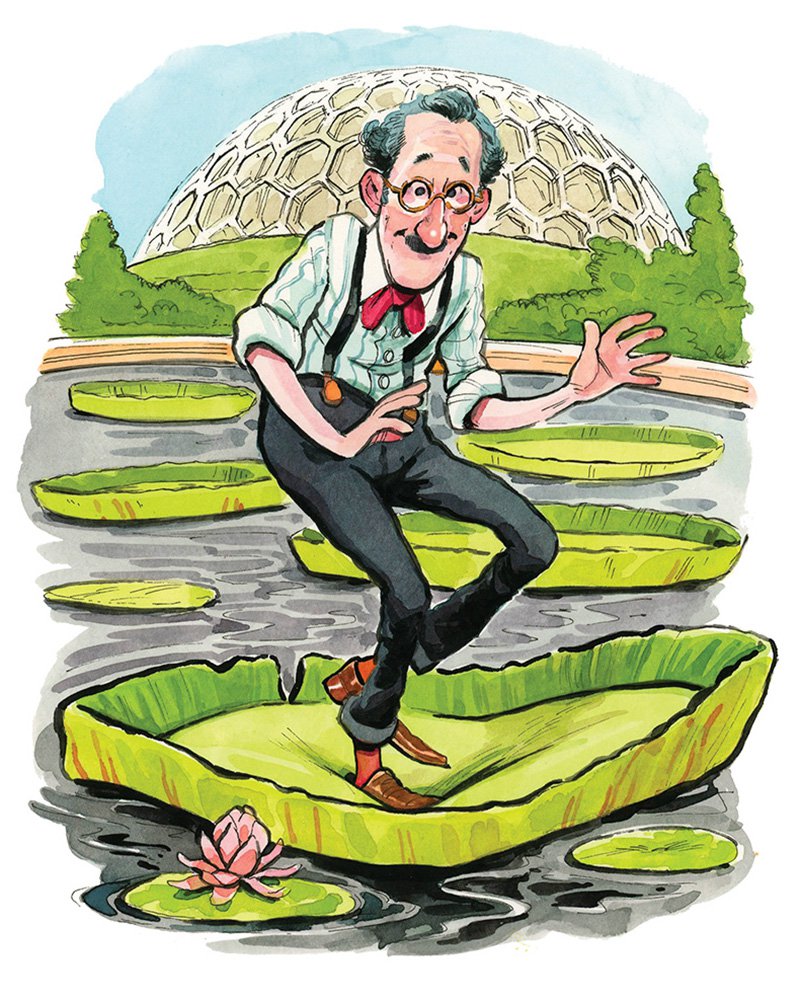
This spring, The Missouri Botanical Garden will set afloat three species of Victoria water lily that may stretch to world-record diameters.
European botanists began noting these giants of the aquatic Nymphaeaceae family in South America in the early 1800s. Seeds and specimens soon found their way across the Atlantic. In 1852, gardener James Gurney managed to grow the lilies in the Royal Botanic Gardens at Kew, in London. (A young Queen Victoria was enchanted by the plants, and her name has been attached to them ever since.)
Get a fresh take on the day’s top news
Subscribe to the St. Louis Daily newsletter for a smart, succinct guide to local news from award-winning journalists Sarah Fenske and Ryan Krull.
Gurney later sought a new life in the United States. He found a job in St. Louis with a wealthy man named Henry Shaw, who was planning a large municipal garden. Over the ensuing decades, Gurney rose to head gardener at Shaw’s Garden, where he grew Victorias once again. They helped lure more than 30,000 people to the garden one Sunday in 1895.
Today, 125 years later, MoBot senior nursery manager Derek Lyle wants to grow the biggest Victorias he can. He has high hopes for his Victoria amazonica specimens, for example. Native to the backwaters of the Amazon, this species’ pads grow the largest in the wild—reportedly up to 10 feet across, though Lyle says no reliable record exists. Their weakness in St. Louis is that they dislike cold water, and a hard summer rain can lower pool temperature enough to stall growth. Another candidate for record size is Victoria cruziana. Endemic to Bolivia and Argentina, these lilies tolerate colder water but don’t typically get as big. Between these two species is the Longwood hybrid, which combines the cold tolerance of V. cruziana and the bulk of V. amazonica; in 2019, one specimen at MoBot grew a 91-inch pad.
Lyle says any of these species may see a growth spurt this year. As usual, he’ll plant the seedlings in May, the water will be dyed black to absorb the sun’s rays, and the middle pool in front of the Climatron will be heated, elongating the growing season. For the first time, Lyle will have nursed the seedlings under high-intensity LED bulbs for about 15 months, so the root ball will be larger, helping reduce transplant shock. Lyle will also raise the pool’s overflow pipe by 2 inches, giving them more water in which to grow.
Still, Lyle won’t directly say he’s vying for a world record. A friendly competition has arisen among MoBot, Kew, and Longwood Gardens, near Philadelphia. Lyle jokes that his counterparts at those gardens may drop out of their seed-sharing program to sabotage his quest. “But we have our own seed stock,” he says with a grin, “so we’d survive the embargo.”