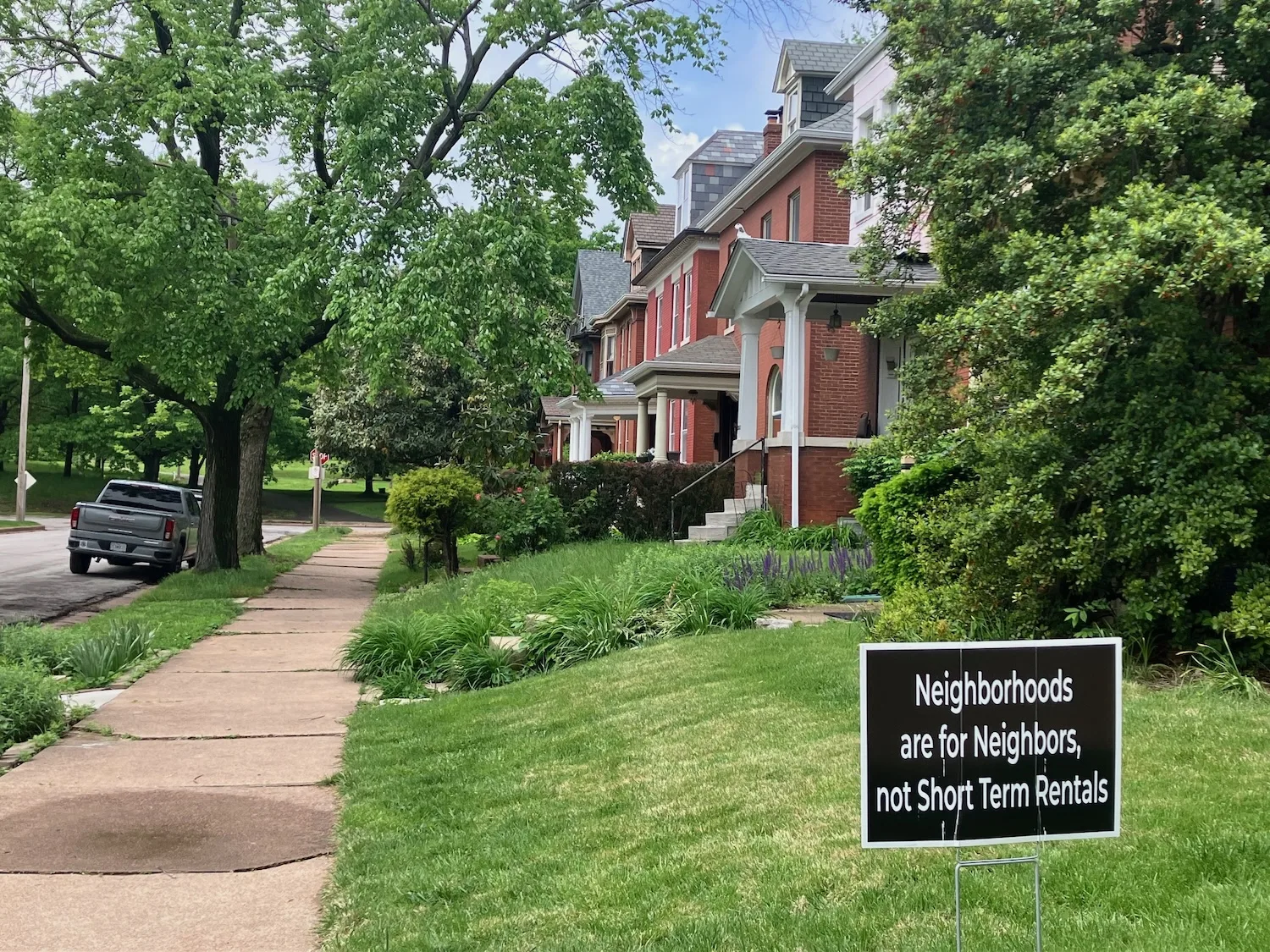
St. Louis can now start collecting a 3 percent tax on short-term rental bookings on platforms like Airbnb and Vrbo, a year and a half after voters approved the city’s ability to start doing so.
Alderman Bret Narayan, whose bill passed Friday, allowing the city to start collecting the tax, notes that this same amount has been long levied on hotels. “This brings parity,” he says.
Get a fresh take on the day’s top news
Subscribe to the St. Louis Daily newsletter for a smart, succinct guide to local news from award-winning journalists Sarah Fenske and Ryan Krull.
The bill provides the necessary fixes to correct some problems with previous legislation that put the question of the fee to voters, who approved it in November 2024.
In short, while the bill cleared the path for voters to approve the 3 percent tax, it didn’t set up a way for the city to collect the funds. Previous City Counselor Sheena Hamilton said that collecting the money wouldn’t be an issue, but someone in current City Counselor Michael Garvin’s office disagreed, necessitating the bill passed Friday. Narayan says his bill creates an account into which to deposit the funds, which will be used to fund affordable housing projects as well as the Right to Counsel program, which provides legal representation to some tenants facing eviction.
“This is the bones on how to actually collect that money and get it into account it needs to go to,” says Narayan.
As Narayan confirms, the city doesn’t know how much money the tax will bring in because, historically, it hasn’t regulated short-term rentals at all. Even now, more than two years after aldermen signed off on a bill to regulate them, that plan remains on hold.
In October 2023, aldermen passed legislation establishing a permitting process for short-term rentals, making St. Louis one of the last major cities in the U.S. to regulate them. The move followed a summer of raucous short-term rental parties turning violent across the city. The new rules mandated that people renting units out via Airbnb or Vrbo or any other short-term rentals platform needed to not only be permitted, but also to have an agent available 24/7 to address concerns. It also required a minimum stay of at least two nights and language forbidding the space being put on offer for parties.
All of that, however, is on hold pending the resolution of a purported class-action lawsuit brought by a company that owns a four-bedroom unit in Forest Park Southeast. The suit argues that the city’s new rules violate the Hancock Amendment, a state law barring the government from raising taxes without voter approval. The $150 annual fee that is part of the permitting process, the suit argues, is in essence a hidden tax. Judge Joseph Whyte put the collection of the tax on hold last May.
While Judge Whyte later gave the go-ahead for the city to begin enforcing all parts of its new short-term rental rules other than the fee, the city has opted against doing so. Mayor Cara Spencer said previously the city still does not plan to enforce the regulations “until we have clarity on the part of it that is currently playing out in court”—referring to the question of whether the city can charge the $150 fee.
Spencer indicated she is enthusiastic about the legislation passed Friday.
“This fix is a critical next step towards the bigger challenge of implementing short-term rental regulations, and I look forward to signing it into law,” she said of the bill’s passage. “While the short-term rental litigation remains ongoing, my administration continues to monitor the short-term rental landscape in the City for safety and other important issues.”