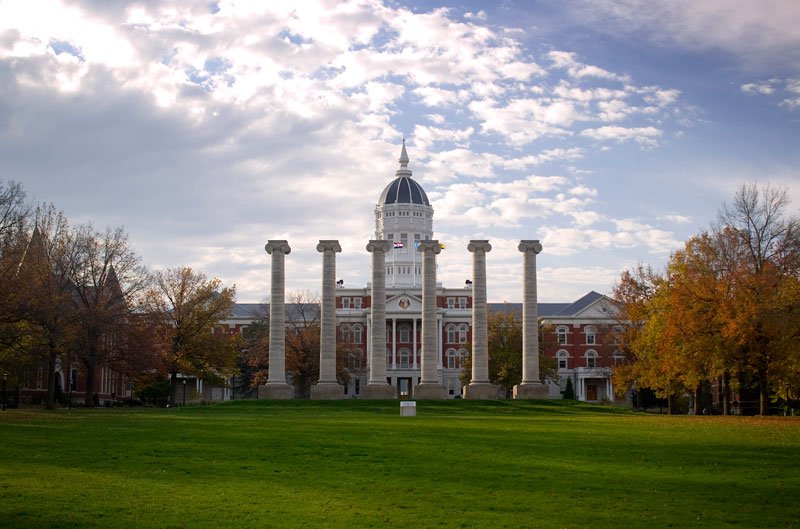
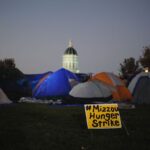
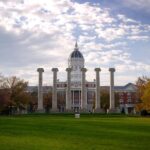
Race is at the root of many of America’s troubles. The recent turbulence at the University of Missouri–Columbia is further evidence of that, not that any reminder is needed. Racial tension triggered the protests, yet last fall’s turmoil continues to affect the fiscal, political, and social realities at the state’s flagship university, long after the mishandled crisis seems to have passed.
See also: In St. Louis, Mizzou Protests Bring Ferguson Flashbacks
Get a fresh take on the day’s top news
Subscribe to the St. Louis Daily newsletter for a smart, succinct guide to local news from award-winning journalists Sarah Fenske and Ryan Krull.
“We recognize we didn’t do the best job,” says Jim Spain, vice provost for undergraduate studies. “We’ve learned a lot.”
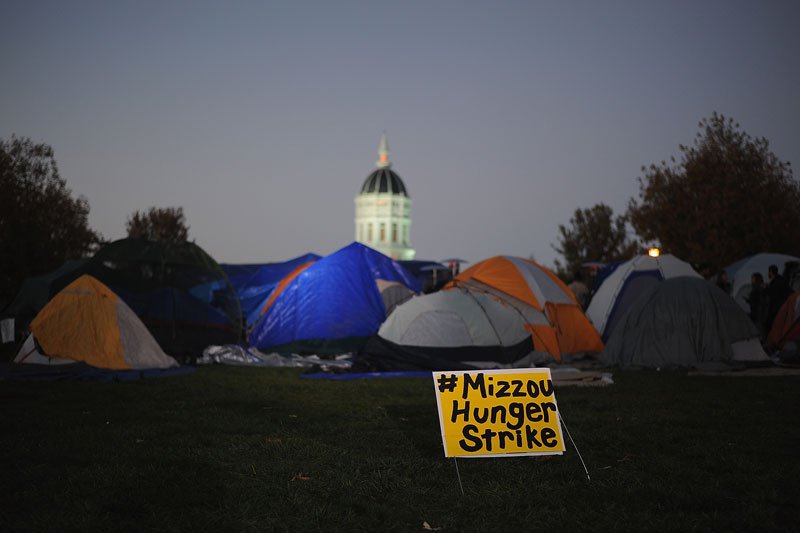
The casualty list is long. University President Tim Wolfe resigned and left, and Chancellor R. Bowen Loftin resigned and stayed, having been promised another position with a pay cut. Head football coach Gary Pinkel retired, citing a cancer diagnosis, after he supported a threatened player boycott. The team said refusing to play would be a sign of solidarity with Jonathan Butler, the black student who had started a hunger strike to get Wolfe to resign over Wolfe’s inaction on racial issues on campus.
Charges of racial insensitivity included slurs shouted by passersby at black students, swastikas scrawled on dorm walls, and a reluctance on the part of administrators to meet or communicate effectively with black students. Those weren’t the only difficulties on campus: Controversies arose over a Planned Parenthood–affiliated physician’s having privileges at the university hospital and graduate student-employees’ unhappiness over pay and benefits. Then videos of communications professor Melissa Click went viral, showing her cursing at a policeman and threatening a student photographer. She was fired.
See also: St. Louis Journalists Disagree Over Mizzou Media Blockade
The Missouri Legislature attempted to punish the UM state system by cutting its cashflow, but the final budget cut just $3.8 million from administration and gave an $18 million increase in “performance funding.” The political blowback continues. During a gubernatorial debate in June, Republican Catherine Hanaway called for eliminating the new position of chief diversity, equity, and inclusion officer that is paying $235,000 a year, and current Lieutenant Governor Peter Kinder referred to the protests as “PC foolishness.” The university’s administration hears the static. “We work for the state of Missouri,” says Spain. “We listen. The state supports us with more than $200 million. If we didn’t have that, we’d have to pass that cost on to our students.”
Students are a concern to the university, particularly when there are fewer of them. An estimated decline of 2,600 students for the fall semester will mean $36 million less in revenue for the Columbia campus and has resulted in a hiring freeze and a 2 percent across-the-board budget cut.
Administrators point to the selection of Michael Middleton, an African-American emeritus professor of law, as the system’s interim president as a sign of changing times. If there is a next time for student unrest, Spain says, the administration is “absolutely certain there will be different steps taken to respond. We are opening lines of communication in a proactive way.”
When Coach Pinkel tweeted his support of his team’s threatened boycott, a New York Times column referred to him as an “accidental revolutionary.” The level of Pinkel’s national notoriety may have been an accident, but the university hopes that the revolution is over.
Mizzou by the Numbers
- 35,424: Student enrollment for 2015
- 7 percent: Black representation of student enrollment as of 2014
- 19.3 percent: Decline in state support of UMC from 1987 to 2012
- $36 million: Revenue loss attributed to enrollment decline in fall 2016
- $25,514: Cost of in-state tuition and room and board