Kathy Gilsinan’s recently published debut nonfiction, The Helpers: Profiles from the Front Lines of the Pandemic, reads like a thriller, but one that gives the reader a window into the lives of those fighting COVID-19 under pressure. She opens with six Americans whom she says “keep their egos out of their work.” They continually risk their careers and lives to spare others from the ravages of COVID-19.
Gilsinan alternates her subjects’ stories over time, compelling the reader to turn the pages to find out what happens to them: the Vietnamese American tech worker in Northern California who ends up hospitalized at the same time as his elderly mother; the aging EMS paramedic from Aurora, Colorado, with medical conditions who races to New York to ferry the dying, then falls ill himself; the nurse in the Bronx desperate to save him and her other patients in the ICU; the CEO in Kokomo, Indiana, working with GM to manufacture more ventilators; the vaccine developer in Cambridge, Massachusetts, rushing to bring Moderna shots to trial; and the young biracial chef in Louisville scrambling to feed her community wracked by job losses and protests over the police killing of Breonna Taylor.
Get a fresh take on the day’s top news
Subscribe to the St. Louis Daily newsletter for a smart, succinct guide to local news from award-winning journalists Sarah Fenske and Ryan Krull.
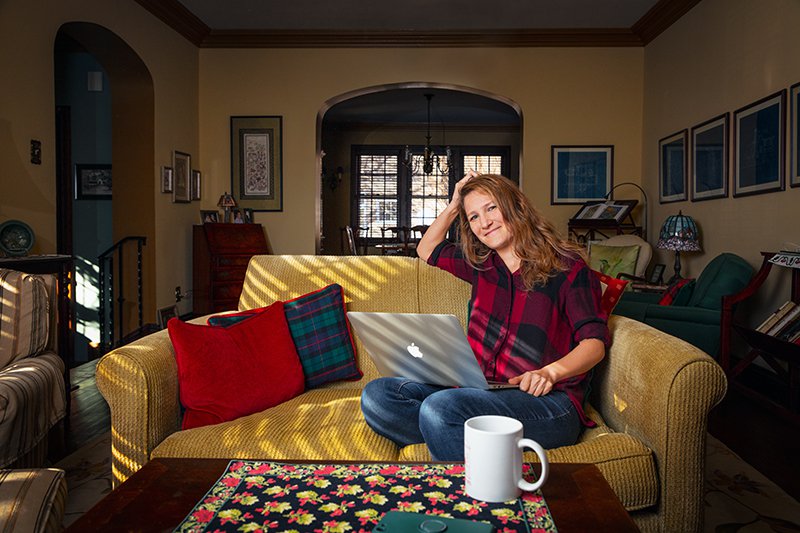
When COVID-19 struck, Gilsinan, now 38, was a staff writer for The Atlantic magazine covering national security and global issues. “Suddenly no one cared as much about sanctions on Iran,” she says. “It was all COVID, all the time.” Hearing a radio story about how strangers quarantined in a California hotel pulled together, she pitched a story about them to her editors.
Within days of The Atlantic publishing “Friendships in the Age of Quarantine,” on March 15, 2020, Gilsinan’s life changed. Her live-in boyfriend dumped her, and a literary agent proposed that she research and write a book about how Americans across the country were fighting the pandemic in their various careers. Two months later, Gilsinan and 67 other Atlantic staffers were laid off. She moved back to her parents’ home in Webster Groves and made reporting trips. “I felt compelled to find light in the darkness,” she says. “I had a burning desire to know these characters. I wanted their stories out, to show the good side of America.”
One story is about Hamilton Bennett, age 35, an executive at Moderna. After developing a vaccine for Zika in “a record-breaking dash,” she risks her career to grab scarce resources so scientists can develop a vaccine against COVID-19. She hunts for partners in the drug trials, nails down grants, and maps out timelines. She pushes herself so hard, her “outside social life” is a weekly phone appointment with Gilsinan. And Gilsinan was “almost intimidated” by Michelle Gonzalez, a 30-year-old RN union organizer who fights her own hospital for her ICU patients and her COVID-sickened parents. She proclaims, “People who don’t have voices—I’m gonna be the voice for you. Because I got a big mouth.”
Toward the end of the book, Gilsinan applies to her six characters what Albert Camus says of the doctor in The Plague: “While unable to be saints but refusing to bow down to pestilences, [they] strive their utmost to be healers.”