We know what we like and what we don’t like. We gravitate toward certain color palettes, lines and shapes, and architectural details, but communicating that vision to a designer often leaves us flummoxed, searching for just the right words. Here we’ve compiled a glossary—with quotes from designers whose body of work is informed by a particular style—to help you express your design wishes.
ART DECO: “A decorative style of the 1920s and 1930s using elements intended to suggest modern technological developments.” (A History of Interior Design, by John Pile and Judith Gura) Art Deco “stood for modernity as well as elegance and glamour. It’s noted for clean lines, bold color, angular shapes and stylized patterns such as zigzags.” –Interior Design Timeline via Visually
Get a weekly dose of home and style inspiration
Subscribe to the St. Louis Design+Home newsletter to explore the latest stories from the local interior design, fashion, and retail scene.
“I love the glam and the fact that they mix their metals. I love the geometric shapes and motifs, the saturated colors. They broke rules, but they still had a structure. They had fun.” –April Jensen, ADJ Interiors
ARTS & CRAFTS: “An aesthetic movement of the latter half of the 19th century in England led by the teaching of William Morris.” (A History of Interior Design, by John Pile and Judith Gura) “As a movement to oppose industrialism, people turned to traditional crafts to produce items of furniture and decoration.” –Interior Design Timeline via Visually
BAUHAUS: “The motivations behind the creation of the Bauhaus lay in the 19th century, in anxieties about the soullessness of manufacturing and its products, and in fears about art’s loss of purpose in society. Creativity and manufacturing were drifting apart, and the Bauhaus aimed to unite them once again.” –theartstory.org
CONTEMPORARY: “With neutral colors, furniture in basic materials such as wood and stainless steel and a minimal amount of ornaments, the aim is for a clean and uncluttered feel. Bright colors are sometimes used to contrast against the neutral feel.” –Interior Design Timeline via Visually
“Modern design speaks to us because of the innovative and classic designs that were brought forth by some of the most appreciated and well-known designers in history. The designers from the Modern era inspire us to explore the unknown. Contemporary design is often misrepresented as modern design. Currently, popular design has a lot of modern design characteristics. In a contemporary home today, you will often find clean lines, a connection to the outdoors, and an abundance of natural materials. Twenty years from now, contemporary design will have a whole new look.” –Maria Lesko and Channing Glover, C&M Interiors
CHINOISERIE: “A French word that means ‘in the Chinese taste.’ It describes a European style of decorative ornament that was wildly popular in the 17th and 18th centuries, and still looks great today. Scenes of the Orient abound on textiles, wallpapers, pottery, porcelain, and lacquered and painted furniture.” –poshsurfside.com
“I’ve worked on a few [William] Bernoudy houses. Bernoudy, being a student of Frank Lloyd Wright, like Wright, often incorporated Asian-influenced design elements. I find a touch of Chinoiserie applied with a light hand to a Bernoudy is taking the interior in a more decorative direction without stepping too far away from the root of the design. In a more traditional setting, Chinoiserie can be applied more liberally to add an exotic element that keeps boredom at bay.” –David Deatherage, David Deatherage Design
ECLECTIC: “The eclectic style forced a rise in the interior design trade as it created a need for people with an understanding of differing styles and interior design history. The lavish interiors created for the well-off increased demand for the style into the middle and lower classes.” –Interior Design Timeline via Visually
“The objects have to have an interrelationship before you mix them all together. To come across correctly, there has to be a grid—an alignment of styles, something that glues them together. You might start with a painting and then choreograph the pieces into a dance.” –David Kent Richardson, DKR Interiors
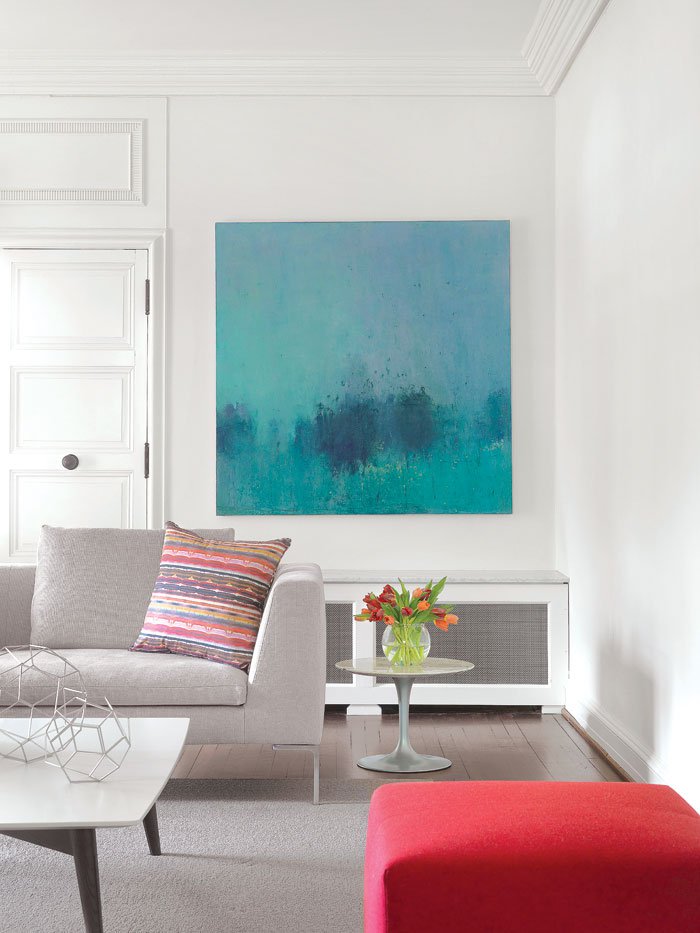
MIDCENTURY MODERN: “The aim was to bring the outdoors in and therefore big windows and open-planned rooms were utilized. The style was relatively simple.” –Interior Design Timeline via Visually
“I continue to be intrigued by the influences of form-follows-function eras and designers such as William Morris, Mies van der Rohe, and Frank Lloyd Wright. Their clean, simple forms and patterns are timeless. I love the societal concept of design for the masses as much as the classic furniture pieces from those periods still produced today.” –Dana Romeis, Castle Design
MODERN: “Moving away from the typically ornate and somewhat cluttered home, the modern style was focused on under-furnished spaces and bold primary colors. Materials such as plastic, steel and laminate were heavily used. Flooring would blend from one room to another, as would the walls, which were usually left bare or painted white.” –Interior Design Timeline via Visually
SCANDINAVIAN: “Simplicity and function are the guiding principles that have shaped the design sensibilities of Nordic Europe, resulting in spaces suffused with light, airiness, and a feeling of oneness with nature. Principles play up natural elements, favor neutral color palettes, keep lines simple and squeeze optimal function out of every part of the décor.” –impressiveinteriordesign.com
“Scandinavian style is pared back with a warm functionality and an understated feel of elegance. There’s a cleanness and brightness with deep roots in the rustic. I love the feeling of wood and something green and earthy. It can lend individual personality—one pop of quirkiness among muted tones and textures. It takes a personality to fully embrace Scandinavian style.” –Aisling Leonard, Ash Leonard Design
SOUTHERN: “Well-curated collections amassed from items gathered over time, family heirlooms, and a particular flair for the interesting.” –Southern Lady magazine
“Southern style is a way of life, curated family style. It’s using heirloom pieces in a way that feels unfussy, mixing them into the décor in a way that tells a story. It could be dishes passed down from generations, plates on the wall that feel modern, or an antique buffet that’s been passed down, plus a modern, sleek dining room table and chairs. ‘High-low’ is very important in terms of price point; that’s inherently Southern.” –Retta le Ritz, Retta le Ritz interior design studio
TRANSITIONAL: “This style is seen as classic with a modern take. The aim is to be timeless by blending the old with the new. Not as minimal and basic in design as contemporary but with decoration focused on simplicity. Traditional elements are kept in the design and furniture with ornate elements.” –Interior Design Timeline via Visually
“Transitional designs are classic with a modern twist—a leaning toward upholstered pieces with clean lines and neutral tones to anchor a room while layering color and texture through artwork and accessories. Furniture is usually the most expensive piece in the room.” –Heather Helms, president of the Missouri East Chapter of the American Society of Interior Design


