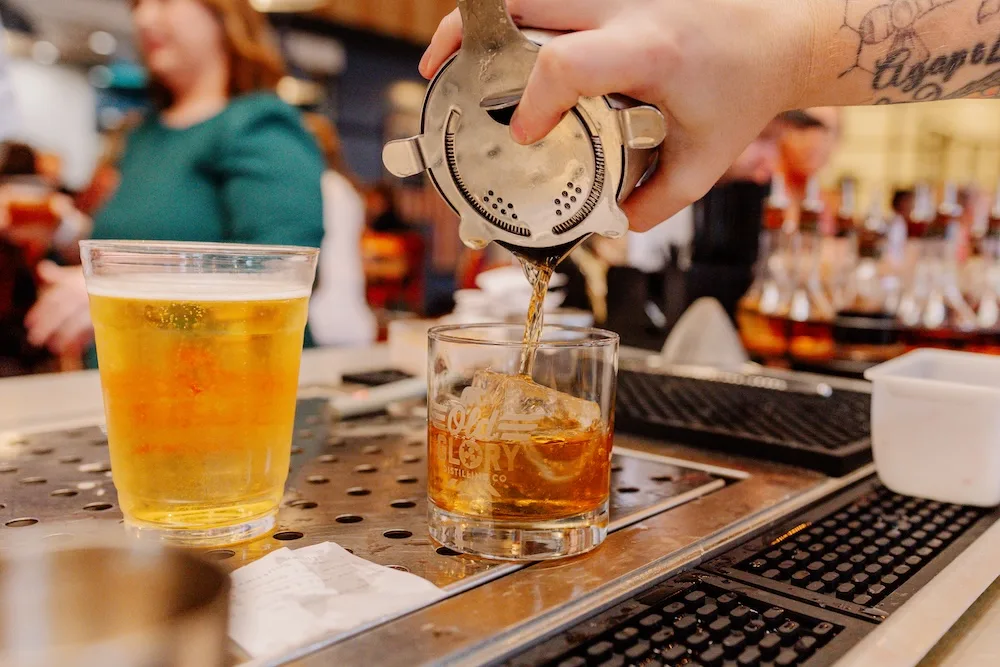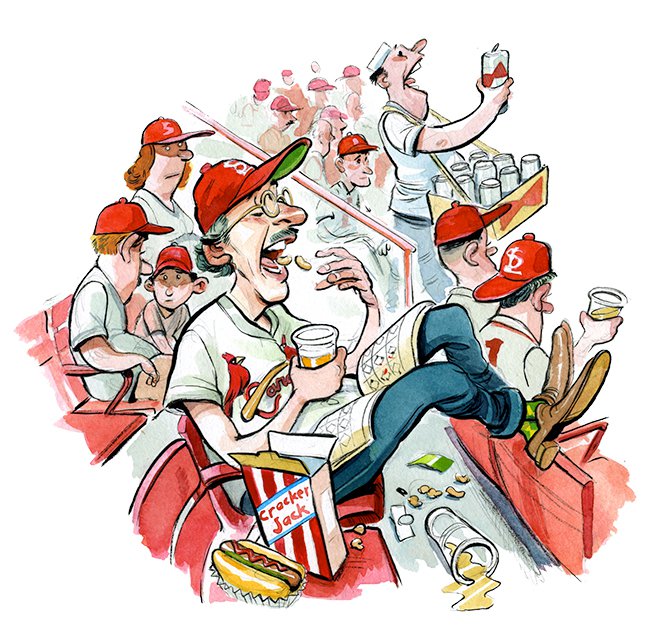
Most of us can agree that a cold frosty one at Busch Stadium could rescue any hot July afternoon—even if the Redbirds can’t pull out a win. But there’s actual reason to believe that if it weren’t for beer, the Cardinals wouldn’t even exist—and we’re not talking about when brewing magnate Gussie Busch bought the team, in the 1950s.
To answer this query, we must go back to the 1870s, when organized baseball was in its infancy and gambling was rampant. After the 1877 season, the Brown Stockings, St. Louis’ first big-league team, was booted from the National League for fixing games and eventually folded. Enter a German-American grocer and saloonkeeper named Chris von der Ahe, who happened to own a beer garden near the ballfield. Von der Ahe didn’t know anything about baseball, but he knew that he tended to sell more beer on game days.
34: number of beer and cider varieties available at Busch Stadium during the 2017 season
You see, at the time, the National League, run largely by Eastern WASPs, didn’t allow teams to play on Sunday and forbade alcohol sales at games. This never sat well with working-class Midwestern German and Irish immigrants, who traditionally liked to relax and drink their lagers after a six-day workweek. Von der Ahe sensed opportunity. He bought what was left of the team and later changed the name to the Browns, built a stadium called Sportsman’s Park, and co-founded the American Association, a new league that would play on Sundays, sell beer and whiskey, and charge 25 cents for admission—half the price of an NL ticket.
Both the league and the team were smashing successes. The Browns won four straight league championships between 1885 and 1888. In 1891, the American Association failed, but the resurgent Browns were quickly welcomed back into the National League. Before long, von der Ahe—thanks to his debts, divorces, and meddling in on-field affairs—lost the team, which changed its name to the Perfectos and then the Cardinals.
In addition to salvaging baseball in the Gateway City, von der Ahe is credited by some historians with forming the first farm team, coining the term “fan” for fanatics, and being the first to sell hot dogs at a ballgame. “He helped save baseball across America,” says Edward Achorn, author of The Summer of Beer and Whiskey. “He’s largely been forgotten by baseball. I think he belongs in the Hall of Fame more than Bud Selig.”