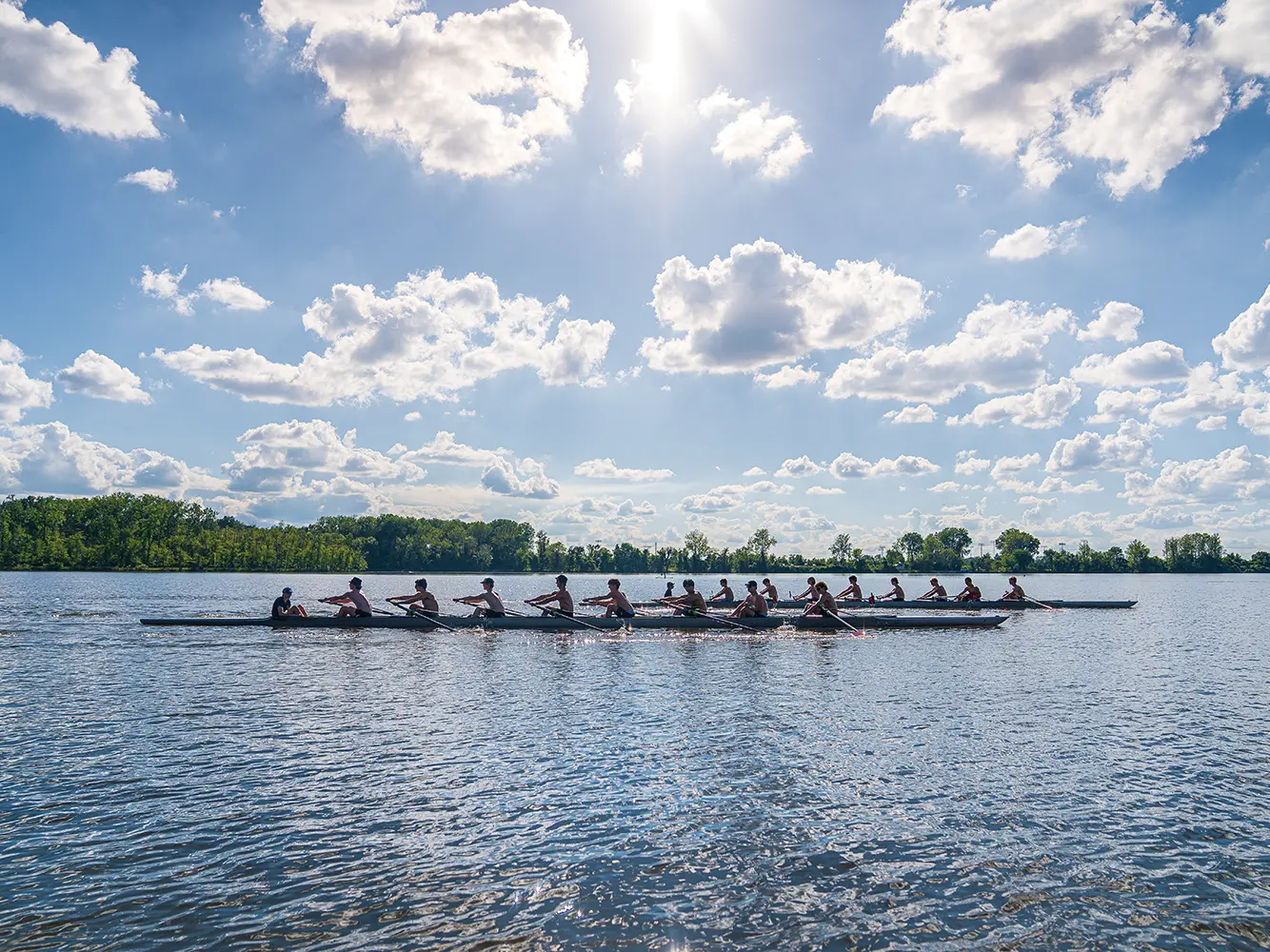
Roughly 150 years ago, in landlocked Missouri, on the calm waters of Creve Coeur Lake, a rowing club was born. Today, as one of the oldest rowing clubs west of the Mississippi, the St. Louis Rowing Club regularly competes in national championships and sends many of its youth members to Ivy League institutions on scholarship. As the only rowing club in St. Louis, the club is local rowing culture—but its existence might be considered the area’s best-kept sporting secret.
“I think, frankly, a lot of people don’t even know it exists,” says assistant coach Dean Hooks. “Whenever I say something about rowing to somebody that’s from St. Louis, they’ll say, ‘I didn’t even know we had rowing in St. Louis.’ They might’ve seen groups of people out on Creve Coeur Lake, but they don’t know that the organization is accessible to them.”
Discover your next outdoor adventure
Subscribe to the St. Louis Outdoors newsletter to get smarter about hiking, biking, paddling, climbing, and camping within the St. Louis region and beyond.
The Rowers
Some members are teens looking for a pathway to college scholarships. Others are former athletes seeking a social belonging. For several, the club’s learn-to-row workshops offer an avenue into a healthy hobby. For many of the club’s current leaders, the organization has served as an outlet during life’s biggest transitions.
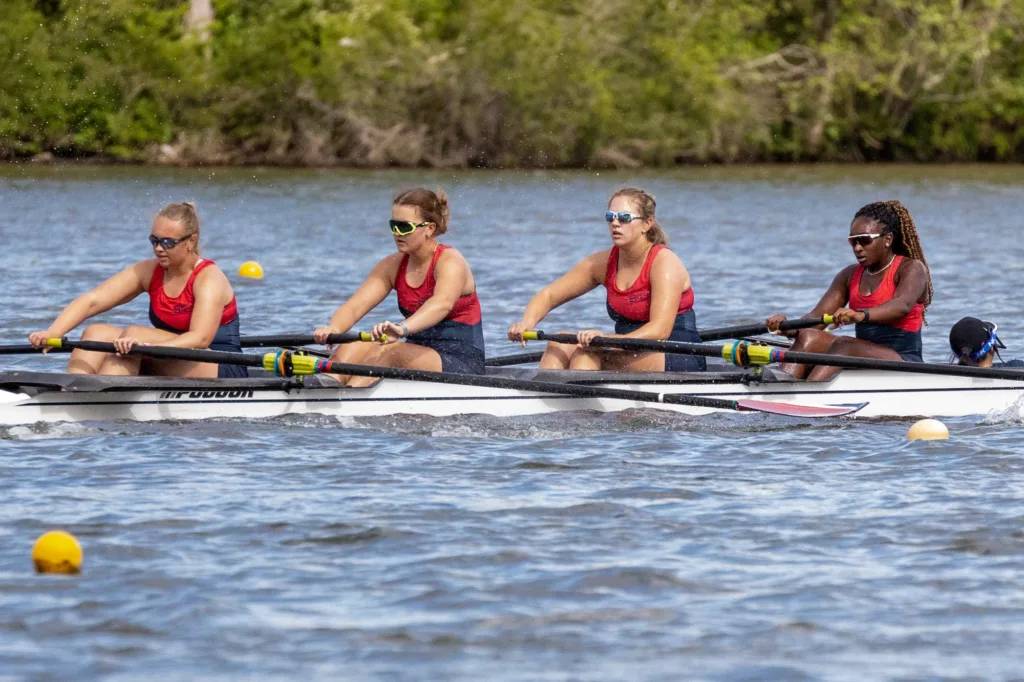
Margaret “Margie” Wolf Freivogel started rowing at age 52, after her youngest child left for college. “Rowing turned out to be a constant challenge—a test of physical endurance, mental focus, and the ability to stay in sync with the rest of the crew,” she says. “When it all comes together and the boat is flying, there’s nothing better. But even when things go wrong, you’re still enjoying time on the water and a chance to refocus and relax. Whatever was bothering you when you arrived at the boathouse is in better perspective after practice.”
The athletic challenge itself is what drove Hooks—an avid water skier, competitive runner, and cyclist—to jump in a boat for a corporate competition almost 20 years ago. After an extended rowing pause while raising kids and focusing on work, he realized his regular exercise routine could use some cross-training. “My joints are getting more miles on ’em, and my body’s getting a little bit older,” Hooks says. “So I bought a rowing machine. I started figuring out that my body, at my height and weight, is a little bit better suited for rowing than it is for running.”
Since that realization, Hooks has been an active member of the St. Louis Rowing Club, first as a member, then a competitor, and now as a coach and mentor. “It’s a little different than any other sport that I’ve ever been involved with,” he says. “There’s no real star in the boat. I always try to tell the kids, ‘Don’t try to be the best person in the boat; try to be the best person for the boat.’ There’s a kind of magic, and there’s physics behind it, but basically if you can get everybody synchronized and working together and doing exactly the same thing, stroke after stroke, that boat is gonna really move, and when it does, it’s a great feeling.”
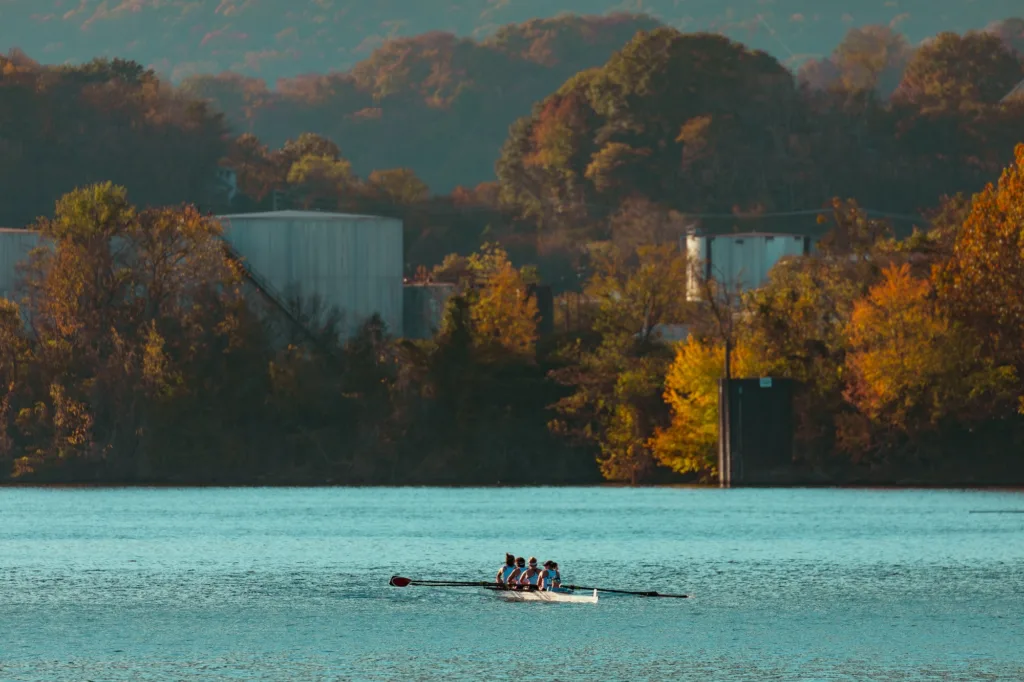
Hooks explains that in rowing, the whole truly is greater than the sum of its parts. “If you have somebody who’s 20 percent stronger than somebody else in the boat, nobody on shore sees that—but they know if the boat moves or not,” he says. “It’s a full-body type of thing; you’ve used a lot of big muscle groups, and it’s just a different feeling in terms of the effort you put in and the accomplishment that you feel.”
The low-impact sport also appeals to active adults who’ve sustained injuries or can’t compete in the way they once did, such as Rob Rosenwinkel. “While it is intense exercise, it’s not hard on your body, which makes it something that is possible for really anyone to do,” he says. With more than 100 adult members, Rosenwinkel says, the community that he’s gained has equaled the physical benefits. And the annual membership ($711 for adults, $579 for juniors) rivals a typical gym membership. “We have full-time coaches in our program, so you’re getting coaching every time you’re out on the water, you have access to the boathouse that has rowing machines and the equipment—the shells, the oars, all of that,” he says.
“It’s a nice way to have physical fitness improvement without having your body be abused, especially when you’re a late entrant or you’re older,” says board president Karthik Raghavan.
The Juniors
Raghavan considers the club’s robust juniors program its foundation.The program offers financial assistance to encourage community-wide involvement, and more than half of its 150-plus members end up rowing on a collegiate level.
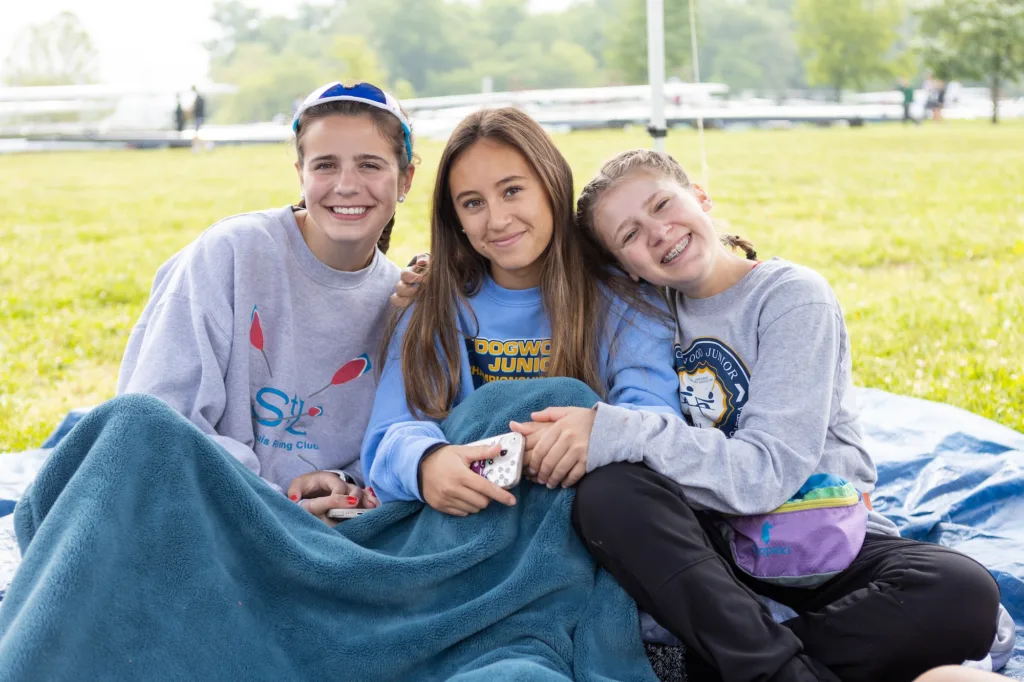
Each year, Hooks explains, youth members gain opportunities at world-class universities, from Harvard to Princeton to Yale to the Naval Academy. “My measure of success is not how many races we win. We like to do that, but what’s more important is the impression this experience made on these young people as they go on to school and business and family life and so on,” Hooks says.
Hooks describes one of the main takeaways for young rowers being the value of delayed gratification. “In any kind of a business or school environment, those skills and that mentality really pay huge dividends,” Hooks says.
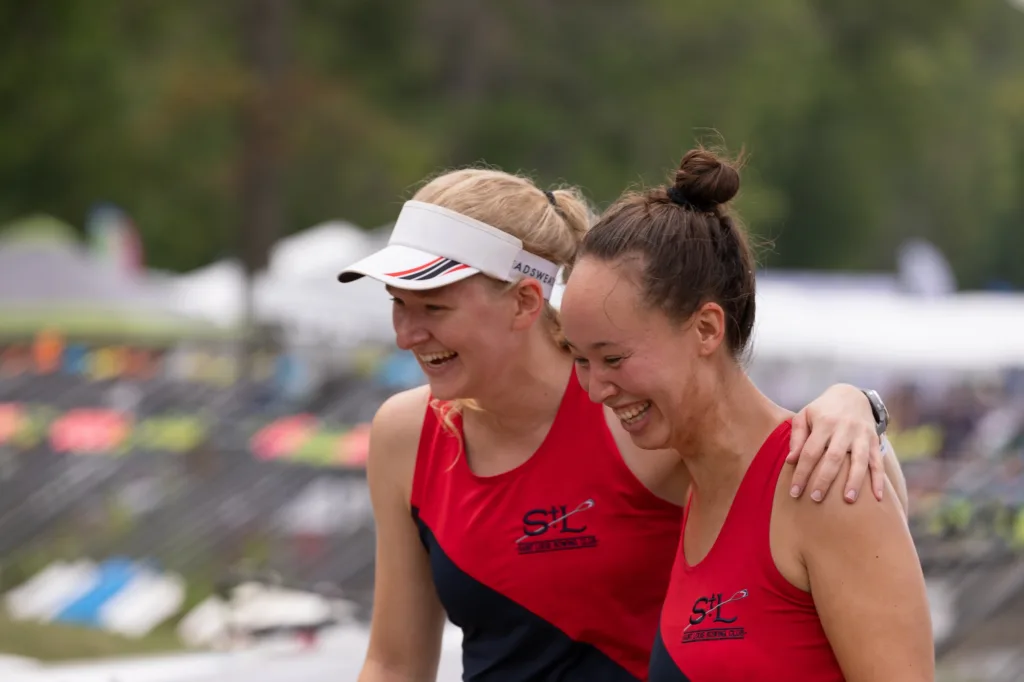
Junior members practice through the school year, while those who go to nationals dedicate far more time. “It’s one thing when it’s a beautiful sunny day out in the middle of the lake—everybody has fun, right?” Hooks says. “But if it is 20 degrees, wind blowing, and you’re sitting inside a cold building staring at a monitor that’s telling you exactly how fast you’re going every stroke, that builds a lot of mental toughness, a lot of mental resilience. It’s lessons that these kids will carry with them throughout their lives.”
The juniors program is not for everybody, Hooks notes, though he adds that rowing is adaptable to many body types. “This is a sport that requires you to work hard,” he says. ”It requires you to put yourself out there and put yourself in some self-inflicted discomfort.”
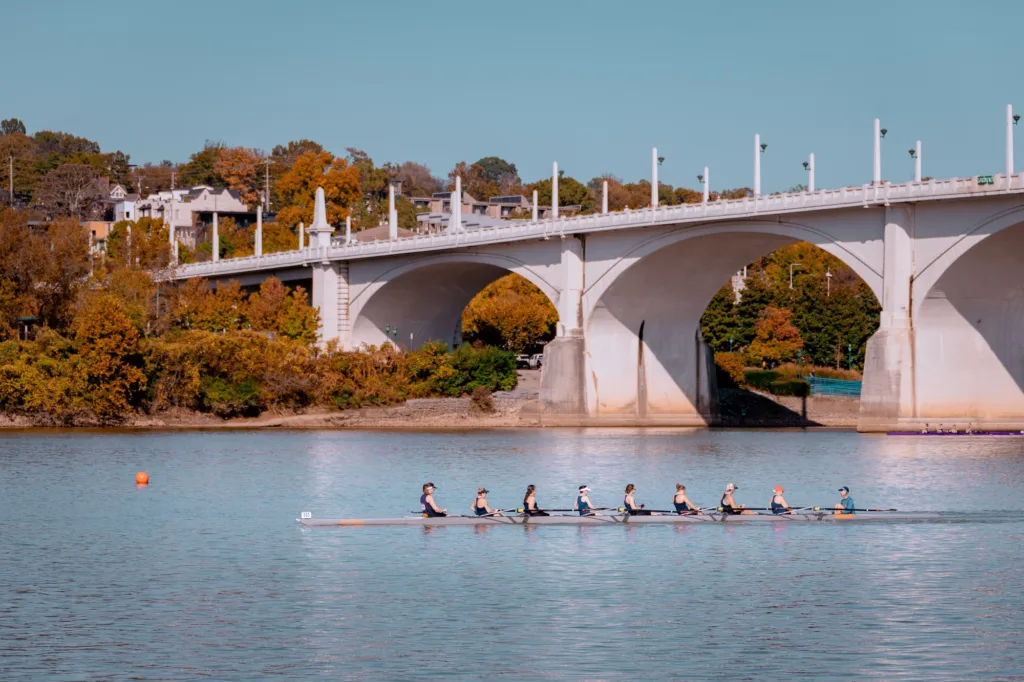
Former club president and current senior member Steve Giddings attributes much of the club’s longevity and success to the launch of the juniors program during its reinvention in the ’80s. “The club grew quite quickly and consisted mostly of juniors for quite some time,” Giddings recalls. “There are now kids who went through our juniors program who come back as adults, work as coaches, and come back to row again.”
The Boathouse
Giddings, who grew up on boats in New Hampshire and rowed in college, says his daughter took up rowing when she outgrew ballet. In 1994, his daughter got him back on the water and inspired him to join the club. It was during his tenure as president that the club acquired the land that would ultimately be the grounds for the boathouse at Creve Coeur Lake.
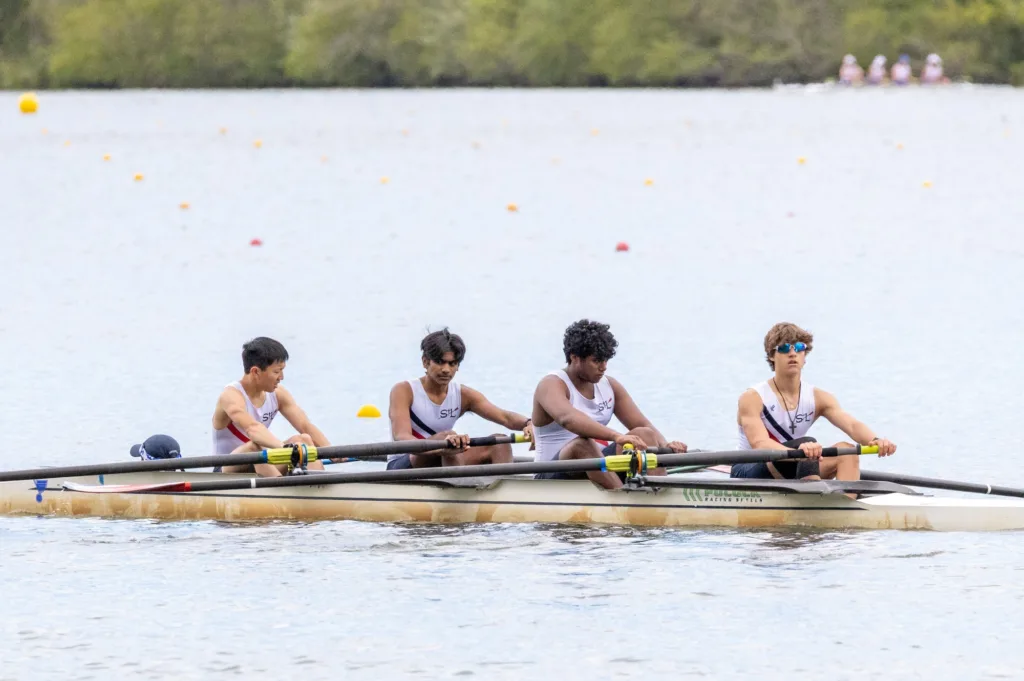
Since 1875, the club has experienced periods of both rapid growth and dormancy. Rowers first met on the banks of the Mississippi River, but in the 1980s, a transformation took place, largely thanks to resourceful club members and the evolution of Creve Coeur Lake from a residential to a park property. At first, the club’s headquarters was an old volunteer fire department station on the beach side of Creve Coeur Lake—what modern members call the only reasonable venue for rowers in the metro area—but the makeshift shelter washed away during the Great Flood of ’93. Then, in 2000, St. Louis County moved the club to its current site, and, in 2004, the organization raised $250,000, matched by a loan commitment from Washington University to build what today is the rowing club’s home base, which is also shared by WashU’s crew team. Club volunteers helped construct the building, from fundraising to crafting boat racks.
That same team spirit persists today. “We have a really strong volunteer culture within the organization,” Rosenwinkel says. “When things need to be done, it’s not very hard to get people together to pitch in. This past year, the boathouse flooded. It was up to the club members to come together, but it wasn’t hard to get people to do it. Everybody is engaged and has a stake in it. We’re a team, in the same boat.”