
It was a behemoth: a swimming pool that legend says could hold up to 10,000 swimmers. If you grew up in North St. Louis in the early 20th century, it was the place to go in the summer to cool off. Streetcar lines converged at the intersection of Natural Bridge Avenue and North Grand Boulevard, at the corner of Fairground Park, by the old bear pits. Fairground Park was originally land for the St. Louis Exposition, hosted by the St. Louis Agricultural and Mechanical Association. The fair had two racetracks, one of which was known as The Amphitheatre and featured a giant circular dirt track and spectator stands. The Amphitheatre’s foundations would be transformed into that huge pool. Fast-forward to the Civil Rights era, during which Fairground Park was the site of turmoil when Black teenagers attempted to desegregate the swimming pool. White teens rioted, and a substantial portion of the police department was deployed to quell the disturbance. Famed civil rights attorney George W. Draper II fought to desegregate the pool, and his victory opened St. Louis parks to people of all races. Today, a smaller swimming pool stands on the site of the once vast swath of water that played such an important role in St. Louis history.

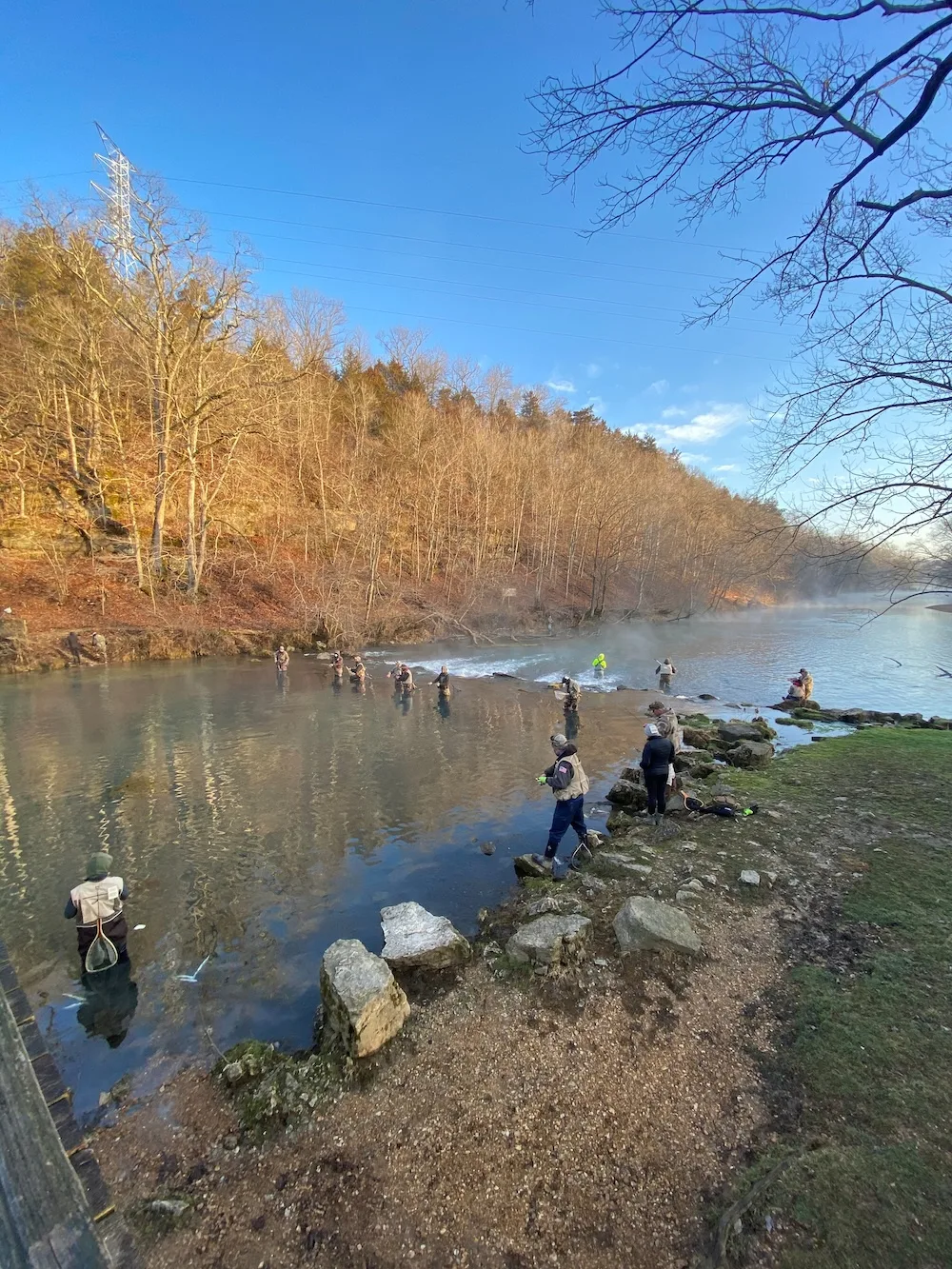
Maramec Spring Park is a trout-fishing gem
Catch-and-keep season opens March 1 in Missouri’s four trout parks.


