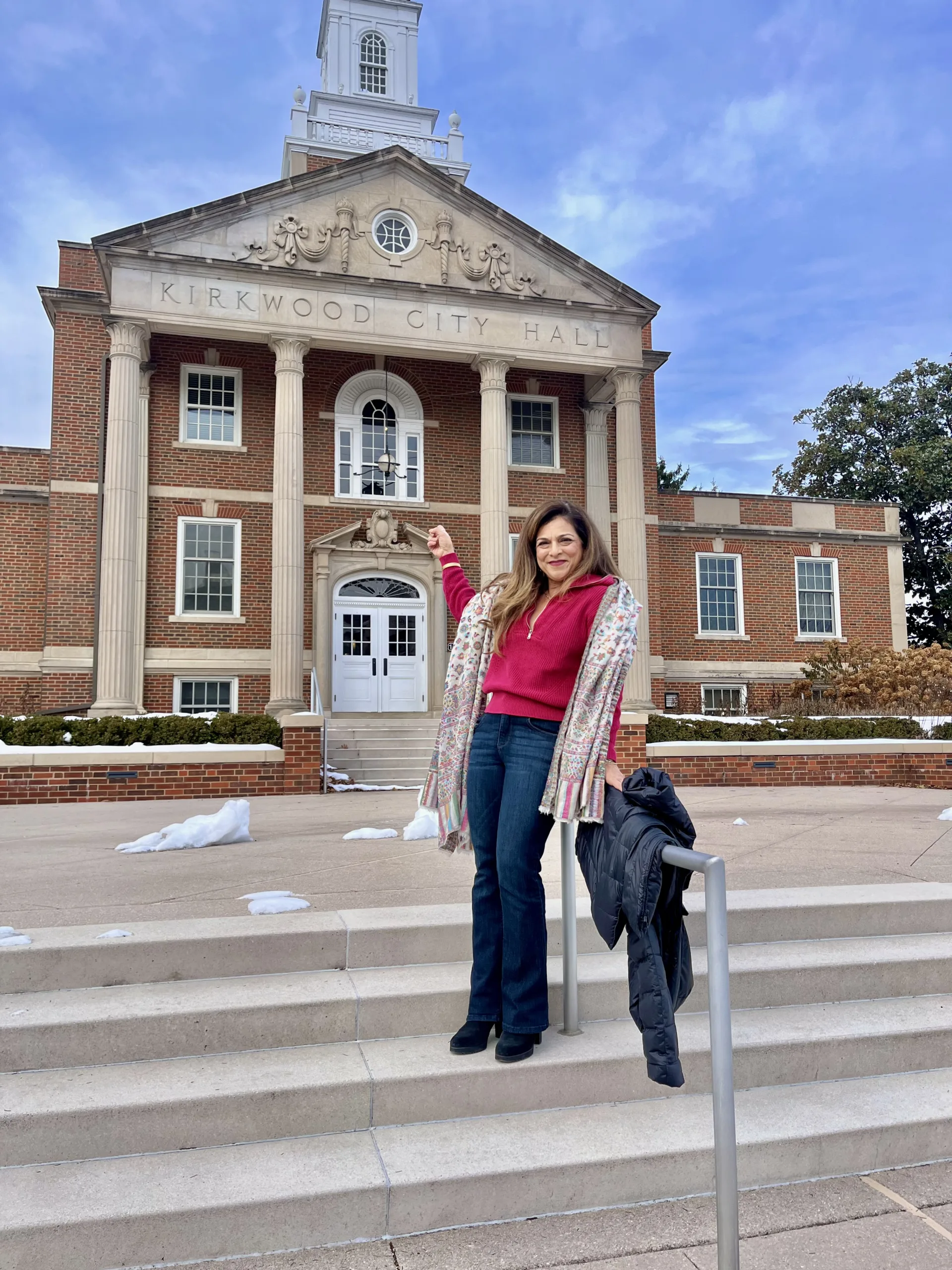
Wellbeing doesn’t have to involve a dramatic life overhaul. Instead, manageable micro-habits can improve your day-to-day in vast ways, says Hajra Jaffer, the City of Kirkwood’s new wellbeing coordinator.
Jaffer was hired through BJC’s Corporate Health arm in July 2025, after years as a nutrition educator, as well as a senior wellbeing coach for New York Presbyterian Hospital. “I believe strongly that holistic wellness can transform individuals,” Jaffer says, “and entire communities.”
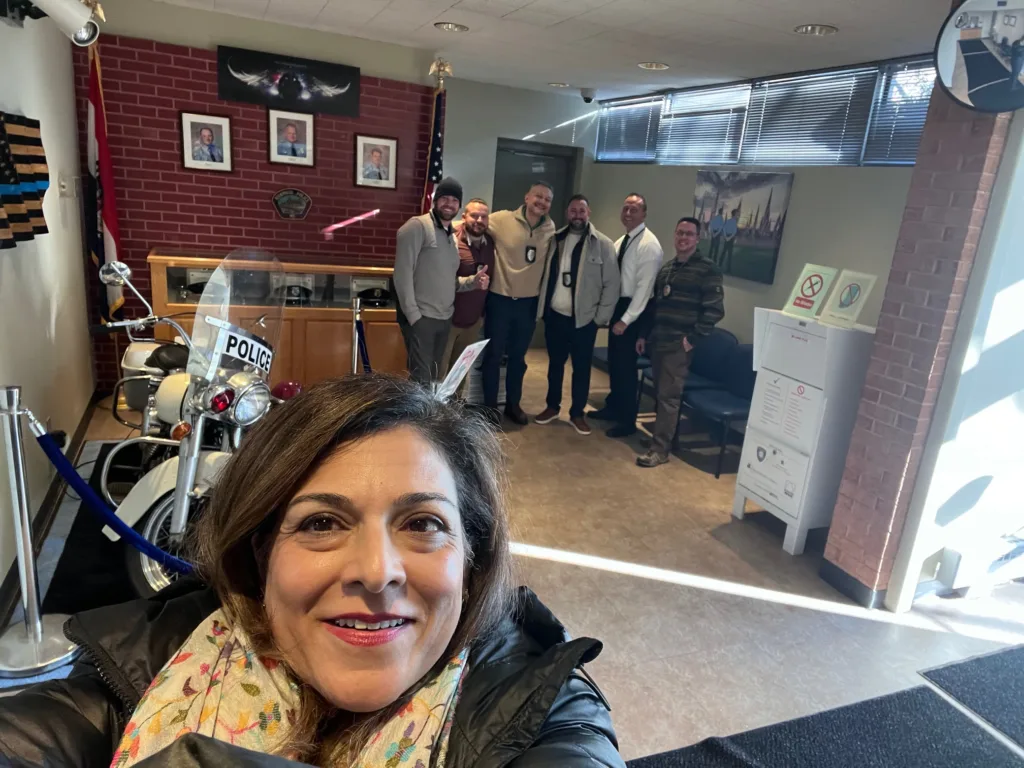
Jaffer believes that looking after the wellbeing of civil servants—first responders, sanitation, parks and recreation—can impact a community at large. After six months in the role, Jaffer says she’s already seen a difference. “It’s all about how you are being, not what you’re doing,” she says. “Micro-habits, like movement, have been the game-changer.”
Jaffer says her ultimate goal is one-on-one meetings and relationships with city employees to help them make sustainable habit changes, from cutting down the number of treats each day to taking the stairs. At the same time, group challenges—for instance, hydration-boosting and gratitude-encouragement—have made an impact.
She meets with departments before their work day to discuss topics related to holistic wellbeing—physical, emotional, or social. She’s given workshops on seasonal affective disorder, simple ways to increase movement (think chair yoga and resistance bands), breath work, nutritious on-the-go options, and food-label analysis. “With our busy lives, we often don’t realize the importance of wellness,” Jaffer says. “Many of the people I am working with just thought of wellness as diets and running, but there’s so much more.”
Your guide to a healthier, happier you
Sign up for the St. Louis Wellness newsletter and get practical tips for a balanced, healthy life in St. Louis.
Intentions, Not Resolutions
Jaffer’s latest development for city employees is a program that encourages “resetting in the New Year” across three pillars: renew, refresh, and recharge. It’s a program she initially launched with a talk at the Kirkwood Public Library, which soon will be shared with St. Louis Public Library and BJC employees as well.
“At the end of the year, personal batteries are all at 20 percent or even 10 percent,” she says. “So instead of saying, I have to lose weight; I have to get more money, how can we use intentions instead? For instance, I have to be kinder to myself, or I have to figure out how I can make myself calmer, rather than make these huge resolutions.”
Renew
This pillar, Jaffer explains, means reconnecting with what matters. “What’s your purpose? What’s your meaning? Purpose doesn’t have to be something big, but it’s how can you bring intention into what you’re doing every day?”
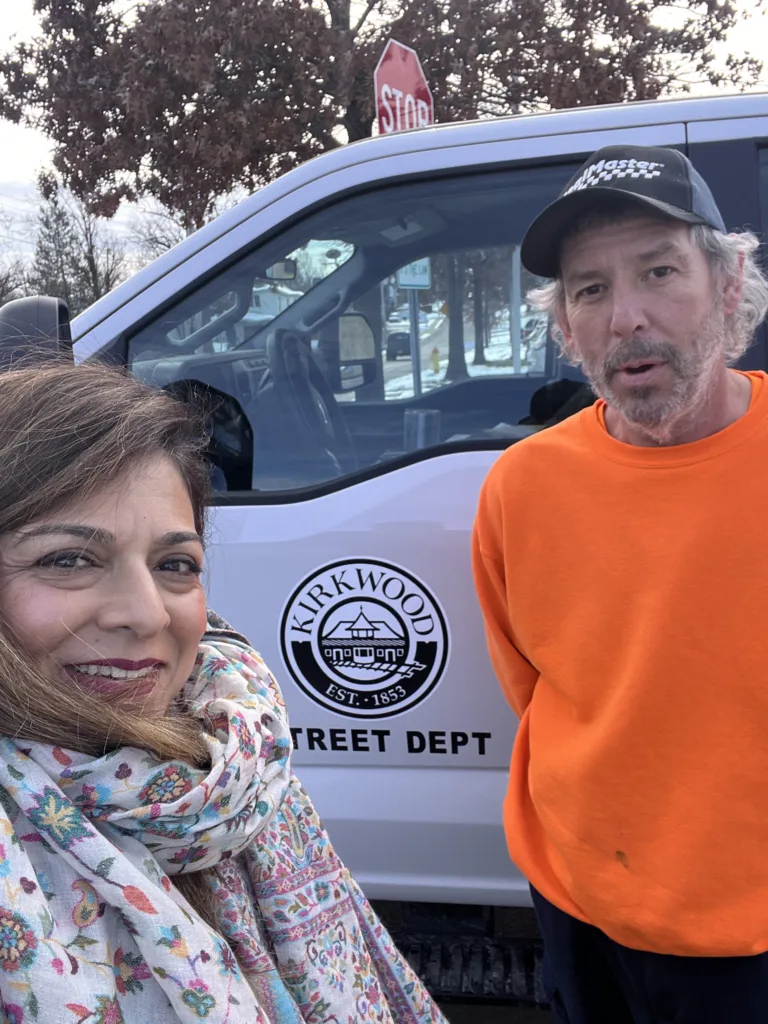
When speaking with the parks and recreation team, for example, Jaffer expressed how much joy they provide the community and how much beauty they contribute to the town. “And then I say, How do you connect that back to you?” she says. “That’s what renewing: focusing on intentions, rather than rigid resolutions, asking people what gives them that energy in their day.”
So often, Jaffer explains, people go on autopilot, doing what they need to do in their jobs, but they don’t stop and think about what gives them energy and who they are impacting. “When we connect what we do to that impact, it creates purpose,” Jaffer. “And that is meaningful for daily connection.”
Refresh
The second component to Jaffer’s program involves clearing up mental and emotional clutter. “In my residency training, we learned the concept of the not-to-do list,” Jaffer says. “What is something I can take out of my busy day that’s not serving me, that’s not giving me energy?”
Jaffer gives the example of swapping an hour of doomscrolling or watching the news with an hour or reading. This stage of the program also involves the STOP technique, an acronym for ‘stop, take a breath, observe, and proceed with presence.’
“The whole Refresh part is being more mindful and being more aware,” Jaffer adds. “So I’m not telling everybody you need to meditate, but do try to bring mindfulness into a daily routine, like expressing gratitude to a coworker or spending a couple of seconds bringing it back to the present moment, to what you’re doing and how your senses feel.”
Recharge
Rebuild your energy through small, holistic habits, such as micro-movement, mindful eating, and socializing. “The No. 1 secret to resiliency in life and in work is connecting with others,” Jaffer says. “So I give them my example that I’ve moved so much, and it’s really hard. But one thing that makes me feel good is when I pick up the phone and talk to a friend, and I’m able to tell her what I’m going through, and she’s able to tell me. Connecting with others, even if it’s for a couple of minutes—hearing somebody’s voice—is a great way to recharge you.”
Uplifting the Community
Jaffer says the No. 1 wellness gap she sees in St. Louis is the comprehension of realistic, holistic wellness that fits into daily life. Beyond weight loss, exercise, and social media trends, she explains, wellness has a much deeper pool. “It’s connection, community, giving back, watching your stress, taking breaks, that is all holistic wellness, and this is something that I feel is in need in St. Louis,” Jaffer says.
Jaffer hopes that wellness coordinators become more widely accessible across the metro area. “Communities can all benefit from somebody like a wellness coordinator or a wellness coach, even part-time, like I am” Jaffer says. “If everybody realized the importance of wellness, it can be a trickle-down effect. If leaders believe in it, then it comes down to the community. So get in your departments, in your spaces, and find your wellbeing champions. And once you have one, then it can spread, and the entire community will be better for it.”
This new year, Jaffer recommends that metro area residents start building positive micro-habits. “Cut down five minutes of your news; give yourself a pat on the back. Drink some water; take a walk; take the stairs; take a breath; find reasons to smile,” she says. “All of these simple things are science-based and proven to improve your wellbeing. My dream would be making people realize that every step counts.”
Jaffer adds that you have to make these habits fit into your lifestyle. Can’t work out in the morning? The afternoon is just fine. Can’t meditate for an hour? Try 10 minutes. “Smiling, breathing, and going slow—these three things changed my life and made me decide how important these things are. So I would like to spread that and help it change other’s lives, too,” Jaffer says.
Jaffer is already seeing a change with Kirkwood city employees. “Instead of running away from me, they’re making an effort to call and say, ’We’re gonna get all the guys together for a 10-minute talk,’ or we’re going to take a walk,” Jaffer says. “It’s internal motivation, rather than external motivation, and that routine and practice will make all the difference over time.”