If a goat sleeps in Grant’s Farm and no kids are there to see it, does it even have a bedtime?
As Grant’s Farm’s supervisor of animal programs, Angie Comerford has heard it all, from both the creatures for which she cares and their youngest admirers. Comerford says her favorite part of her job is training and caring for the animals—but her other favorite part is educating visiting children on those animals.
“I love being able to be a part of someone’s memory, if they’re in one of the shows we do, and they remember the person that called them down to be part of it,” she says. “You never know who you can reach and who could one day go on to cure different animal diseases because you’ve inspired them.”
Whether it’s sparking a future career passion, teaching about a factoid that satisfies guests’ curiosity, or helping guests conquer their fear of snakes, Comerford says she finds value in helping all kids understand that each animal has a place in the ecosystem. She also finds joy in some of the more candid moments on the job.
“I’ve been doing this for 18 years, and the saying ‘kids say the darndest things’ is so correct,” she says with a laugh. “When you have kids come down, and be a part of your show and participate, you never know what they’re gonna say—and you’ve gotta be on your toes to be able to answer.”
Some kids perhaps overshare details (“My sister was put in timeout today”), which leads to laughter. Some kids, such as those who are visually impaired, have awestruck reactions to touching an animal for the first time, which Comerford says make for her most memorable days.
“Sometimes, they ask questions like, ‘Oh, why are those two animals fighting?’ And you just have to be like, ‘Um, you need to go ask your mom and dad,’” she says. “There are some really funny things that the kids say that never cease to amaze me, no matter how long I do this for.”
Get a fresh take on the day’s top news
Subscribe to the St. Louis Daily newsletter for a smart, succinct guide to local news from award-winning journalists Sarah Fenske and Ryan Krull.
No matter how silly or uncomfortable the question, Comerford says, keep them coming—there’s not a group of people that loves talking about the ins and outs of animal life more than the Grant’s Farm care team.
“We have a smaller staff that’s full-time,” she adds. “You don’t get birthdays and holidays. You don’t get sleep if your animal needs something at 2 a.m. Through blizzards, through ice storms—we’re there. Not everyone knows just how dedicated animal keepers are or animal caregivers are, but just because Grant’s Farm closes, doesn’t mean that it stops.”
Not only is the staff excited to answer nonstop questions from kids each season—the animals look forward to them, too, Comerford says. “People don’t realize that animals are excited to do the shows, too, because they wouldn’t do them if they weren’t,” she adds. “They love learning new things, and you can tell by the engagement with the trainer. We are constantly taking care of everything around us to make sure that the animals have what they need and that the guests have a great experience as well. It all works together.”
Comerford also answered some common queries that she and her staff field from young visitors.
Can peacocks fly? Yes, for short durations. They can fly but not in the sense of how a sparrow or blue jay can fly. What most people don’t realize is that peacocks will fly up to the trees at the farm, and that’s where they’ll stay at night. They bed up in the trees at night, and then they kind of float down in the mornings, and that’s how they protect themselves from natural predators.
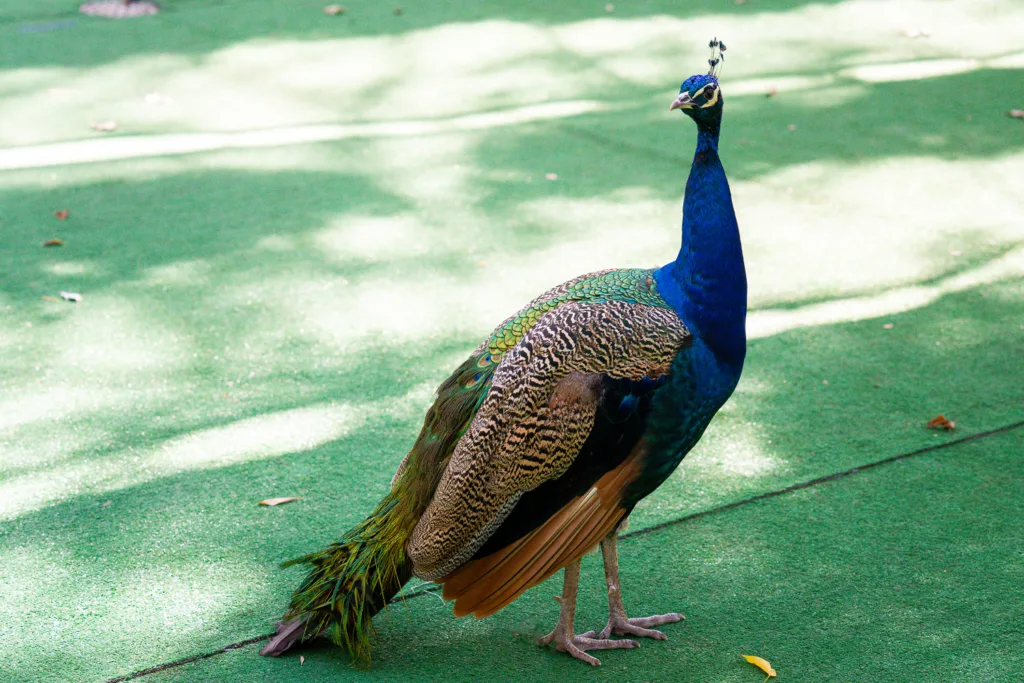
Where do the peacocks live? The peacocks that live at Grand’s Farm breed naturally, and they go wherever they please. They kind of run the farm, in a sense, so the whole place is their home. But they do tend to stay up in the biergarten area, because that’s where most of the animal feed is, and they enjoy the popcorn on the ground. They also tend to stay near where the calmer animals are, rather than the Deer Park, where the animals run around a lot more.
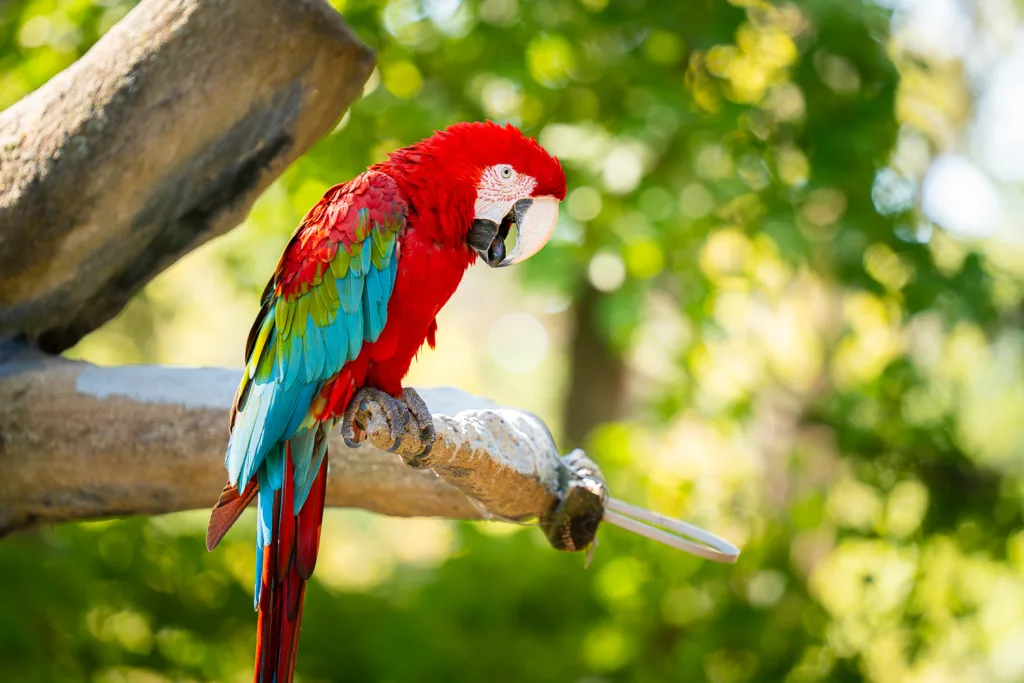
Can macaws talk? Macaws are not actually capable of talking, meaning that they don’t have their own individual voice. However, they mimic. So they can mimic sounds, voices. We have a total of about eight or nine macaws. And when they mimic, they mimic a voice. At night, when we put them in their closures, you can hear different people’s voices who have worked here in the past. So it’s a little bit daunting because you’re like, Oh, that person hasn’t been here for a while, but I can hear their laughter.
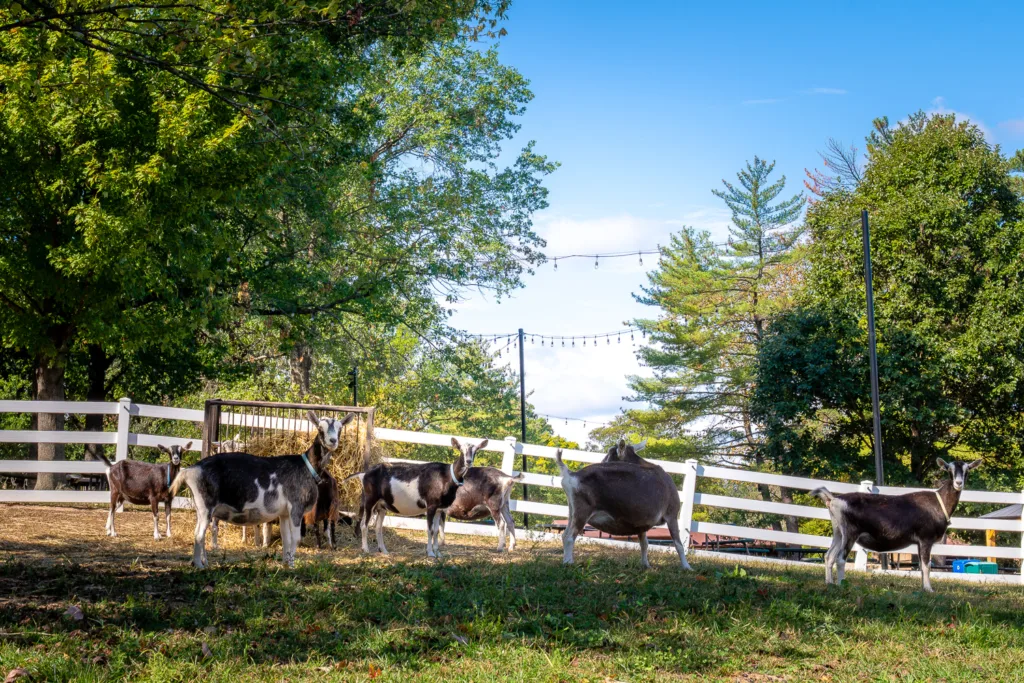
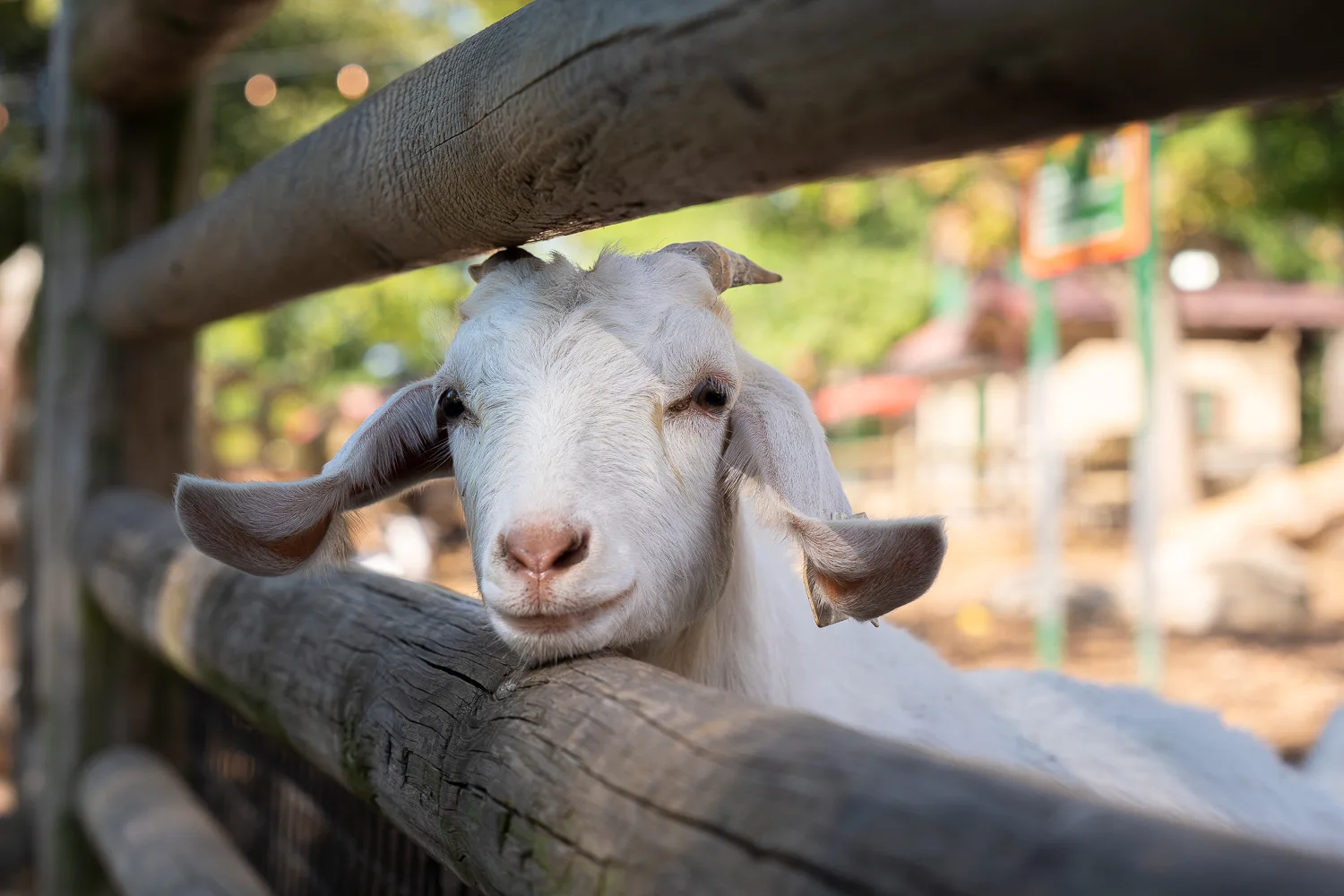
Why do you goats put everything in their mouths? Goats are curious by nature, and they don’t have hands like we do. So, of course, everything goes in the mouth for them to feel. And they don’t have a front platelet of teeth; they have teeth in the bottom and teeth toward the back, but not toward the front, so they can feel things with that.
What do the animals do in the hot weather to stay cool? Animals all have certain ways that they can cool themselves off. So just like a dog, some of our animals pant. Rabbits will pant, so when a lot of people see them breathing hard, it’s because that is how they’re cooling themselves down. Also, heat can escape from their ears. For our bovine and deer, heat escapes through their antlers. But as you will notice, if you ever go to Deer Park, there are multiple water areas that they will be in swimming. We mist our birds constantly through the day; we give them ice blocks, so we provide enrichment, in that sense, of putting different types of fruits or veggies in ice blocks and giving it to them so that they not only get more water, but they get a little bit of sugar in there with that fruit. We provide fans for our animals. In our rabbit house, we have an actual attic fan that is sitting at a temperature that will turn off and on, and some of our barns are air-conditioned for some of those animals, like our macaws, that can’t be out in extreme heat overnight. For some of the smaller animals, like guinea pigs and ferrets, we have a variety of ways to help, but the animals’ bodies are equipped to be able to naturally cool themselves down just like we do when we sweat.
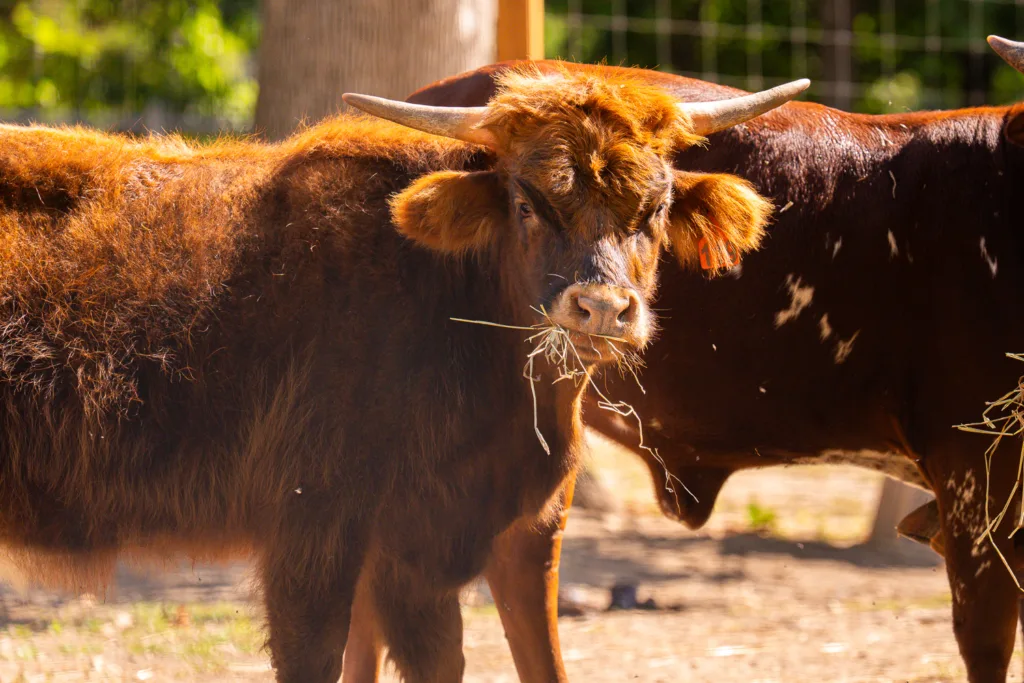
What do your animals do in the winter when you are not open? Most animals have natural ways of keeping themselves warm, like our Highland cattle. They have a double layer of fur that allows them to keep themselves warm and insulated. A lot of the animals will get winter coats, and if you come in the spring, you’ll see a lot of animals shedding off their winter coats. We also have animals, like macaws, that we don’t let outside in certain temperatures, but other ones, a lot of which were born in Missouri, are acclimated to that weather. Some of the animals, like my African Crested porcupines—though they’re from Africa and really enjoy the heat—enjoy the snow, too. I just don’t put them out for long periods of time, because they would play so much that they wouldn’t realize that it’s a little too cold. So we allow them to do that because they’re adapted to it, but we do have heated barns for the ones that can’t do well in the winter months overnight. But for the most part, animals are built to be able to sustain those temperatures.
Where does the goats sleep at night? The goats sleep everywhere. They have multiple areas around the farm. We do have a goat barn where the babies go, and we have multiple areas with barns that they can go in and out of. They are an animal that has hair, so in the winter months, they are able to sustain those temperatures, but they do have a three-wall barn to allow them to go in and get away from that wind.
Why do the horses sleep standing up? Horses are what we call a prey species, so they are a flight animal. They don’t fight. They run. So their body actually has adapted to be able to always be alert by standing and being able to stand sleeping or be in a light sleep, if you will. They possess something called stay apparatus, and what that means is that their joints and muscles kind of lock in place, so they don’t tilt or fall over. But when they’re standing, they’re not in a deep sleep. So when they do go into a deep sleep, a lot of times, they will actually lay down. So if you see a horse laying down, it doesn’t mean necessarily mean something is wrong; they can be sunbathing because they do enjoy the sun and the nice warm sand or dirt or grass that they’re on, or it could be that they’re taking a nice, long rest, too.
What is the difference between horns and antlers? People think they’re the same thing, but they’re not. Horns are generally found on bovine and relatives of bovine, whereas antlers are found on deers and relatives of deers. Both males and female bovines can have horns, whereas males generally only have antlers. One of the biggest differences is that the horns grow continuously throughout the animal’s life, whereas the antlers shed every year. The horns also have a continuous blood supply and are made out of keratin, just like our fingernails, whereas the antlers are made in something called velvet. So when you see a deer kind of rubbing on a tree, they’re shedding their velvet. The antlers are something that grows back every single year, while the horns stay. However, both horns and antlers allow heat to escape.
How do you get your animal to do that (meaning in the show)? Everybody calls what we do with the animals tricks, but they’re not—they’re actual behaviors. It’s their natural behaviors that we modify into something that we want. For instance, a pig pushing a ball—that is something he would naturally do by doing the push motion. Then, we want to take that and turn it into something to showcase and educate the public. So we use a variety of training techniques through operative conditioning, which means a series of steps on how we get to what we want by allowing positive or negative reinforcements. Positive reinforcement means the addition of food or something the animal wants; negative reinforcement would be taking away something they want. So like a timeout for a child. It’s very short, and then they come back, and usually, they’re right back on track. So it’s a lot of time. It’s a lot of patience, mostly because the animals can’t talk like us.
What things do you do to train them? So you have to find out what works for that animal, and then use that. I trained an animal once that didn’t care about the food; she wanted tongue rubs. So every time she hit a behavior I wanted, I would rub her tongue. We use a variety of tools like target poles, which is an extension of our arm. So if I want an animal to move their foot up, I could put a target pole, which makes them raise their foot. We use a clicker that allows them to know it’s a bridge, so they’re doing something at the exact moment that I want them to do it. I click, and that’s a cue that a reward is coming, and they did something great, which leads to, Oh, I’m going to repeat that behavior.
Why is that cow so hairy? The Highland cow is very hairy cow from Scotland. It’s something natural that their bodies produce to allow them to be protected against weather. So they have a double layer—their thick layer of hair is what’s going to protect them from the cold weather in Scotland, and then the thinner layer underneath is what’s going to protect them against elements and dirt to keep their skin healthy. So that the hair is actually pretty important on them. What a lot of people also don’t know is that the hair on their eyes—it’s so cute, I just adore it—but it is also actually protects them from insects and snow and also provides shadow so that they can see in the in the summer months.
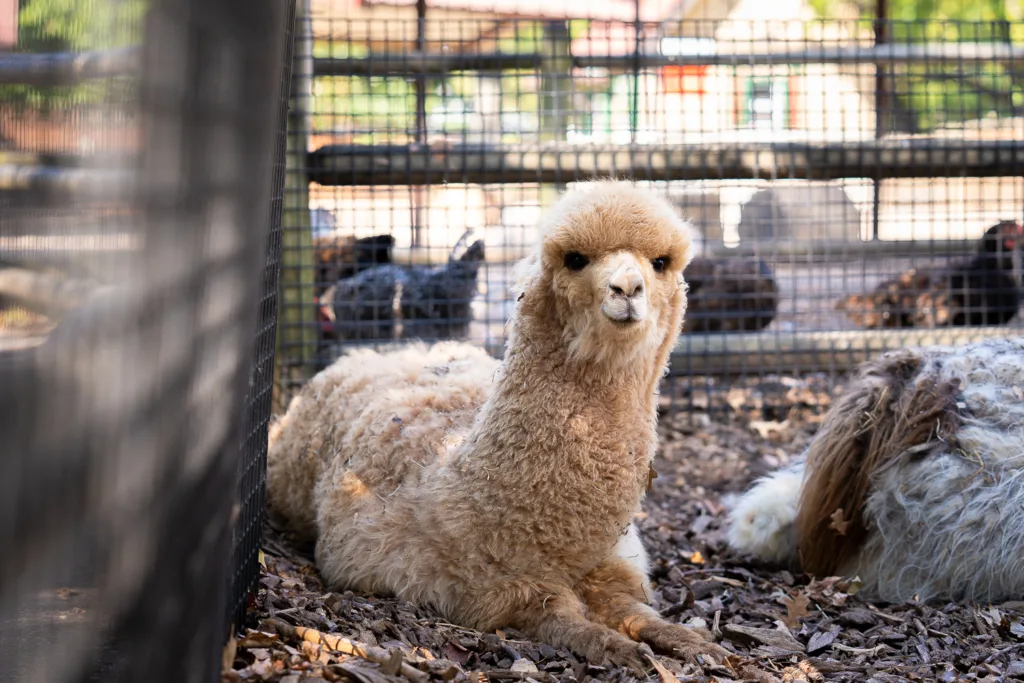
What is the difference between a llama and an alpaca? Llamas are bigger. They have coarse, curly hair. They are roughly 200–400 pounds, whereas your average alpaca is roughly about 100–175 pounds. The llama has a long face and bigger ears, whereas the alpaca has a shorter face and really small, pointy ears—I think they resemble a teddy bear. Alpacas have very silky hair, and a lot of it is used for wool, whereas a llama is more used as a pack animal that can carry a lot of weight on their back. Also, llamas can be a little bit more independent, whereas alpacas tend to be a little bit more shy. But the thing is, both of them can spit. People think that one does over the other, but they both can. However, in my experience, llamas tend to do it a little bit more. Alpacas do it as more of a warning or a protection kind of thing, whereas llamas just do it for communication.
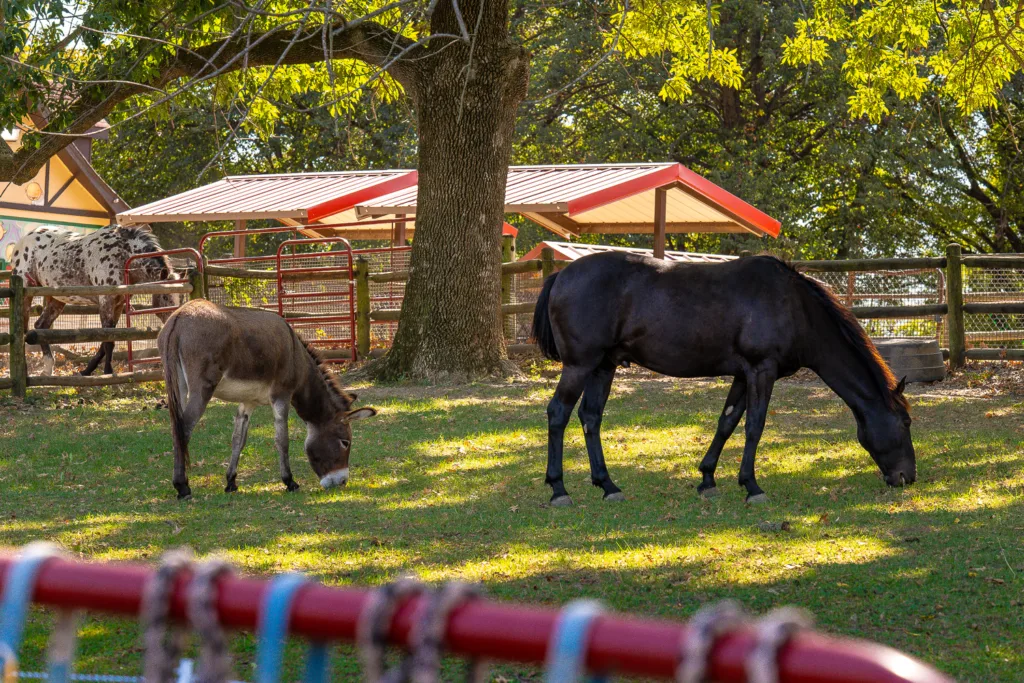
Are Gabriel the mustang and Pinecone the donkey best friends, and do all animals have best friends? Yes, they are friends. They enjoy each other’s company. They feel comfortable and safe with each other. People don’t realize that animals have all different types of personalities, just like people. Some are shy, some are timid, some are more vocal or spirited. So it is possible for donkeys and horses, of course, to be friends and to cohabitate together, but it’s all about the introduction when they’re young enough, through their fences, and then putting them together. So any time you introduce an animal to another animal, you need to introduce them and fully get them accustomed to each other, [especially when it involves] inter-mixing species in enclosures and facilities. So it is common for donkeys and horses to be together, but it’s just as common for an elephant and a goat. It’s just something that they’re used to get used to and they feel comfortable, and certain animals feel comfortable with different animals. And of course, we can’t ask them why, but you can tell physically when they’re together.
Are there any moms and babies at Grant’s Farm that we can see? We do have a lot of moms and babies at Grant’s Farm. We have a mom wallaby and her child in the biergarten. Right now, we have some of our goats that have given birth up in our biergarten area, which is really exciting, and those babies stay with their mamas. Our bottle kids are all the babies, and their moms are the goats that you can feed the grain to. We also have our lemurs, which are part of our animal encounters; right now, it’s our mom, Sia, with her son, Lee. So there are a lot of opportunities to actually see animals with their children here at Grants Farm. And a lot of the time, if you’re driving through Deer Park, you might see a deer that’s had a baby close to its mama, too.
How do I get to do what you do?
There’s a number of things they can do:
- The first one is to research it because what you think you might want to do is something different than what you fall into. I wanted to work with horses and ended up with the lemurs and the reptiles—and I did not think I’d work snakes.
- Then, there’s shadowing and internship possibilities through different zoos or organizations, too. There are programs in Future Farmers of America (FFA)—lots of different places that kids can get that experience to see if that’s what they actually want to do. There are also people who work with us seasonally, and even getting a job through the season at a facility like us can really give them an idea as to what they want to do.
- Finally, I always tell kids, if they want to do work with animals, to just try to learn as much as you can about an animal that you love, and then try to get experiences in that. And also, realize that there’s a lot that goes along with it. It is a way of life, being an animal caregiver, and there are things that they can do in order to find out if this is the job for them. You also never know what you’re actually going to want to do in the animal world until you kind of dive into it. And there’s so many different things that you can do Instead of just being a veterinarian or an animal caregiver, a lot of people think that the only thing you can do with animals is a vet. But there’s nutrition, there’s research, conservation. There are so many things that the animal world has to offer that people don’t really realize.