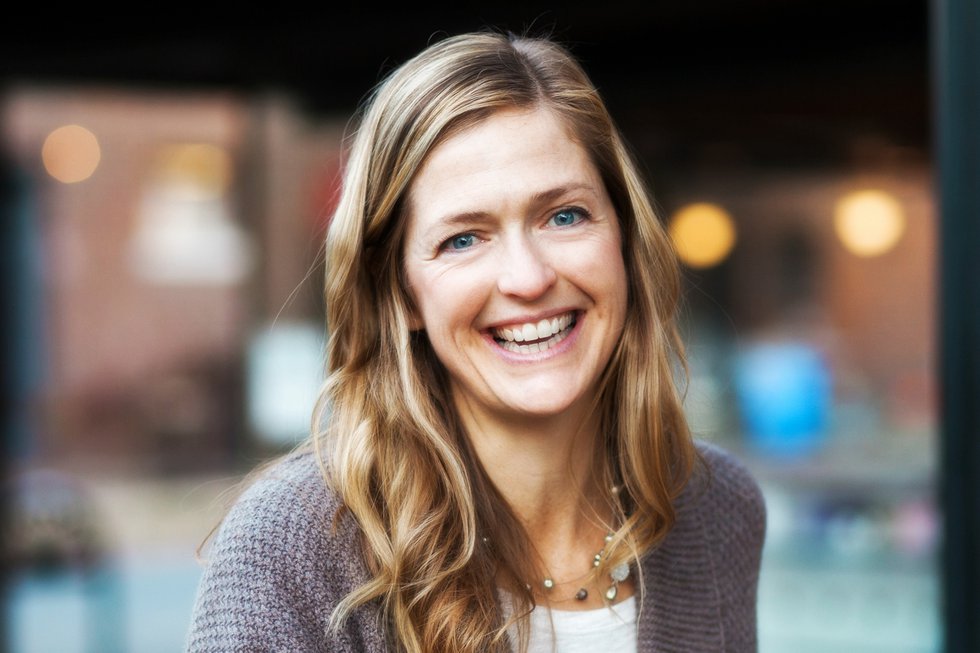
Suzanne Tucker is a physical therapist, parent educator, and mother of four. She’s also the founder of Generation Mindful, a St. Louis-based family wellness company that helps encourage positive discipline and emotional intelligence in the lives of children. Since its founding in 2016, Generation Mindful has built an online community of parents and educators, giving them tools, courses, and toys meant to make practicing emotional intelligence and positive reinforcement simple and accessible. With the help of a recently-awarded Arch Grants growth grant, the organization plans to begin selling directly into schools and nonprofits. The $100,000 equity-free capital grant, Tucker says, will “really help us work towards one of our core values of inclusion. We want to get the tools into the hands of every child, particularly in marginalized populations.”
How did being a parent help you to see the need for more intuitive tools and nuanced communication when raising kids? Parenting isn’t something you do to your child. It’s a relationship. If you’re going to get help with your parenting, what you really want is encouragement and tools or information to help you feel closer to yourself and to trust yourself. I think a lot of people out there have a lot of knowledge and a lot of pressure on themselves when it comes to parenting. It really took me years to see how disempowering that pressure is, so I wanted to create a community and tools that didn’t give people the one right answer.
Discover fun things to do with the family
Subscribe to the St. Louis Family newsletter for family-friendly things to do and news for local parents, sent every Monday.
Even if there isn’t one right answer, what’s one of the key things that parents might not know they should instill in their children? We explicitly fail at teaching children about their inner world and their emotions in a really structured and clear way, like their colors and their numbers and their letters. When I saw the emerging science decades ago, I thought, “Let’s have emotional intelligence be mainstreamed so it’s not ‘woo woo,’ and that it’s just as accepted and mainstream as the alphabet or the colors or the numbers. You have your alphabet and your numbers, and when it comes to emotions, you have the four mood groups: happy, sad, calm, and angry/scared.
What guidance do you give parents in terms of helping them help their kids be emotionally intelligent? It’s not like we just say, “Here’s a little widget. Go give that to your kid, and they’re going to learn about their emotions and learn to listen and collaborate.” It’s more, “Hey, you have emotions, needs, and experiences in your body. How do you model emotional management?” That’s where the learning happens. It’s about relationships. All of our toys and tools are fun and play-based little daily rituals you can do together that don’t take a lot of time. Just by playing with our emotional education tools and toys, people are feeling the mindfulness practice. They’re slowing down, making eye contact, using their words, laughing, sharing, identifying their emotions, and learning together. It transforms relationships that way. It’s very grassroots. Parents think [these tools and spaces] are about their kid and then they realize, “Wow, I am having emotions. I am having a need and having trouble expressing it, and I am feeling it in my body.”
How important is it to foster environments that contribute to the well-being of children, even beyond toys, tools, and programs? For me, it’s about preventing suicide and tragedies like school shootings. Whenever I hear about these tragedies, I wonder [what would be different] if we had gotten into those homes, into those relationships, to give mental health support to the generations in the affected family system that are hurting such that this tragedy happened. In those stories, there’s tragedy and trauma. The thing about trauma is that it’s everywhere, so all of our tools are trauma-informed. My goal and my hope is to mainstream into schools and nonprofits so that we’re reaching every family, and not just the middle-upper income families that can come right to my website and make a purchase. I believe every family and every child deserves to see a calming space and to be explicitly taught the tools that we teach: how to name, express, and manage a feeling using play-based early childhood education.
I imagine parents and teachers have come to you and Generation Mindful even more since the start of the pandemic and in response to tragedies like school shootings. How do you advise parents to help their children cope? In the face of a tragedy, it’s not that [we need to focus on] protecting our children from hearing about all of the hard things of the world. That’s not what creates an emotionally healthy, resilient child. It’s actually giving them the tools to be with those hard things. Of course we want to protect our children. We want to bubble wrap them and send them out into the world and to protect them, but what I want people to know is that the truest way to protect them is to arm them with self-awareness and self-forgiveness. It’s encouraging to think about what the world will be like if an entire generation is taught how to name and manage their feelings. It’s profound, but it’s really very simple at the same time.