The popular Netflix series Midnight Diner is set in an intimate neighborhood boite in Tokyo, one populated by a regular, quirky clientele and presided over by an avuncular “Master,” who whips up an assortment of modest specialties. The stories are charming; what makes the series is the setting, the cozy eatery, and the flow of good food, lovingly prepared and enthusiastically appreciated, which makes conviviality a natural atmosphere.
There are, of course, dozens of sushi restaurants and other Japanese eateries in St. Louis, but it’s rare to find such a classic neighborhood joint, the informal spot with just a few tables and a small bar that invites locals to drop by for a leisurely meal after work or to stop by for takeout. There are thousands in every city in Japan—they don’t appear in guidebooks; nobody reviews them. They exist, even flourish, because of the patrons who inhabit them. They are without pretense, serving simple, honest food.
Find the best food in St. Louis
Subscribe to the St. Louis Dining In and Dining Out newsletters to stay up-to-date on the local restaurant and culinary scene.
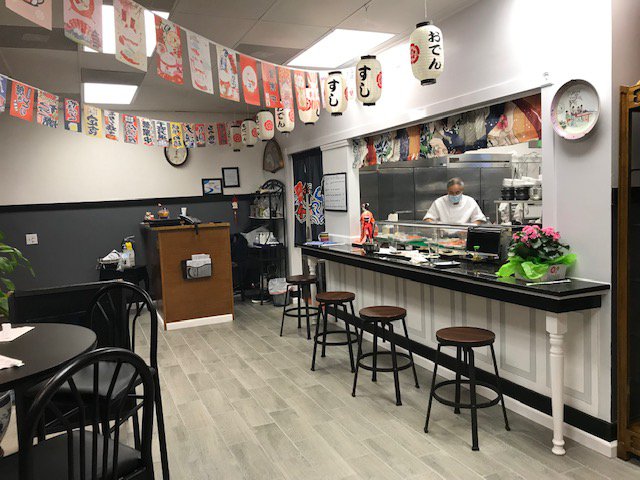
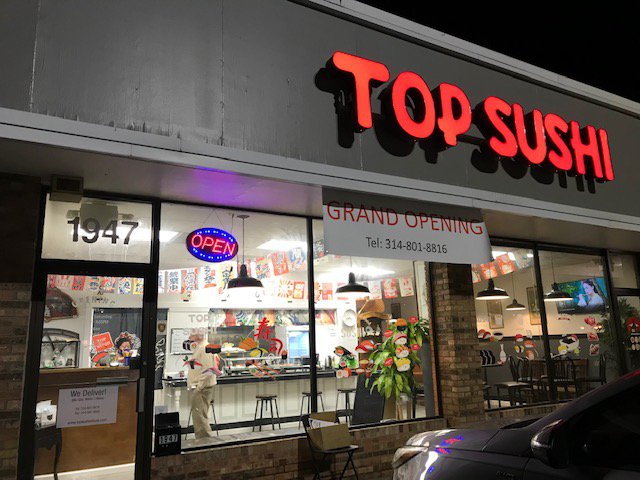
So no one was more surprised than us to see such a place, Top Sushi, open in a modest Creve Coeur strip mall. It’s convenient for lunch, in that it’s surrounded by all kinds of businesses, and it’s perfectly situated for dinner for those traveling along Page, Lindbergh, and I-270. The sushi bar holds about four, and there are small tables that can accommodate maybe a dozen or so. It’s big by Japanese sushi-ya standards, but we’d call it fairly intimate.
Frankly, unless the chef behind the sushi counter has trained in Japan, we have little in the way of expectations when visiting a new Japanese restaurant. We remained skeptical when we saw the menu, featuring sushi rolls, the ghastly parasol drinks of sushi-dom, replete with the obligatory cutesy names: Pink Panther Roll, Kamikaze Roll, Mango Roll, something unholy called a Crab Rangoon Roll. We wondered if it wasn’t too late to stroll across the parking lot to the Subway but decided to give it a shot.
We turned to the sashimi list, which was both longer and more varied than we expected. We looked over at the counter, where a couple was sharing plates of sushi. Behind it, the chef was slicing, moving, and making all the right motions, his cuts coming from his hips instead of his shoulders, his posture balanced. More so than maybe any other cuisine, the way a sushi chef moves can reveal a lot about the quality of the product.
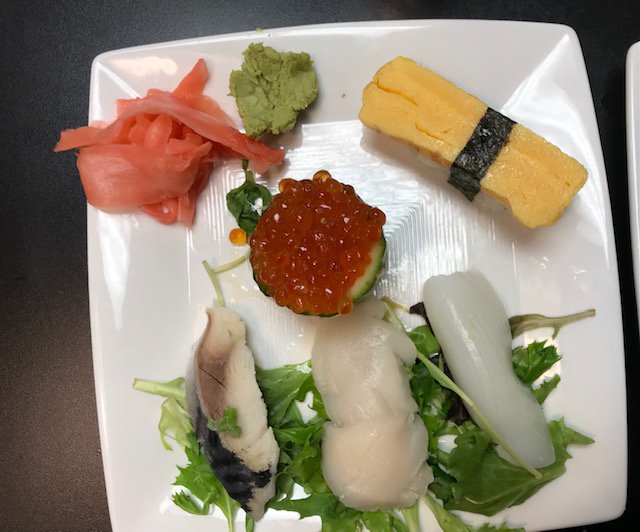
We ordered: scallop, mackerel, salmon roe, squid, sea bass. All of them have particular requirements for proper slicing and presentation. Ordering them as sashimi rather than as sushi toppings, nothing can be hidden. The kitchen’s work has to speak for itself. It did, and it was delightful.
The scallop was cut with the grain of the muscle, the texture juicy, utterly tender and explosively fresh. The mackerel is ruinously rich with fatty oil, a sweet fishiness that tastes like the ocean. The sea bass is cut from the belly, soft and fatty, the choicest part of the fish. A carved cucumber held a scoop of salmon roe, pink, fresh, popping on the tongue to release the salty juices. The squid, scored delicately, got even sweeter the longer we chewed on it; it was obviously taken during the summer, when the flavor is at its peak. Every fish we tried was at its best, which is easier to do nowadays, with freezing and reliable transportation. Still, it takes a competent eye and competent standards in the kitchen to select ingredients.
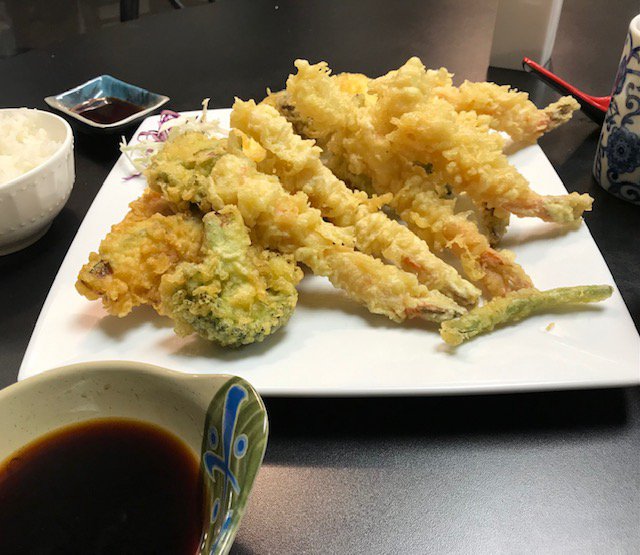
The next surprise was the tempura, which often has much of the same connoisseurship as sushi and sashimi—it’s just as likely to be prepared without a lot of attention. What came to the table was a mound of crackly gold vegetables and long, fat shrimp that were still hot, with an ethereal crust. You can tell a lot just by looking at a plate of tempura. The idea that it should be enrobed in a batter is mistaken—it ain’t a corndog. Good tempura batter creates a lacy crust, a delicate filigree. In Japan’s west, it tends to be lighter; in the east, it’s heavier, but it isn’t ever so thick as to become gummy. What we saw instantly, though, was that the chef had probably used shinbiko-ko, a toasted rice flour added to the batter mix, which gives the skin of the tempura little puffy nuggets. It looks like Rice Krispies were used in the batter, and its sweet, with the tempura having an unmistakable nutty flavor. Wow, was it good—the combination of that cool, fresh sashimi and the hot, crispy crackle of tempura just out of the oil, all of it brought together over a bowl of rice and a cup of tea.
After we finished, we talked with the chef and his wife, who are running the place all by themselves. His name is Gu Rongyue; he’s a native of Shanghai and learned to make Japanese food by working at some of the better Japanese restaurants here in St. Louis. He has a lot of the same demeanor of the Midnight Diner’s “Master,” commanding the kitchen, talking with diners, completely at home in this place.
In addition to the sushi, sashimi, and tempura, there’s a fairly wide menu of Japanese noodles, teriyaki, chicken katsu cutlets, and a selection of Korean specialties, such as bulgogi and stone pot bibimbap.
It’ll be interesting to see if the couple can establish Top Sushi as the kind of eatery that it deserves to be, a regular haunt for those who want a lovely little neighborhood spot that offers wonderful fare. It isn’t easy making a go of any restaurant right now, but it would be a shame if this one doesn’t become a local classic.