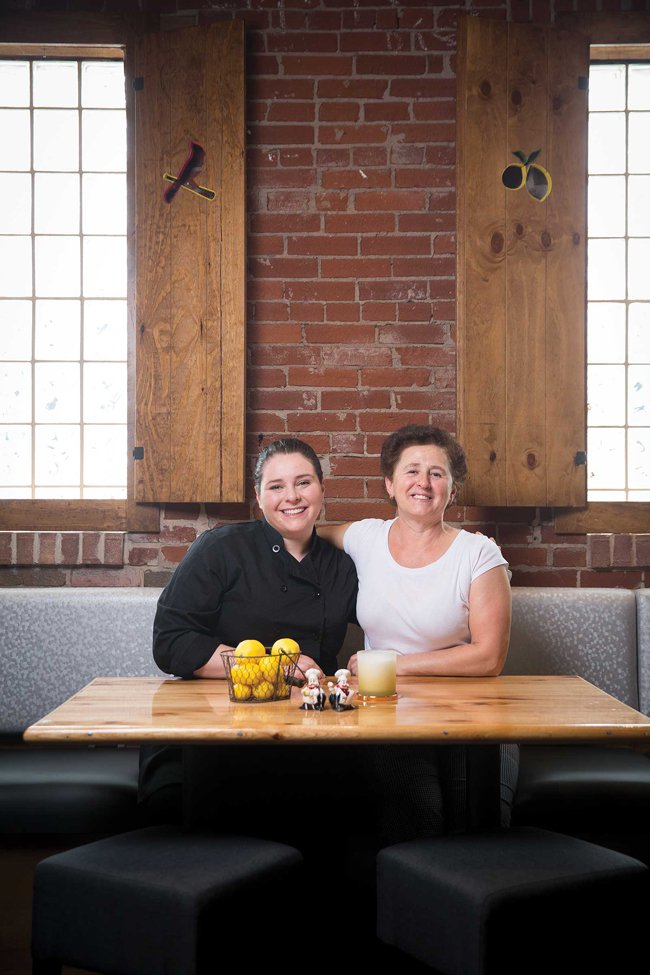
The namesake Bosnian eatery is located in a beloved former dairy in the Bevo neighborhood. Grbic has been lauded by The New York Times and food guru Andrew Zimmern, so the local fooderati were understandably abuzz when the family announced that it had purchased Lemmons restaurant, another South Side institution, which they renamed Lemmons by Grbic. Ermina Grbic and her daughter, Senada Grbic, discussed the project that they call “three siblings, two parents, and one big idea.”
What was your first restaurant job?
Find the best food in St. Louis
Subscribe to the St. Louis Dining In and Dining Out newsletters to stay up-to-date on the local restaurant and culinary scene.
Ermina: I remember being at my father’s restaurant even before I started school, helping my mom. I was the—what do you call it?—the time clock. Back then, there were no timers, so she sat me in front of the oven to make sure nothing burned. She had me making bread and pita when I was 7 years old, and I ended up going to culinary school in Bosnia.
When did you come to the U.S.?
Ermina: It was 1981. Suli [Sulejman] had been living in St. Louis and came back to Bosnia to propose to me. I told him yes, but then he told me he only got a few days off from work, so we had to get married the next day. All I knew about America was from watching shows like Dynasty. We thought all of America was like that.
So what did you do?
Ermina: We got married the next day, but I was working in the school cafeteria. I told the kids. I was crying, and then they were crying. But when we came out of City Hall, there they were, the whole school, 800 of them, crying again. It was the happiest day of my life and the saddest.
Did you come to the U.S. right away?
Ermina: No, I lived with his parents in Slovenia while I was waiting for my visa—for three months. When I was traveling, it was Thanksgiving time, of which I knew nothing about. I was served turkey on the plane rides, in the hotel. And when I finally get to my husband’s apartment, there was a huge turkey on the table. I said, “I’ve been eating turkey for the last two days. Do they eat anything else but turkey in America?”
Was your husband in the restaurant business here?
Ermina: No, he was driving an 18-wheeler when he showed me the old Bailey Farm Dairy.
What did it look like then?
Ermina: There was no ceiling, broken floors, water up to my knees; it smelled, and there were small rooms, like a labyrinth. It was like a scary house.
And that became your first restaurant?
Ermina: No one would buy it, and Sulejman announced that he wanted to open a restaurant there. I told him I’m not that young anymore—that it would have been a good idea when we got here. And he said, “Yes, but we have three kids.”
Senada: He had a vision that no one else had or could even imagine.
So how did Grbic get started?
Senada: In 1998, when there were a lot of Bosnian refugees in St. Louis. They couldn’t speak English or find a job but knew construction work. My dad hired them, found them housing, and helped some get their CDLs (commercial driver’s license) to get truck-driving jobs. Talk about building a base of loyal customers.
Ermina: But we didn’t have that much money and needed credit to buy the building, more to rebuild it, and still more for the furniture and equipment. It took us four years to get the restaurant open. I didn’t know that Suli had co-signed for a relative’s car who then didn’t pay his bills, so credit was even harder for us to get. I asked him if he’d do that again, and he said he would.
Was Grbic busy from the start, or did that take time?
Senada: Mom’s sister, who worked as a private chef for the prime minister in Austria, helped set up the kitchen and build the menu, so everything was solid right from the start. Plus, there was so much history and nostalgia with the old dairy that people just wanted to see it again.
Ermina: After we opened, many people say they stopped by just to shake the hand of the man who had the guts to invest so much.
Senada: I tell my mom we need at least three more kids for of all Dad’s ideas.
Ermina: Suli wanted five. I said, “Please, don’t kill me with five.”
Senada was young at the time. At what point did she get involved?
Ermina: She loved to eat, to taste, to be in the kitchen. I saw the talent in her when she was a little girl.
Senada: If I wanted to see Mom, she was in the kitchen, so that’s where I went.
What other family members are involved?
Senada: All of us. My sister takes care of private events and social media, and my brother manages the front of the house. There are aunts, uncles, close family friends… I’m in the kitchen with Mom, and Dad does the paperwork and all the butchery.
Who’s the better cook?
Senada: Mom is very traditional and old school—she thought it was crazy to put the beef bacon into the hamburger patty, for example. But that’s how I think; I put a twist on everything I do. Mom’s methods are more time-consuming, and we definitely butt heads, but she is the better cook by far. You’re never going to beat the time-honored, original recipes, that my mom got from her mom.
When you started Grbic in 2002, how much of the clientele was American?
Ermina: Then and now, it’s 80 percent American. Bosnian women cook a lot—cabbage rolls, goulash, schnitzel—but they will come here for cevapi [chih-VOP-ee] and mixed grill, things they don’t cook at home.
How has Grbic’s cuisine changed over the years?
Senada: None of the recipes have changed. We still cook from scratch, the same way my grandma cooks in Bosnia, trying to duplicate the whole home-cooked, laid-back Balkan lifestyle. Same proteins, same size portions as always. I did modernize the plating style, cut the regular menu in half, and added a seasonal menu, but those are the only changes.
Has Bosnian cuisine changed in Bosnia over the years?
Senada: I’d say 90 percent is the same old world classic staples, but when I was there recently I noticed more Italian influence—more Italian-style sandwiches, pastas, and pizzas.
Is there much of a difference between Bosnian, Croatian, and Serbian food?
Ermina: None. All were originally in Yugoslavia, so those cuisines are the same.
Senada: The only difference I see is that with Croatia being on the Adriatic [Sea], there’s more of a seafood influence there.
What are the most popular items on Grbic’s menu?
Senada: Mixed grill, cevapi, sarma—cabbage rolls—and valdostana, which is spaetzle baked with thinly sliced grilled beef, white wine mushroom sauce, and mozzarella cheese. The old menu was huge and difficult to execute. But if someone wants something from it, we’re happy to make it, given a little advance notice.
What are your favorites?
Ermina: I like sarma, and so does my husband—so much that he makes sandwiches out of them. People laugh at him, but it’s not a bad idea.
Which item most typifies Bosnian cuisine?
Senada: Definitely cevapi. We serve it in half and whole portions, just in case people don’t like it, but they always do. When we explain that cevapi is beef—not pork—sausage, it creates a lot more interest.
Does Grbic do any offsite events?
Ermina: When we do Festival of Nations, we always have the longest line.
Senada: She likes to brag about that. We sell baklava, apple strudel, cevapi, and Babo’s Chicken.
What’s Babo’s Chicken?
Senada: Babo means dad in Bosnian, so it’s Dad’s recipe for chicken: thinly sliced and grilled, with peppers and onions that you eat with pita bread. At Grbic, it’s part of the mixed grill; at Lemmons, we’ll serve it as a sandwich.
Why did it take you 15 years to do another restaurant?
Senada: Lemmons was appealing because it was a turnkey business—but it didn’t turn out that way. The renovation took us almost three years. Bailey Farm was worse, but this one was pretty bad.
What physical changes were made to Lemmons?
Senada: We gutted the restaurant from top to bottom, roof to basement—48 dumpsters’ worth. The restaurant was on two levels. There’s only one now.
What beverages are typically paired with Bosnian cuisine?
Senada: Rakia, all the time and a lot of it. It’s a flavored brandy that the men like straight and the women drink mixed.
Will you serve that at Lemmons?
Senada: At Lemmons, we’re more about local craft beers, poured from a custom cooler and taps at 28 degrees, ideally. If that happens, we can truthfully say we have the coldest beer in St. Louis.
Why was it important to keep the Lemmons name?
Senada: We wanted to add to the history of St. Louis, not take away from it. Over the years, there were three owners, all of whom kept the name; now there are four. In this neighborhood, everyone has a story about the old Lemmons. We want to give St. Louis more things to remember. We want the stories to continue.
Will you keep any of Lemmons’ menu items, such as the famous fried chicken?
Senada: Senada: We almost felt obligated, so we put buttermilk-brined fried chicken on the menu that involves a secret cooking method. I hope I can add my signature to that longstanding tradition. The chicken plate is served with a carrot and potato mash with brown butter and fresh topped thyme, a non-Bosnian dish my Bosnian mom used to make for us.
Is Lemmons’ décor Bosnian-influenced, like Grbic’s?
Senada: The tables and chairs were handcrafted in Sarajevo. The lemon-themed art, the graffiti on the walls, and the soft-seating area all came from St. Louis. My brother Ermin made the bartop and the shutters with all the fun cutouts [for the Cardinals, Blues, Budweiser, Saint Louis Zoo, the Arch, and a pair of lemons].
How is Lemmons’ menu different from Grbic’s?
Senada: I call it American cuisine with Balkan fusion, a short menu of items that I know I can do well: seven appetizers, four big plates, four handheld burger-type sandwiches, and two desserts.
Will there be any pork items on Lemmons’ menu?
Senada: There is no pork on either menu, mainly for religious reasons, but I’m also not familiar working with it. But, we do have a 50/50 burger on the menu, half ground beef and half beef bacon—a product that looks, smells, cooks, and tastes like traditional bacon. We serve that topped with provolone, a jalapeño sauce, and a fried egg seasoned with vegeta, a dry vegetable seasoning that’s a staple in the Balkans. We put that on a handmade bun from Sana Bakery, the Bosnian bakery nearby.
What side dish comes with the burgers?
Senada: House-made fries, for sure, with a different twist. A machine called a potato tornado cuts whole potatoes into a continuous spiral. Then the ribbons are seasoned different ways and fried until crispy.
What’s on the new menu?
Senada: A board with house pickled vegetables—several flavors of cauliflower, including beet and turmeric; green beans, jalapeños, corn, and carrot. I didn’t get into those flavors until I was pregnant, but during that time I had a jar of jalapeño pickles in my purse at all times.
What else will be popular?
Senada: Doughnut-like fried dough balls called ustipke, served with an assortment of dips, a feta butter, mushroom bruschetta, and ajvar, a roasted red pepper and eggplant relish. There’s a crab cake appetizer and a blue crab burger. Smoked chicken wings and maybe smoked bone-in beef short ribs. Trout is huge in Bosnia, where it’s cooked over an open wood flame. Here, I use a char grill and finish in an iron skillet to crisp up the skin, which is crucial. Two cooking techniques, one great piece of fish. Hand-made pasta. Babo’s Chicken, this time on on a Bosnian hoagie, with melted Provel. Chicken shish kabobs with a sweet chili glaze and a spice blend that we get from Europe. Cevapi, but served on house-made flatbread. It’s a small but exciting menu, and nothing’s over $18.
What’s for dessert?
Senada: Freak shakes, which are adult shakes with outrageous garnishes. One of ours starts with a beer glass dipped halfway in Nutella, rolled in Bosnian chocolate and edible gold. Inside is vanilla bean ice cream topped with Bosnian chocolates—which are unbelievable, Kinder Happy Hippos, and whipped cream spiked with Rumchata and Birthday Cake vodka. It’s something outrageous and fun to share with the whole table.
You won an episode of Guy’s Grocery Games, and Andrew Zimmern paid Grbic a visit.
Ermina: The kids doing Guy’s show brought in people from all over the country, but Andrew’s visit was special. He said in all his years of traveling the world, he’d never tasted such perfect examples of his grandmother’s cooking. We could feel him reliving his childhood memories.