For those who think the James Beard awards are just for the esoteric fine-dining crowd, we’d be the first to remind you that it ain’t, necessarily, so. The Foundation Awards Committee also recognizes regional restaurants “with timeless appeal [serving] quality food that reflects the character of their communities.” That’s how Gioia’s Deli got the nod in 2017.
But Gioia’s wasn’t the first in Missouri to receive the honor. A recent visit to the other Missouri winner, Stroud’s, which has three locations in the Kansas City area, was overdue.
Find the best food in St. Louis
Subscribe to the St. Louis Dining In and Dining Out newsletters to stay up-to-date on the local restaurant and culinary scene.
Known for its fried chicken, the restaurant began in 1933 as a barbecue joint. Because of rationing in World War II, owners Guy and Helen Stroud switched to pan-fried chicken and never looked back. In 1977, two bartenders, Mike Donegan and Jim Hogan, bought the restaurant. Over the years, they expanded even after the original location closed. Currently, there are two locations on the Kansas side of the metro area and one on the Missouri side, north of the river. There’s a fourth in Wichita.
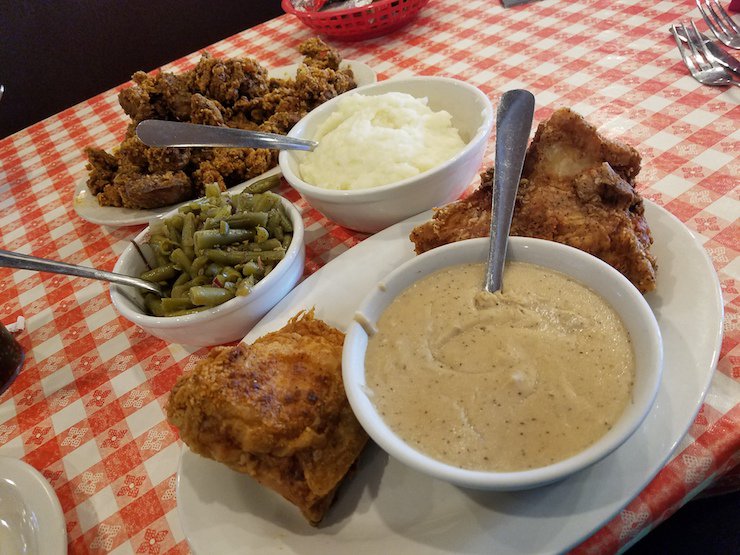
The menu is quite simple, although the restaurant’s ventured beyond chicken, with such items as pork chops and sandwiches. But it’s the chicken that made Stroud’s famous. The recipe likely hasn’t changed since the beginning: flour, salt and pepper, and enough grease in the skillet to come about halfway up each piece—that’s it. It’s nicely cooked, even the white meat remaining moist, and without extraneous grease.
In a day and age of Popeye’s and Gus’s and palates that, even in the heartland, have become more adventurous, it’s almost an anachronism. Mild? Bland? Hipster chic? It’s so retro, it’s beyond ironic.
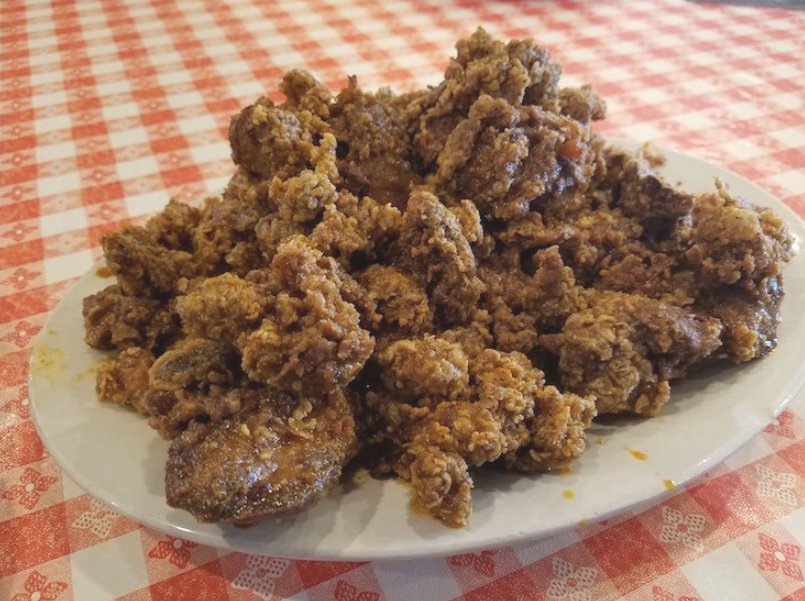
That said, Stroud’s now offers spicy chicken. Among the starters are chicken livers and gizzards. A half-order of the livers, spicy-style, is immense and immensely good, the heat combining with a little sweet. With a different breading, it’s darker and crunchier than the standard pan-fried chicken. It’s Nashville-style, with the hot-sweet oil drizzled over the chicken, leaving some at the bottom. The livers, of course, cook more quickly than the individual pieces of chicken, all of which are cooked to order, so guests don’t have to wait 20 minutes to have their appetizers and entrées arrive together.
Nearly everything else, though, could have been served at Granny’s Sunday dinner during the Truman administration. Chicken soup sports noodles that put Campbell’s to shame. Green beans cooked with onion and something vaguely smoky show only a few shreds of meat that appear to be chicken. But the mashed potatoes are real, not boxed flakes, and taste like potato. (Take a forkful to mop up the last of the sauce from the livers.) Or there’s the gravy, tan but made with milk and lots of salt and pepper.
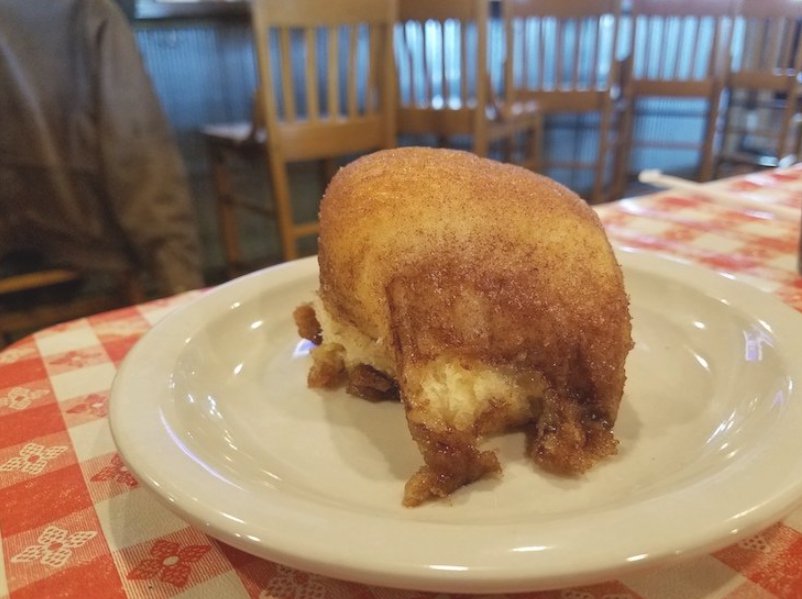
Stroud’s doesn’t do desserts. The signature cinnamon rolls, balls of tender yeast dough that seem to have been rolled in cinnamon sugar before baking, come with dinner but can be served afterward if desired.
All of the locations except the Missouri one are located in more modern buildings, with casual atmospheres; the Missouri one includes a picturesque pre-Civil War farmhouse. Still, there’s a sense of humor, with a sign proclaiming, “It only took us 80 years to figure out CARRYOUT.” The retro also appears in an unexpected way, including a playlist was the music of the generation who throngs these places with their families, tapping their feet to songs like “At the Hop”—and Wilbert Harrison’s “Kansas City.”