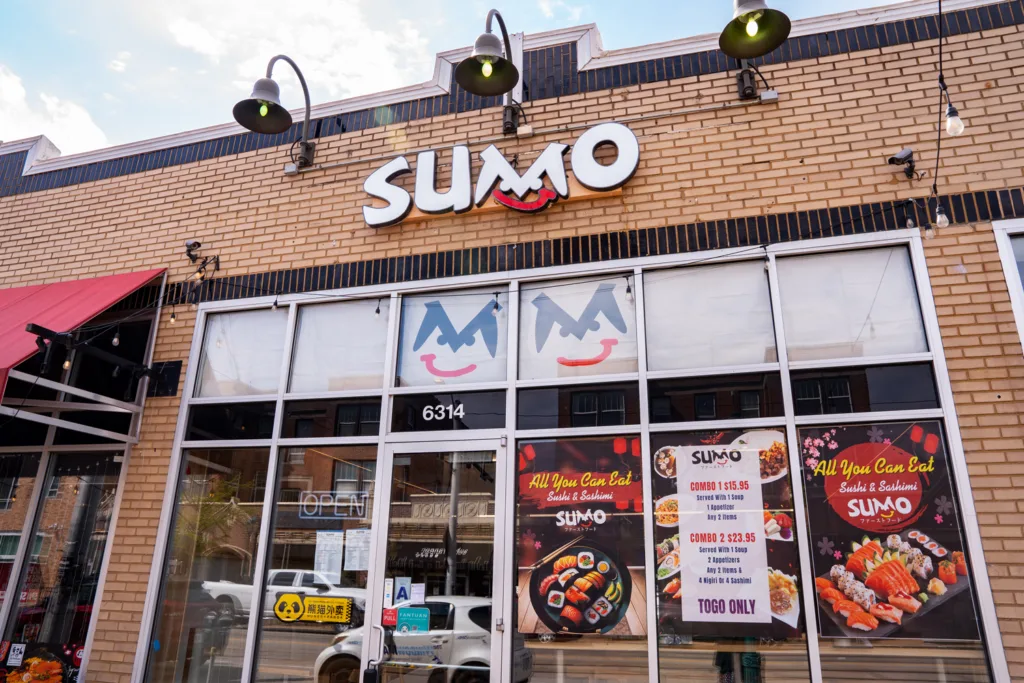
The guy one table over was excoriating the waiter. (The place is so small, it’s practically impossible not to overhear.) He was twitterpated about the proportions of the nigiri sushi. It was, he said, too much rice, not enough fish toppings. His companion looked embarrassed. The server was exasperated. “Sir, it’s all you can eat,” he explained, as if that somehow wasn’t clear. Meanwhile, a quartet of college kids were standing outside, waiting for a table to open.
Since it became popular in the West, as in Japan, sushi occupies an interesting niche in cuisine. Thanks to popular depictions such as Jiro Dreams of Sushi, the “art” of vinegared rice has been elevated to the heights of connoisseurship, a delicacy requiring a sophisticated palate capable of discerning between, say, winter’s fat yellowtail and the leaner version during summer. But sushi is also available in grocery stores now, it appears at Chinese buffets, and school kids consistently list it as their favorite meal. So is it an aristocratic delicacy or the Japanese version of a hot dog?
The reality is somewhere in the middle. That’s why, this annoying jerk’s protestations aside, we thought the newly opened Sumo (6314 Delmar) was arguably the sushi-est sushi joint in town.
Before you split your chopsticks in outrage, remember that sushi—the Edo-style sushi that has come to define the cuisine back in the late 19th century—began being peddled at outdoor carts around the periphery of Edo (now Tokyo) Bay, from where it gets its name. It was the 19th century version of a dirty water dog. Workers stopped by for a quick, stand-while-you-eat meal.
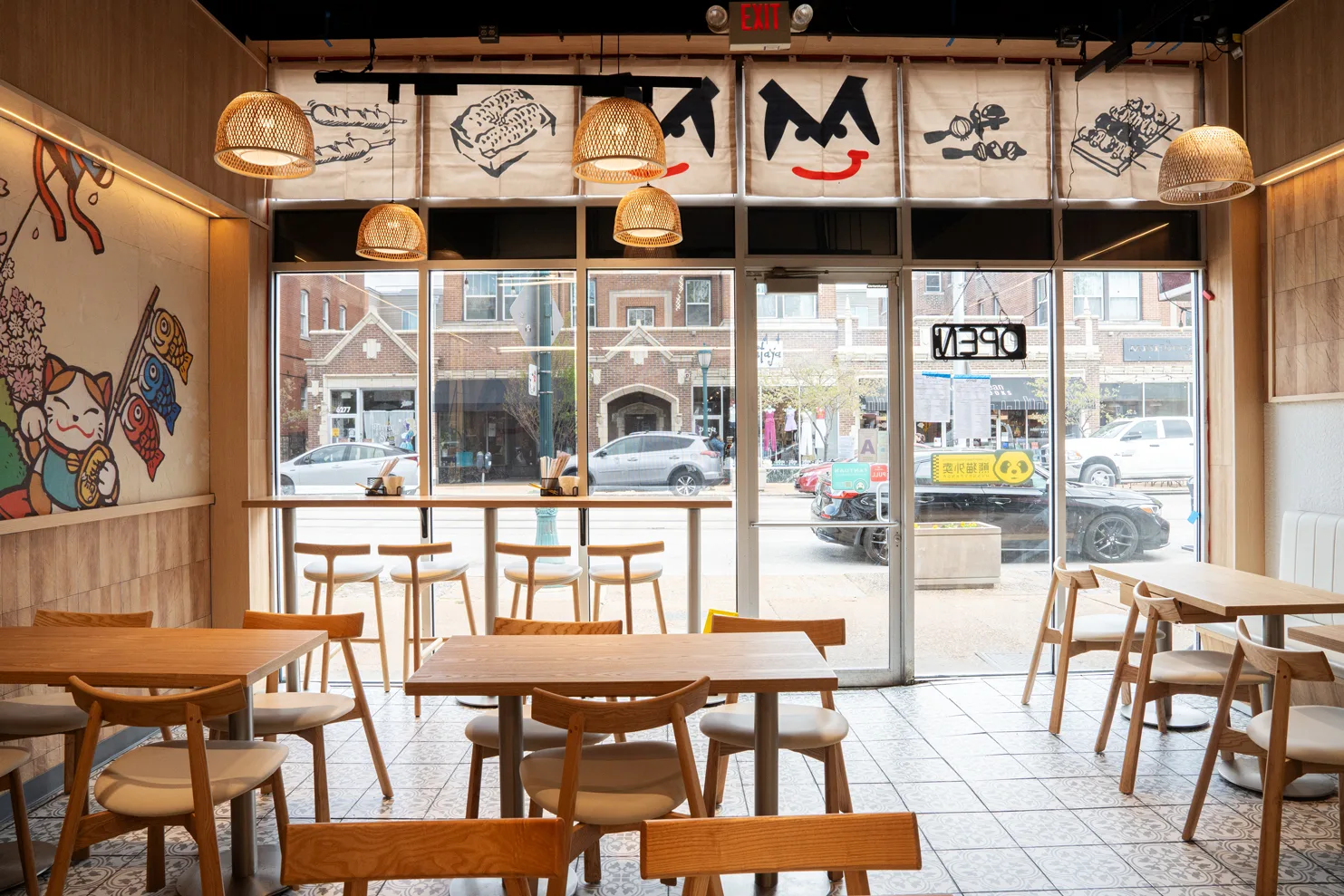
Sumo captures something of that bourgeois spirit. It’s no bigger than a doctor’s waiting room, with tables so small, you’re knee to knee with dining companions. Chopsticks and napkins are tucked into drawers underneath the tables; menus are passed out along with pencils to make your selections. In some ways, the approach seems not far from the wheeled carts in the old days of Japan.
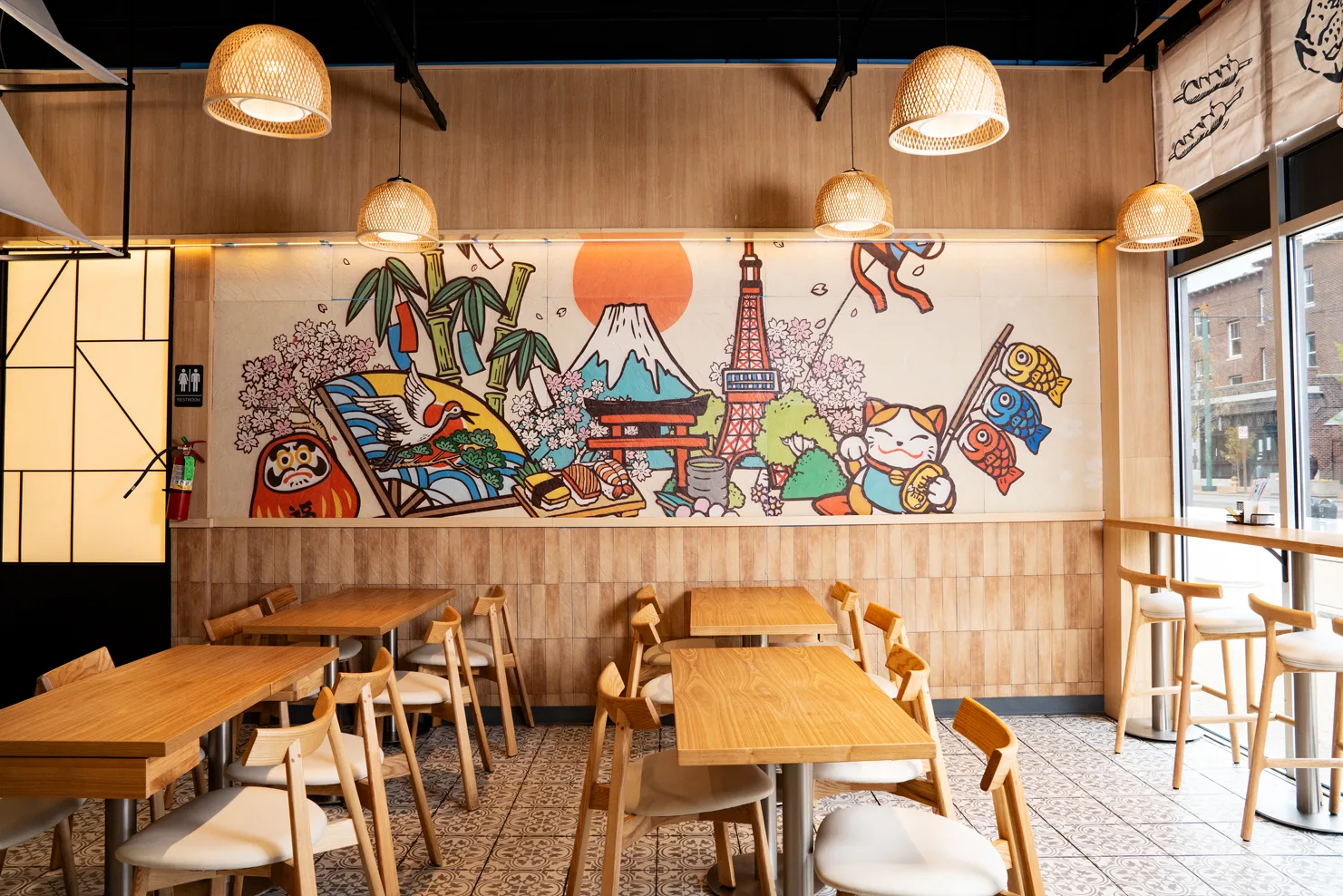
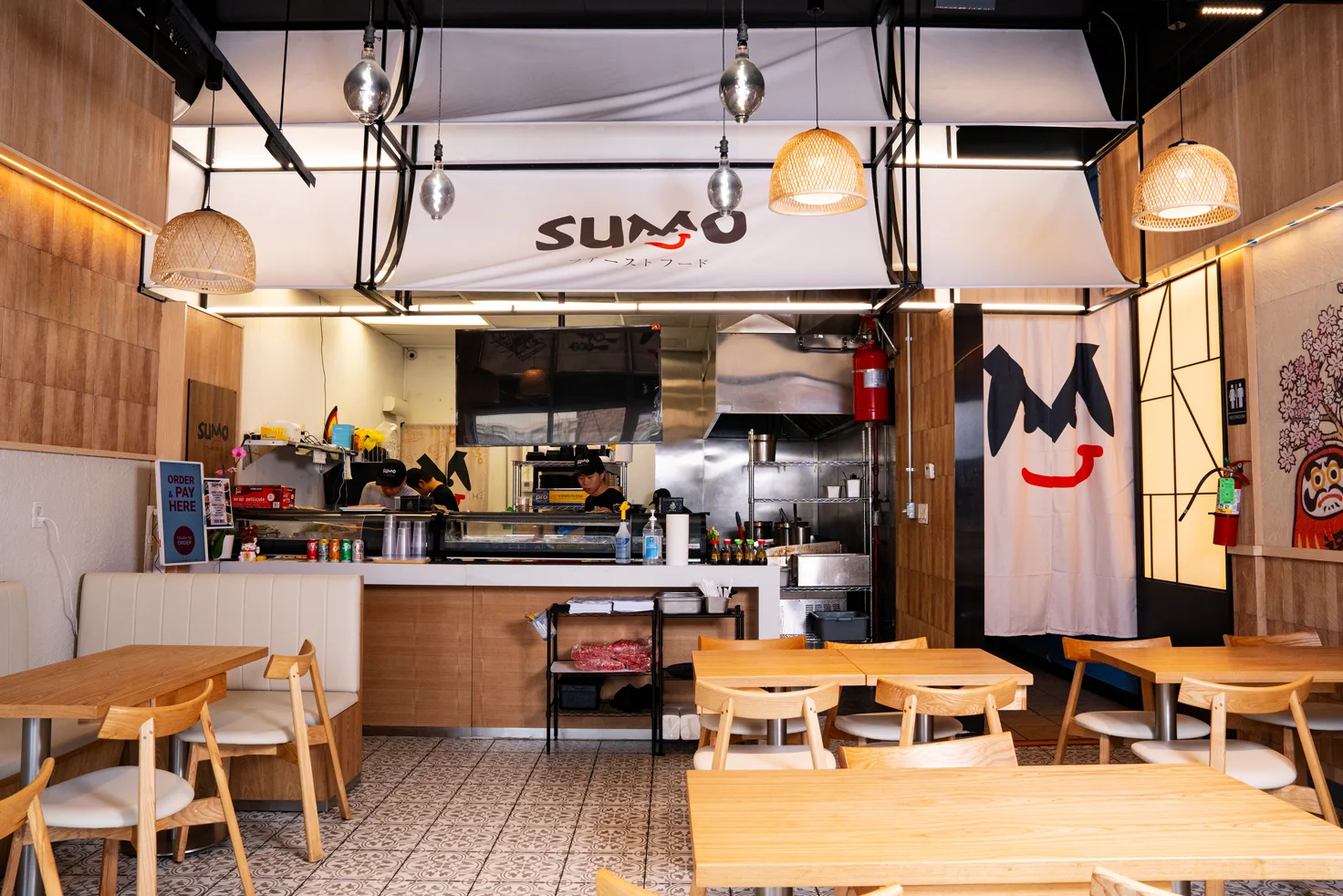

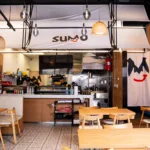
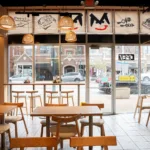
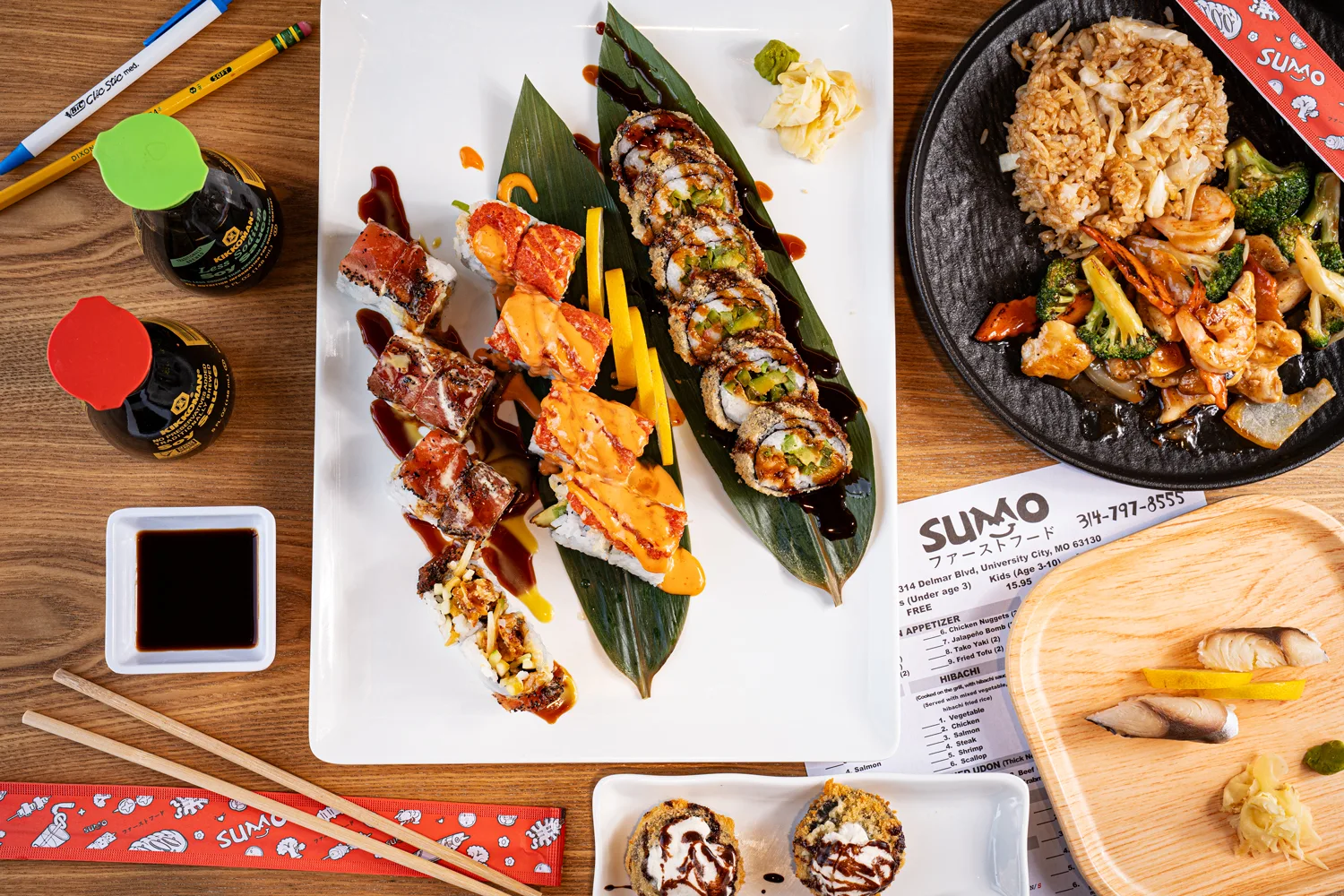
Just like sushi places in the Edo period, the neta toppings for Sumo’s nigiri sushi are fairly limited, with about 20 traditional fish and seafood options. (Toppings then were confined to fishes found in Tokyo Bay.) And yes, the rice-to-topping ratio is traditional, with more of the former than the latter. If there is one incontestable standard by which sushi must be measured, it is the quality of the rice.
There are only a few places in town that get sushimeshi right. Nobu’s, Top Sushi, and the New Ballas branch of Oishi Sushi all serve rice as it should be in sushi, with each grain definable, aligned in the nugget, and just the right splash of vinegar to provide a piquancy. Sushi rice evolved as a way of preserving the fish on top; if it doesn’t have that faint, aromatic tang, it ain’t of the quality that makes for a memorable meal. (That’s one reason that sushi in grocery stores has a certain blandness; they can’t get the proportion of vinegar correct in the enormous batches of rice they turn out.)
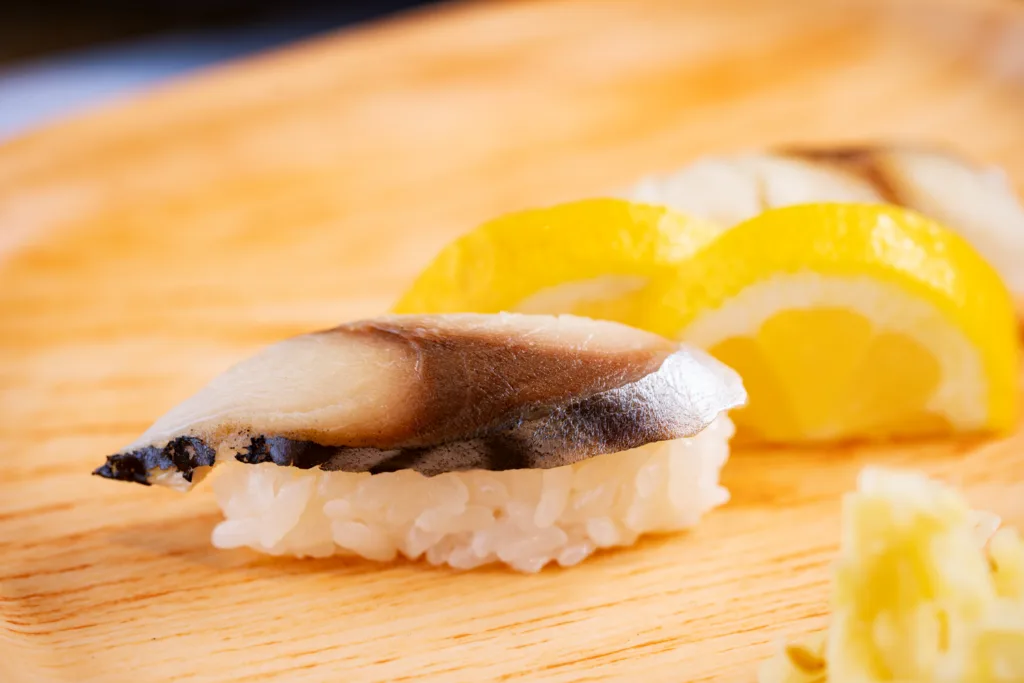
Certainly, Sumo is not up to the quality of those three places. Given the quantity that it’s serving, however, it does a more than adequate job. We stripped a nigiri sushi of its pickled mackerel just to taste the rice by itself, and we were not disappointed.
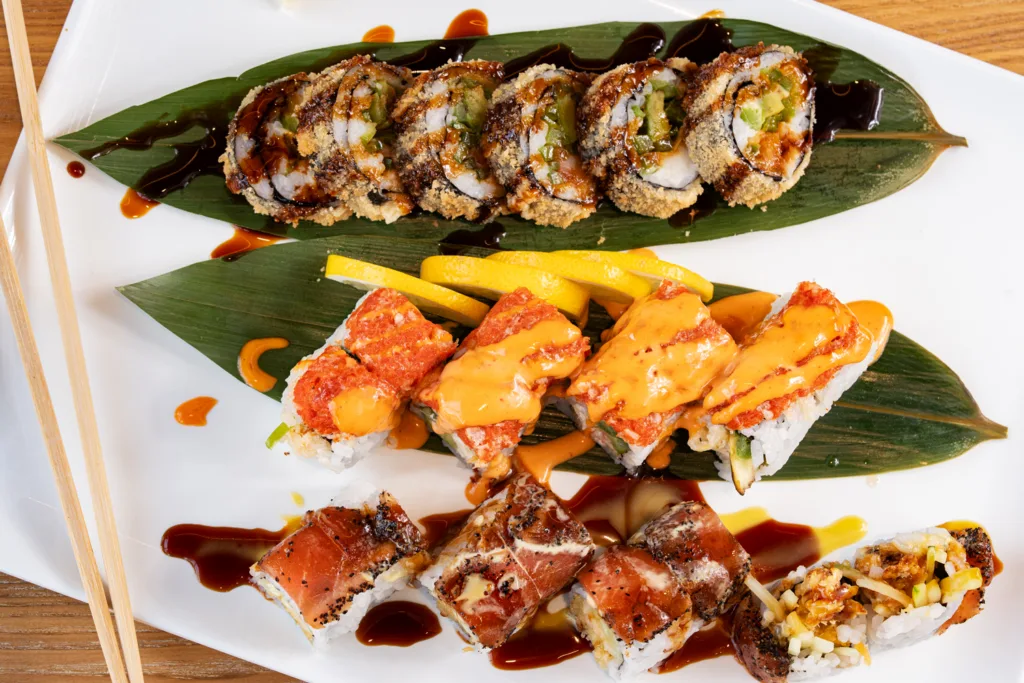
Then there are the sushi rolls. We’ve said it before: Sushi rolls are to nigiri sushi what Beyonce is to Bach. Still, there are those who’d rather listen to “Daddy” than the Brandenburg Concertos. For them, Sumo’s rolls will seem like front row seats at Queen Bae’s next concert. Two dozen possibilities are on the menu before you. Suffice it to say that if it can be rolled into a rice-filled cylinder, it’s probably available here.
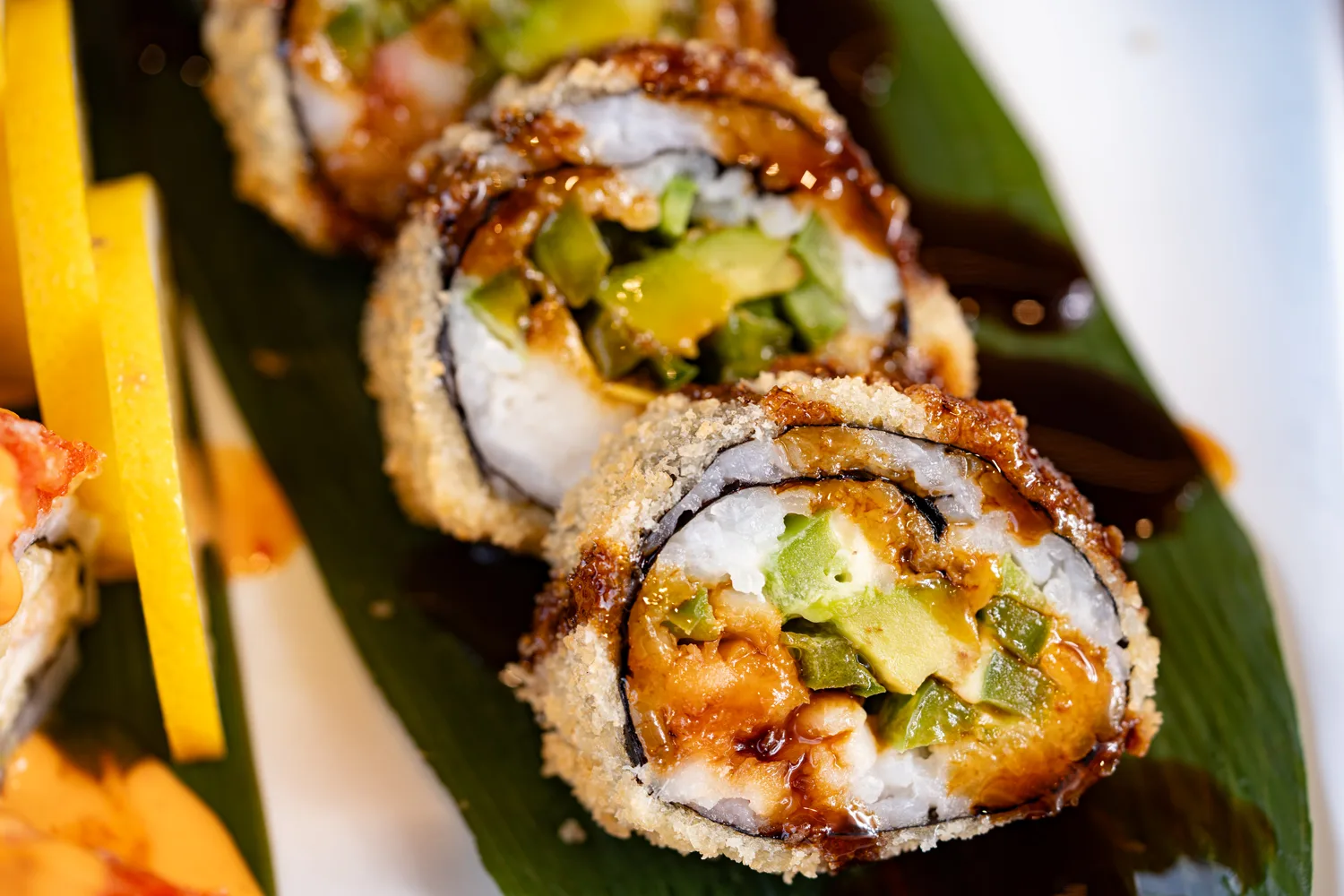
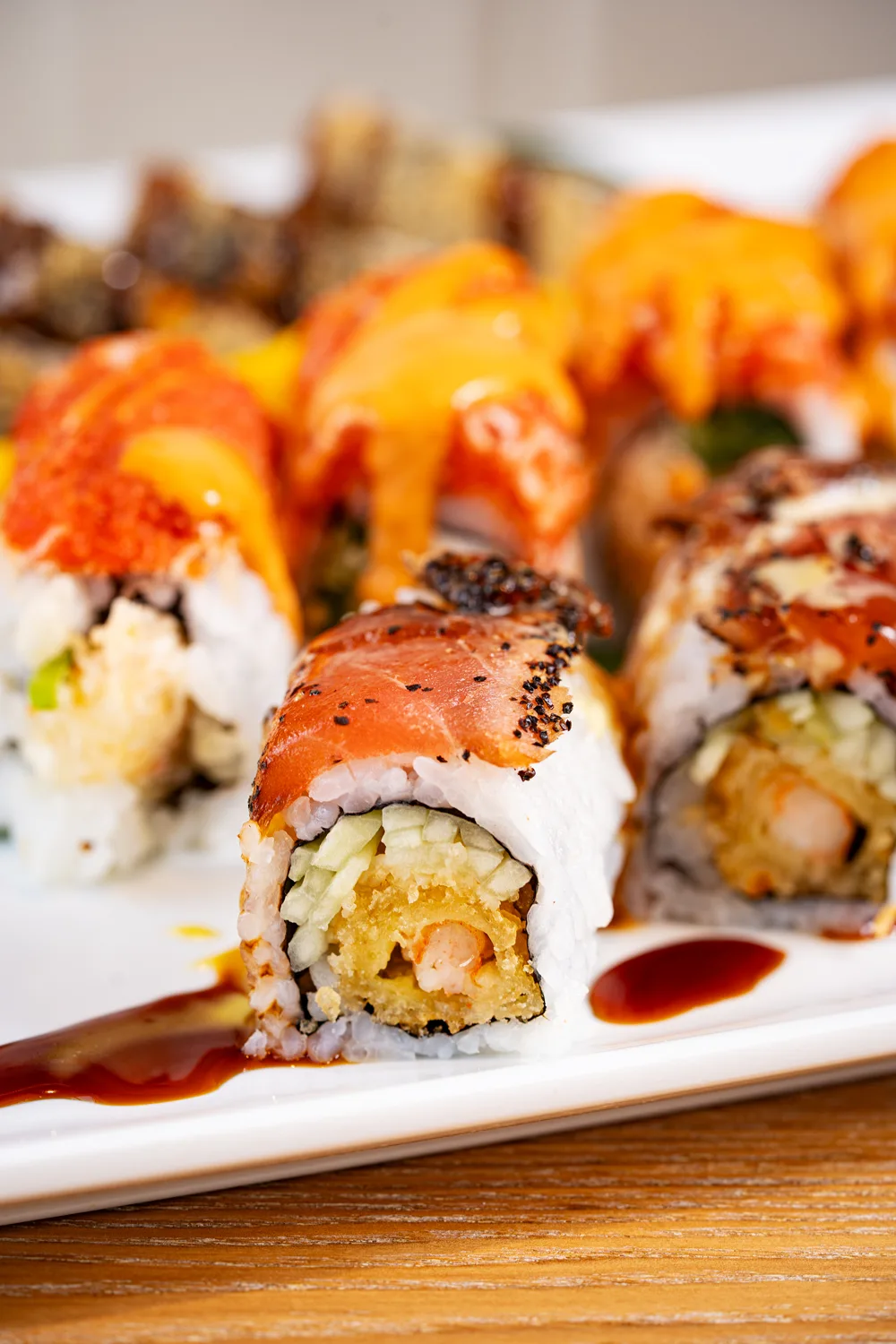
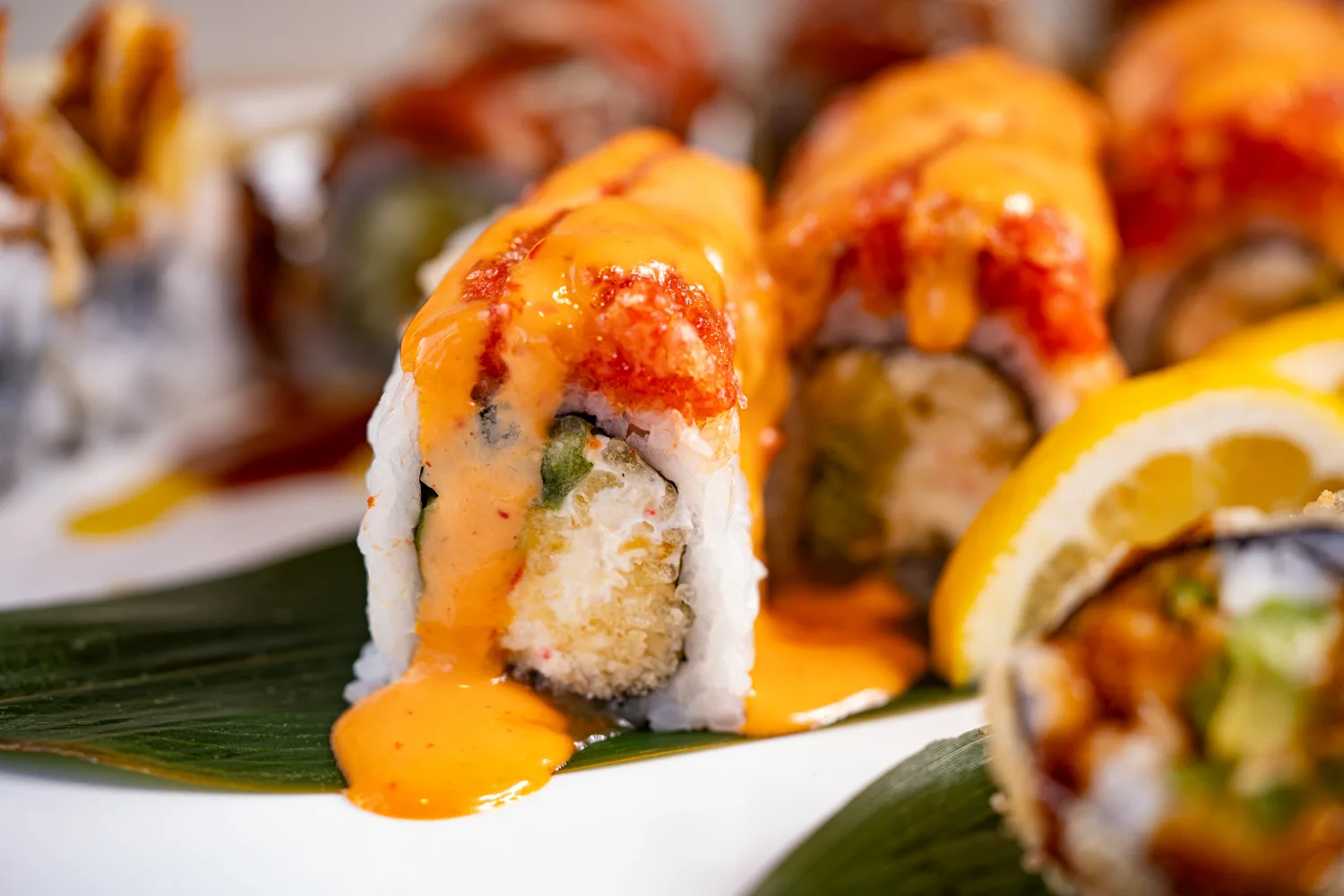
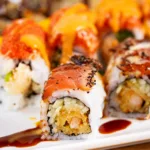
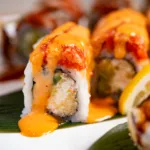
Think we’re exaggerating? Tuck into a Godzilla roll, stuffed with some kind of white fish, jalapeño, and avocado slices, all fried and slathered with eel sauce, spicy mayo, and teensy orange spheres of caplin fish eggs. It may have been what actually killed Godzilla. And hey, since little says “sushi” like Wichita, consider the Kansas Roll, with shrimp tempura and peppered tuna topped with tempura crispies. The Delmar roll is packed with honey, cheese, avocado, and jalapeño, and it will probably be useful for exorcising any demons lurking in your digestive system—or perhaps introduce some new ones.
There are Japanese restaurants in town that don’t have as wide of menu as the non-sushi offerings at Sumo. For a kitchen that’s comparatively tiny, Sumo is turning out a whole lot of food: teriyaki, fried rice, hibachi… It’s quite the assortment, and the results are somewhat mixed.
Look, making tempura is a matter of no small finesse. Lots of places advertise it, just like lots of places advertise their barbecue. But there’s a big difference between some convenience store ‘cue and the ribs at Pappy’s. If there was grocery store tempura, then Sumo’s would be it. One look at the batter-crusted vegetables that come out tells you that the oil it was fried in was too hot. Instead of a creamy gold, the crust is dark brown; the aftertaste, heavy and oily.
Teriyaki fares slightly better. The sauce is that thick, gloppy gravy that compromises way too many Westernized teriyaki marinades. (If you mixed maple syrup with soy sauce, you’d get a similar taste and texture.) We tried a combination of salmon and vegetables; the former is over-grilled, while the latter are flavorful and make you feel good about getting your veggies, but they’d be even better simply steamed without that sauce.
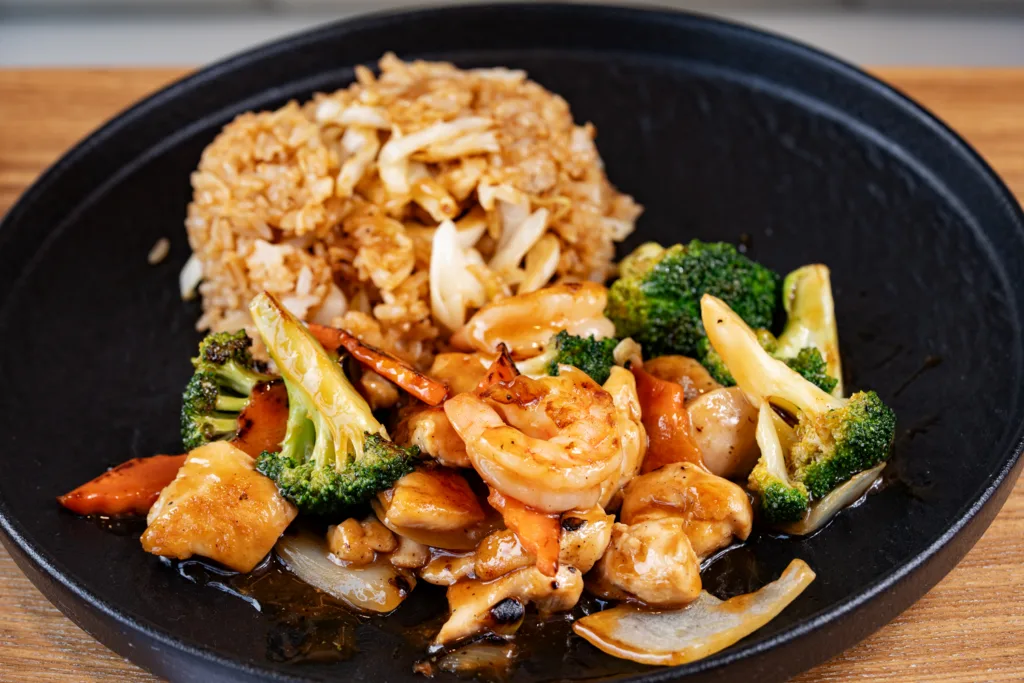
“Hibachi” offerings are better. A variety—chicken, salmon, scallops, and so on—come with a classic, soy sauce-heavy, Americanized fried rice. It’s lovely. You can make fun of Americanized Chinese food, but this fragrant, tasty rice is imminently satisfying. Hey, though, you’re shelling out around $30 for an all-you-can-eat meal at Sumo—a rather hefty price to be filling up on fried rice.
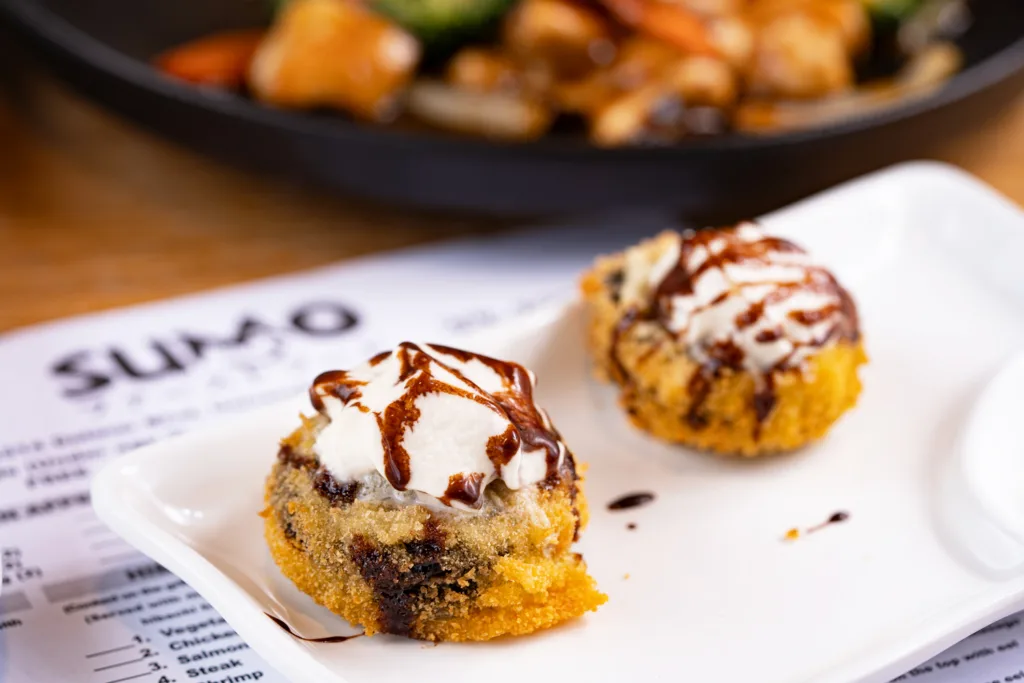
Ice cream is offered for dessert, or you can try the Oreo tempura. If you remember the fried ice cream that a lot of Mexican restaurants served back in the ’70s, then you have an idea of the latter.
There did not seem to be any beer available, nor any tea, both of which are kind of important for sushi dining.
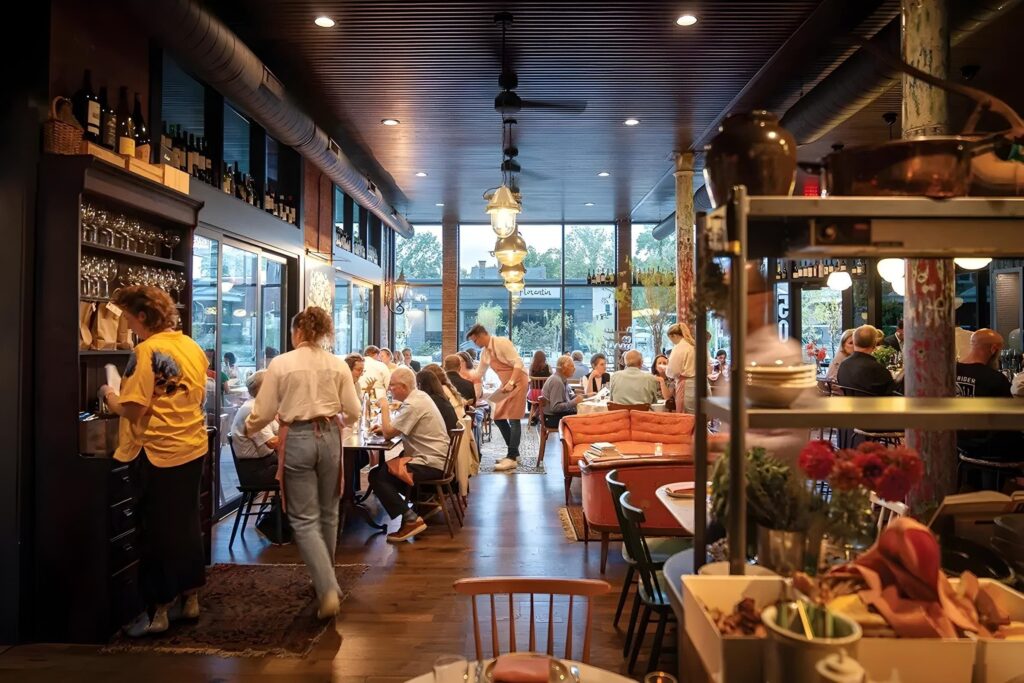
As we noted, space is at a premium. If you don’t go early or late, then you’ll probably be waiting for a seat. The Loop continues to be the dining destination for the whole area—still another Chinese noodle shop is preparing to open right next door. Sumo is in good company, and it adds an enjoyable element to the scene.
Sumo
📍6314 Delmar, Delmar Loop
⏰11 a.m. – 10 p.m. daily